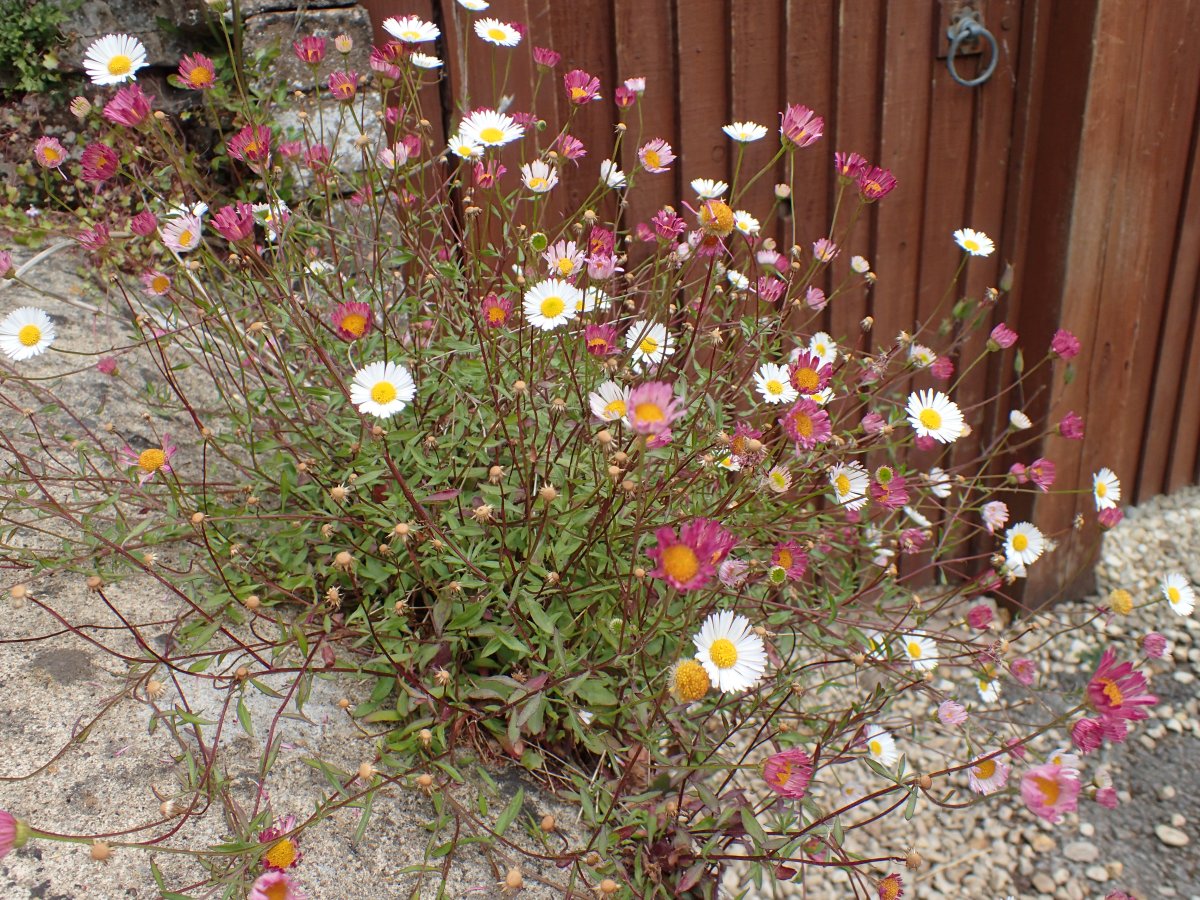
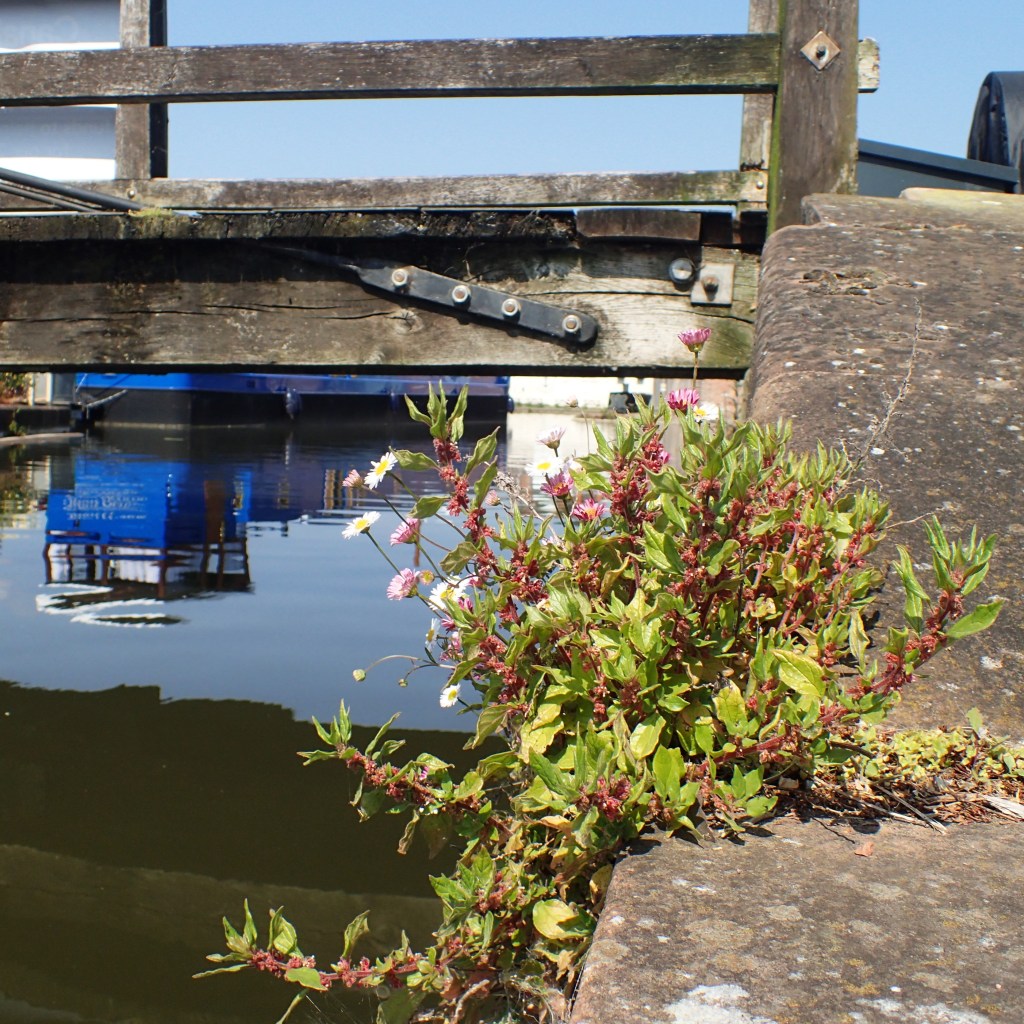
Diglis Basin or to give it its full name Waterside and Marina is at the junction on the River Severn in Worcester and the Birmingham Worcester Canal. On the walls of the canal and marina were various plants but the one that I am featuring here is the Mexican Daisy.

There was a good mix of wildflowers including the common Pellitory of the Wall along with Valerian and Dock but there was also some Skullcap which is much less common and this was the only place I have seen it growing from a wall. There was also some Marsh Bedstraw. Photographing them was somewhat precarious as it often involved leaning over the wall with the drop down to the water in the lock some distance below!
The connection from Worcester to Birmingham was conceived so that materials could be transported all the way from Gloucester or Bristol by barge into the industrial heart of England. Construction began in 1792, the canal was built to a double barge width as the traffic load was expected to be quite high. One of the beneficiaries was Cadbury chocolate based in Bournville just south of Birmingham. The milk was transported to the factory by barge and the cocoa by rail.
The dock and connection to the River Seven was completed in 1893. The canal is 29 miles long and rises from start to finish by 428 feet. This involves 58 locks of which 30 are located in one short stretch known as Tardebigge which is the longest ‘lock flight’ in Europe… not for the faint hearted.
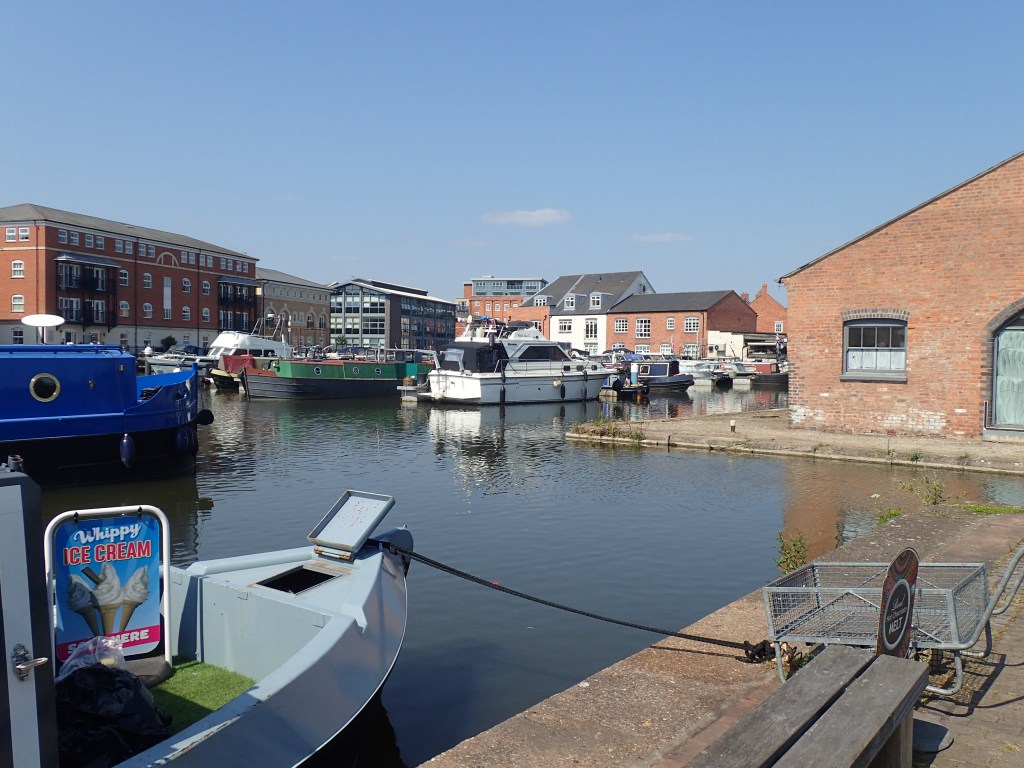
The canal has had mixed usage over the years but the development of an Oil Depot by Shell in 1926 gave a boost to trade but that eventually closed in 1968. Since 1992 the canal has been maintained by the Canal Conservation area.
Mexican Fleabane as its name suggest comes from Mexico and central America, it first made an appearance in Britain back in the 1890’s. It looks almost exactly like a daisy, except that it is more straggly and does not grow in your lawn. It is quite happy growing out of walls and is one of the most tolerant plants of dry conditions. Quite good if you live in Mexico. Back in 1970 when Mexico hosted the Football World Cup the newly commissioned Aztec stadium had its walls softened by planting this species between the concrete blocks used in its construction.
The slight differences between the look of this plant and daisy is that the flowers are very slightly large and the leaves are longer and narrower. It is a perennial and flowers between May to September. It is quite tolerant of coastal conditions but is also found inland. I t is not so common in Northern Scotland or Ireland.


 Walls and Flowers
Jenny and I tried for years to grow Erigeron, with minimal success. Then about three years ago it started popping up all over my concrete-block-paved back yard. I strim around it!
LikeLike
We obtained a few you specimens from some old walls in Cornwall a few years back and I carefully planted them up in some gritty compost in small pots but they all died. However there is some growing at various places in our village.
LikeLike