History of Hadrian’s Wall.(from the plants point of view)

There has been much written about Hadrian’s wall over the years. Gildas was the first to write about it in or around 560AD but already a lot had been forgotten and his descriptions are quite muddled. There follows a brief synopsis but what I want to concentrate on is the plants and their colonisation of the area.

Undoubtedly the most famous wall in the Britain it was, as the name suggests, built under the orders of Emperor Hadrian, in 122AD. It was however campaigns of Julius Agricola which had pushed the Roman influence to the far north of Scotland by 84AD. He even sent ships further north still and reached the Orkneys but his gains were not maintained and much of Scotland was subsequently abandoned and so when Hadrian visited he decided to fortify a line from the Tyne to the Solway.

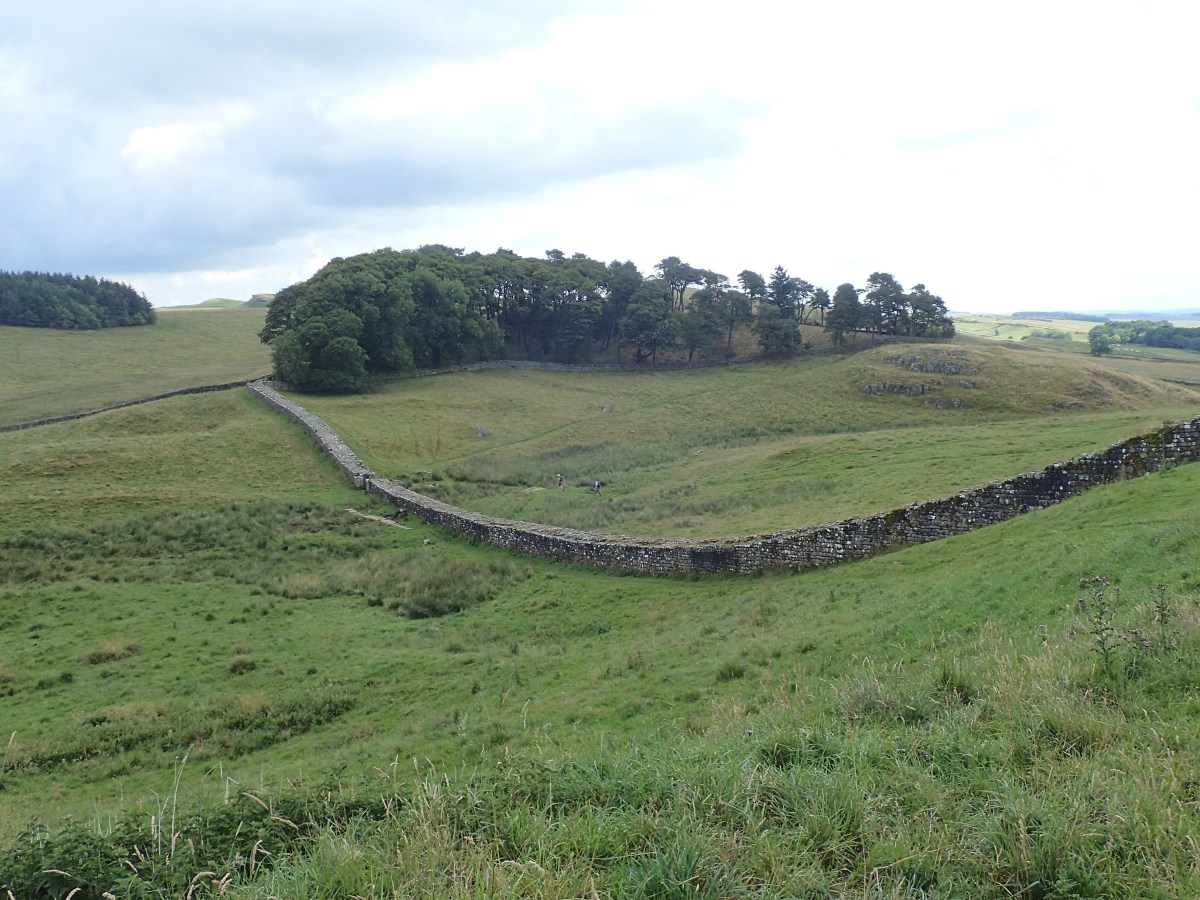
The seventy three mile wall took just six years to construct. Initially some of it was stone and the western section was a turf bank. This bank was subsequently replaced with stone. There is also a large ditch called a Vallum which is three metres deep with parallel mounds along the edges and which follows the line of the wall on the south side. After Hadrian’s death in 138AD the next Emperor, Antonius Pius, decided to build another wall further north between the Firth of Forth and the Firth of Clyde, known as the Antonine Wall. This was shorter than Hadrian’s Wall at just thirty nine miles but it had more forts. Construction began in 142 AD and took twelve years to complete. It is mainly comprised of an earth bank formed from turfs. It was abandoned shortly after Pius’ departure and Hadrian’s Wall marked the northern edge of Roman influence.

The chances of many plants colonising the walls whilst it was being maintained by the Romans is probably small. Back then the wall and the forts would have been covered with plaster and then painted quite brightly. It would not have looked like it does today. The locals might have described it as a bit of an eyesore across the beautiful Northumbrian and Cumbrian landscape but it was there to make a statement and painting it white and other bright colours certainly did that.

Some plants may have grown along the top, in between the cobble stones and down in the Vallum. However I suspect that maintenance was quite rigorous. The soldiers would have needed to be kept busy to prevent boredom and possible misconduct, so tasking them with weeding and repairs would be an obvious way to occupy them. I once recall seeing some squaddies at an army base in Cyprus mowing the playing field. There was not a blade of grass anywhere to be seen as it was dry bare soil but still they mowed up and down obeying instructions.

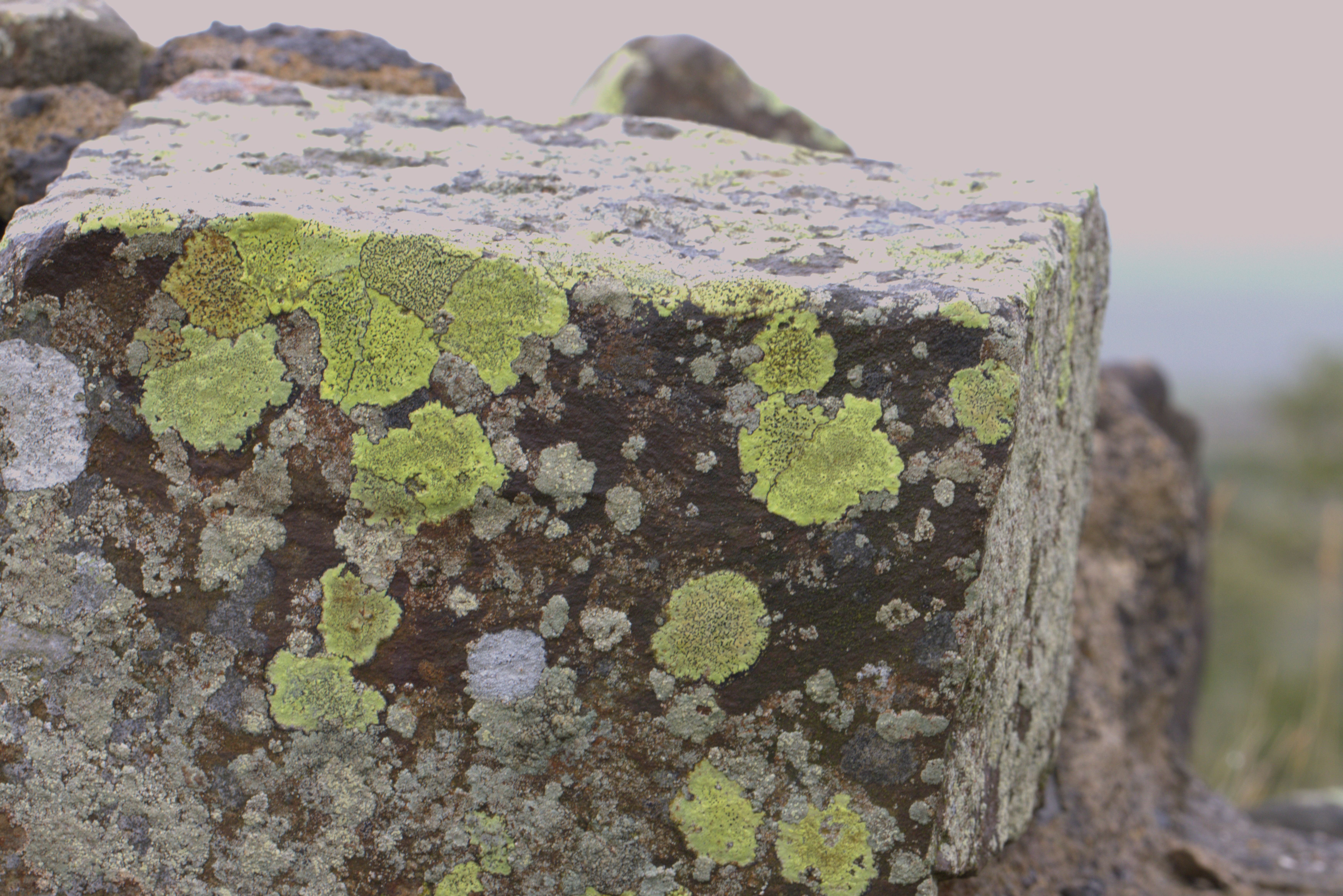
Colonisation probably did not get underway until sometime after 406AD when the Romans withdrew. Even after that date there is evidence that local rulers maintained sections of the wall and some of the forts for anything up to two hundred years. It would in any case have taken time for plaster to fall off and cracks to develop. The first colonisers would be plants dispersed by seeds or spores. Spores blow long distances on the wind and so mosses and lichens would be the first plants to show up, exactly as they do today on gravestones or rock -formed coastal defences. They would have paved the way for subsequent, larger species, as over time they died and got washed into the crevices between the stones so that gradually a type of organic soil would have developed. This would provide not only a source of water but also nutrients for the ferns and flowering plants that came later.
Ferns are also dispersed by spores and so the second wave of colonisation probably had a high proportion of ferns. Plants might also have arrived by way of animals bringing in seeds. Many species of plant produce fruits and nuts in order to attract animals which then either move the fruits and nuts to store them somewhere such as in a wall, or they eat them and the seeds pass through with their droppings and get deposited on the wall whilst the animal is having a rest.

However getting to the wall is just the start. The seedling then has to get established. In the Vallum this might have been quite easy and soon this would have been overgrown with Brambles, Hawthorn, Blackthorn and, probably Gorse. Thereafter trees such as Oak and Beech might have developed although the climate can be is quite cold and bleak so they would have struggled.

On the walls of the forts and along the wall, life would have been tough for the flowering plants. Plants that were already adapted to grow on rock faces and cliffs would have found the walls most suitable. The number of plants back then that could have colonised would have been significantly fewer than today. Well over half the plants that we now find on walls would not have been in the Britain at that time as they have been introduced since then. It is possible that soldiers might have brought a few species with them. Wallflowers are generally thought to have been introduced by the Normans but they do have lots of medicinal uses and conceivably soldiers could have imported them as it has been recorded that Roman soldiers used a poultice of Wallflower leaves to treat wounds. However most of the Roman soldiers stationed on the wall and in Britain generally were not from Italy. Many came from Gaul and two of the brigades that were stationed at the wall were from Tungria , now Belgium, and Batavia on the Rhine delta.

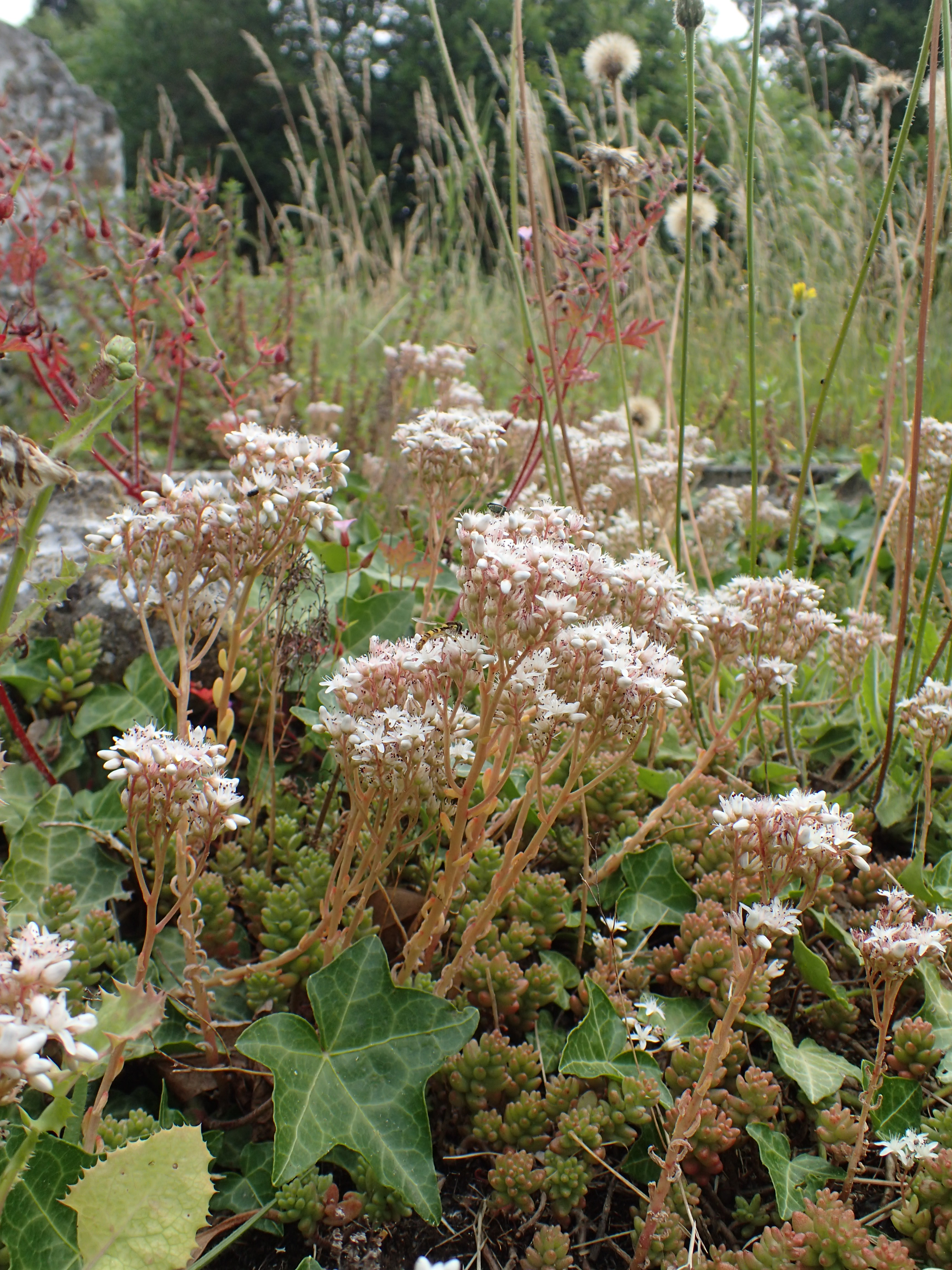
The flowering plants most likely to have colonised the wall would have been species such as Stonecrop, Whitlow Grass, Bittercress and Sandworts. These are all small native species which would not have made much visual impact.
As time went by the wall was gradually plundered to provide stone for other constructions, some of them, such as Hexham Abbey, quite grand, others less so. The B6318, known as the Military road which runs west from Newcastle, was constructed from stone which was removed from the wall and pulverised to provide hardcore.

Nowadays the wall attracts thousands of visitors each year and car tyres and walking boots will bring seeds from all over the world so who knows what could turn up. Getting there is just the start and colonising is the big ask but with climate change anything could grow there in the future. Perhaps there might be orange groves and olives lining the route one day. Very Italian.
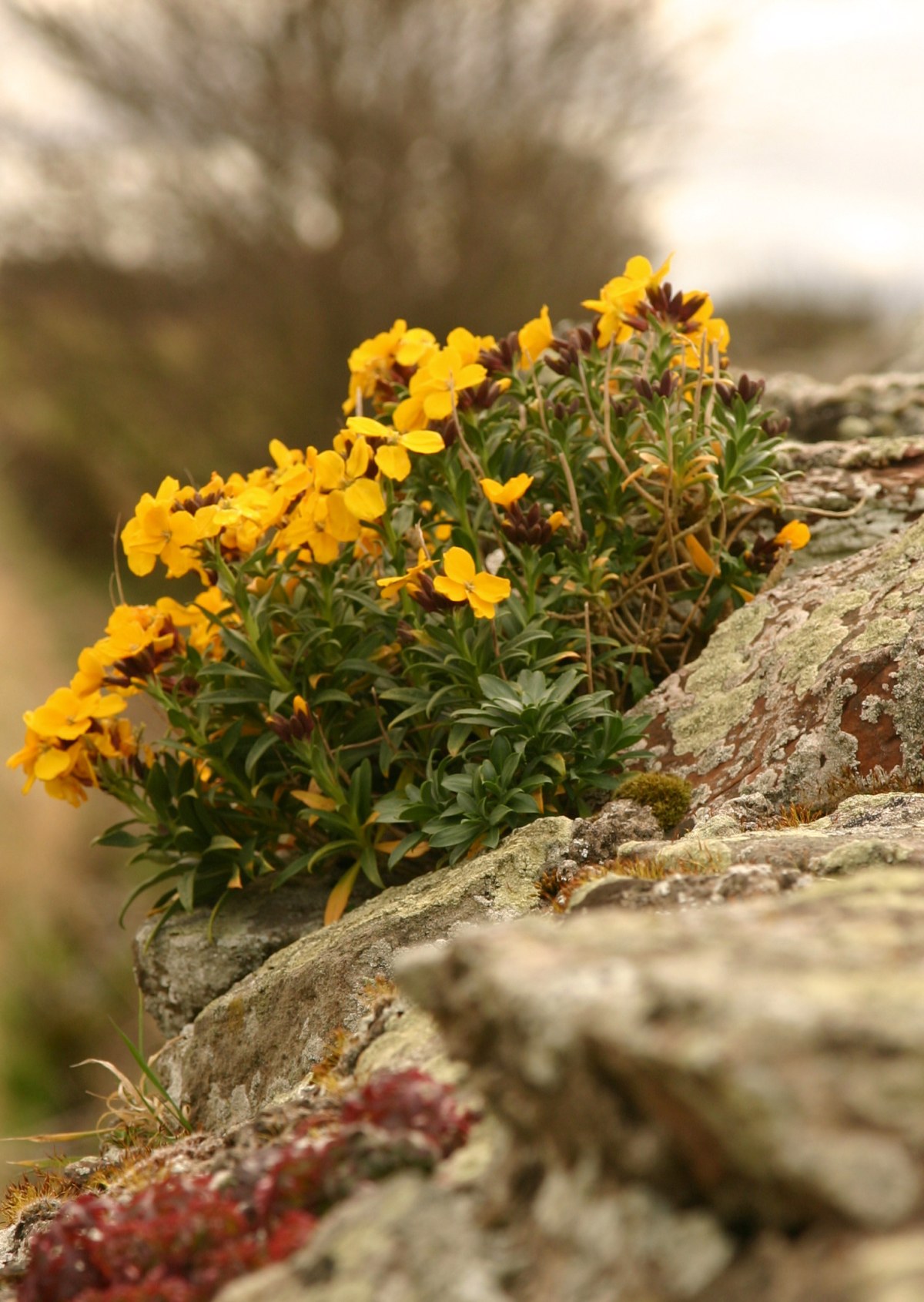
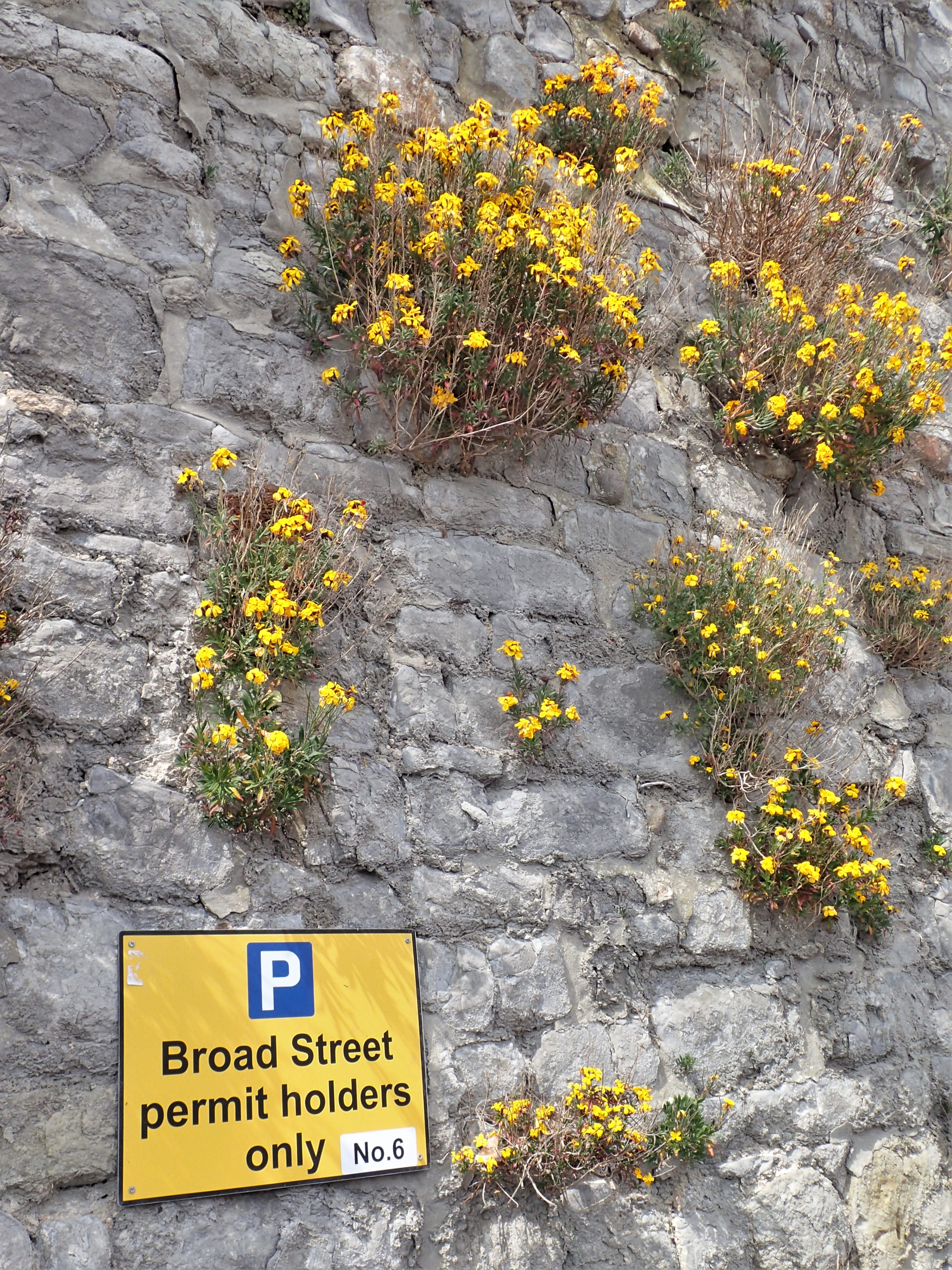
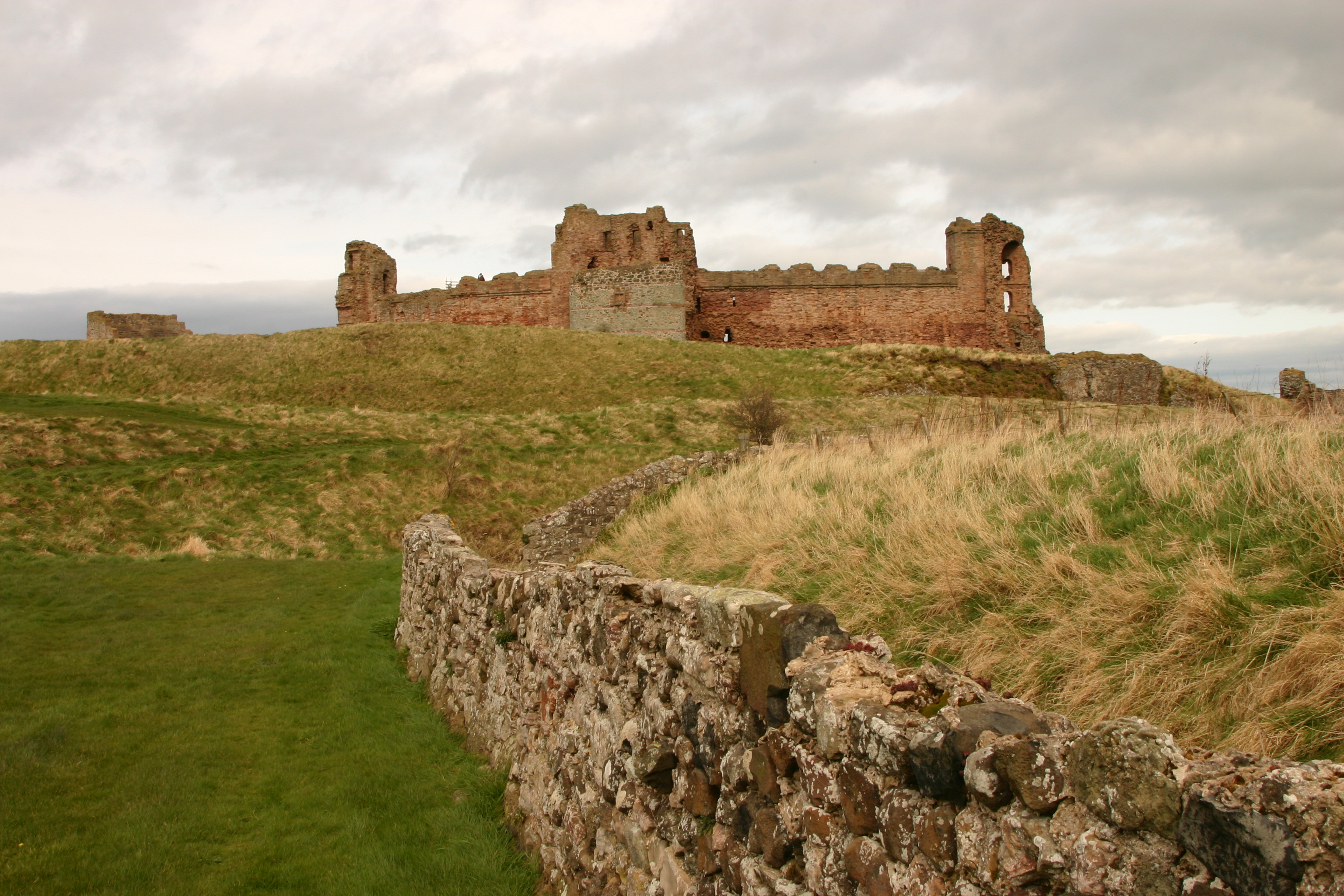
Wallflower and Tantallon Castle Scotland

The Wallflower is one of the plant species with which most people are familiar. It is often to be found growing out of walls which, given its name, is just as well but it is also a garden flower. It is not originally from Britain but from southern European and is found right across the Mediterranean and Aegean areas. It has been used throughout time for various medicinal purposes and the list is quite long. It was used by Roman soldiers to treat wounds, a tincture was used to reduce tooth ache, it has been used to treat rheumatism and gout, to bring on menstruation when periods were late and so it goes on. It does contain a substance called cheiranthin which is similar to digitalis derived from Foxgloves which affects the heart rate.

An early reference to the plant appears in a work by Pliny the Elder writing in the first century AD. Some suggest that it was introduced into Britain following the Norman invasion but I see no reason why it could not have arrived much earlier, possibly with the Romans. Either way it has been here a long time. The first record of it growing wild appears in 1548, and there is one in 1777 when Edward Jacob, a local naturalist, records it as Wild Chier growing ‘on old walls and being very uncommon.’ It is now quite common but is recorded less further north and is still uncommon in Scotland, no doubt reflecting its southern European origin. Despite this I found it growing from some of the walls surrounding Tantallon Castle in East Lothian.

It was originally classified as Cherianthus cheiri by Linnaeus but it is now called Erysimum cheiri. The cheiri derives from the Greek word for hand as it was often used in small bouquets held in the hand. It is in the Cruciferae family along with cabbages, brussel sprouts and turnips and as such it has a simple flower structure composed of four petals in a cross. Like most of the family the wild form has yellow petals, but over the years a range of different garden varieties have been bred so that colours ranging from Red to yellow, purple and brown are all available. Personally I prefer the brown or yellow types . It is often grown by gardeners as a biennial. Bundles of bare rooted young plants can be purchased in the autumn and planted out to flower the following year. However if they are left in place and they will go on to flower for several more years. They flower in the Spring and have a wonderful scent. The petals have a velvety texture and they are much appreciated by bees and other insects.

Not all Wallflowers grow on castle walls.

Tantallon Castle is a ruined mid fourteenth century fortress, located three miles east of North Berwick, in East Lothian, Scotland. It sits atop a promontory opposite the Bass Rock, looking out onto the Firth of Forth. The last medieval curtain wall castle to be constructed in Scotland, Tantallon comprises a single wall blocking off the headland, with the other three sides naturally protected by sea cliffs. It was the home of the Douglas clan.

In 1354, William Douglas was given the estates of his father, Sir Archibald Douglas and his uncle, the ‘Good Sir James Douglas’ who was a close friend of Robert the Bruce. These estates included the barony of North Berwick.

William was made Earl of Douglas in 1358 , by which time masons may already have begun to build Tantallon.

The house of Douglas split into two branches in the 1380s: the ‘Black’ and the ‘Red’. Tantallon passed to the junior line, the Earls of Angus known as the ‘Red Douglases’. They owned the castle for the next three hundren years, often clashing with the Crown.

It is possible to see Gannets from the castle. They make Bass Rock look almost white which is no doubt the result of the combined effect of their plumage and the guano. Eider ducks can also be seen,often close to the shore line.

The demise of the castle came during the Civil War when Cromwell sent two to three thousand troops led by General Monck along with much of the artillery located in Scotland, to lay siege to Tantallon. After twelve days of bombardment with cannon a breach was made in the Douglas Tower. The defenders were compelled to surrender. After the siege Tantallon was left in ruins and it was never repaired or inhabited thereafter.

Introduction;

 Walls and Flowers.

There are flowers which grow on walls and there are walls which have flowers growing out of them and this is about both. The plants which have been selected for this book are those which often grow out of walls, some almost exclusively others commonly but not always found on walls. There are many plants that might just grow out of a wall occasionally and these are not included. One has to draw the line somewhere and I drew it at sixty.

Shown above is a superb specimen of Great Mullein. It is unfortunately one of the rejects as it happens to be growing out of a wall but it is not a plant that regularly does so. However the related species, Dark Mullein, does make the cut as it is commonly found on walls and sunny banks. This Great Mullein is the only one I can recall seeing on a wall.

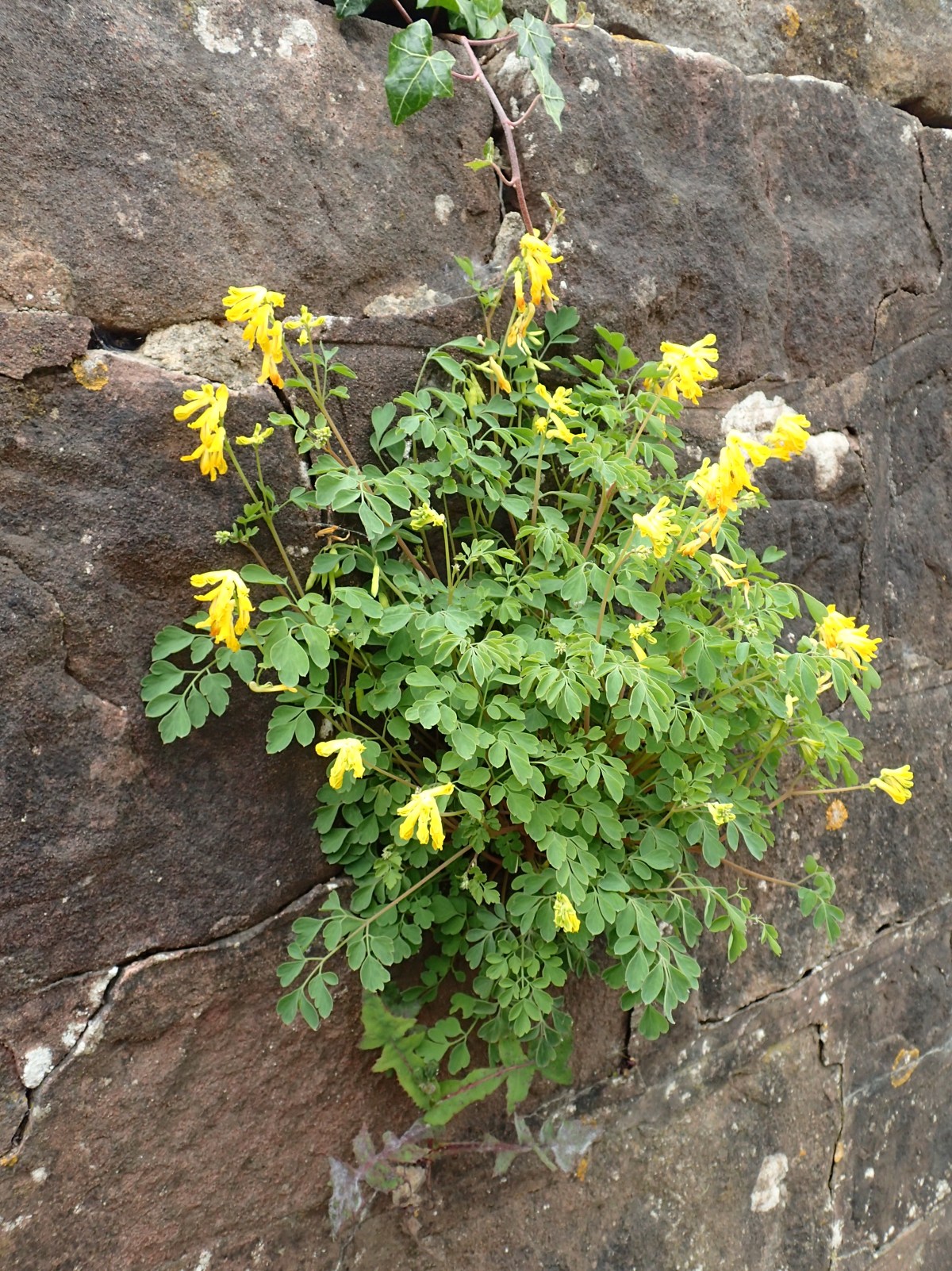
The sixty chosen species include a few grasses which are, after all, flowering plants, and also some ferns which are not. Plants which are almost exclusively found on walls are species such as Ivy-leaved Toadflax, Yellow Corydalis and Mexican Fleabane. These three all happen to be introduced species. Some plants have become so much part of walls that ‘wall’ is part of their name, for example Pellitory of the Wall, Wall Bedstraw, Wall Rue which is a fern and the most famous one of all – the Wallflower.

Pellitory of the Wall

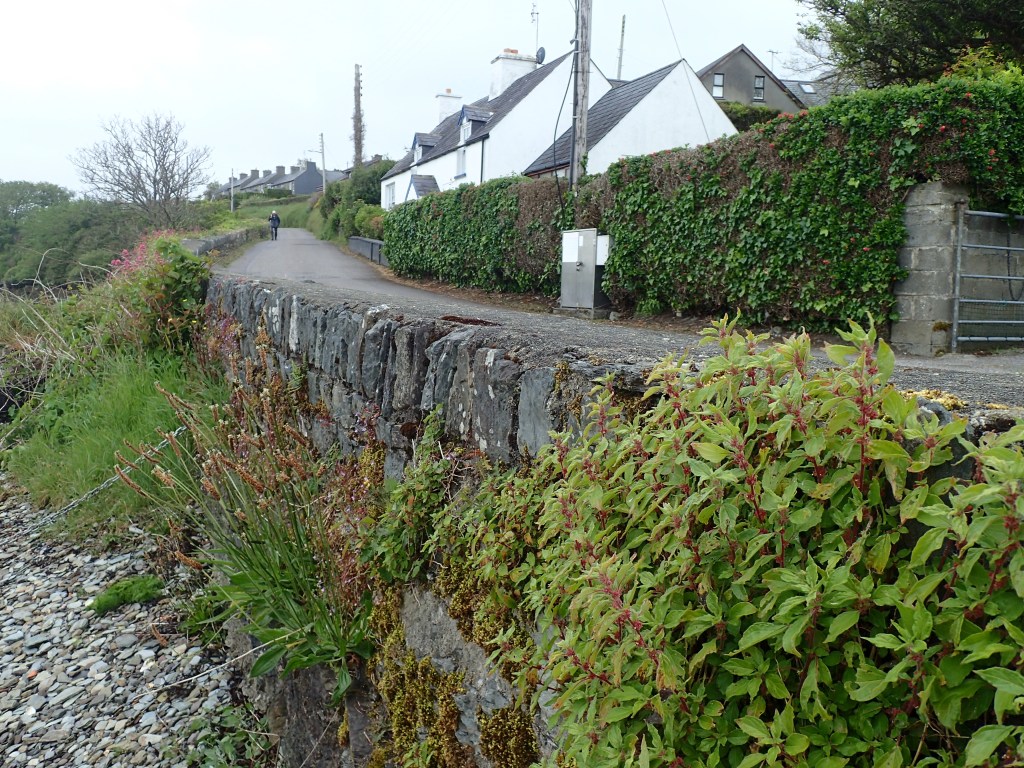
The other aspect of the book is the walls themselves and each plant has been photographed growing on a particular wall which may be famous, may be characteristic of a certain region such as dry stone walls which vary from place to place or it may be just somewhere that I visited.  I will cover walls as far apart as Hadrian’s wall, The Antoine wall (which is even further north), the sea wall at Baltimore in southern Ireland, and closer to my home I have the drystone walls of the Cotswolds and the walls of the first iron smelting works just up the road from where I live.

The flowers obviously predate the walls, so the plants we now find on our walls had to live somewhere before man started his constructions. This would have been cliffs, mountain sides and rocky gravelly places. When man began to put up his buildings, fortifications, and boundary markers the plants were already adapted and could take advantage of these new opportunities. It is a difficult habitat though and I will explore the challenges that colonising walls presents.