
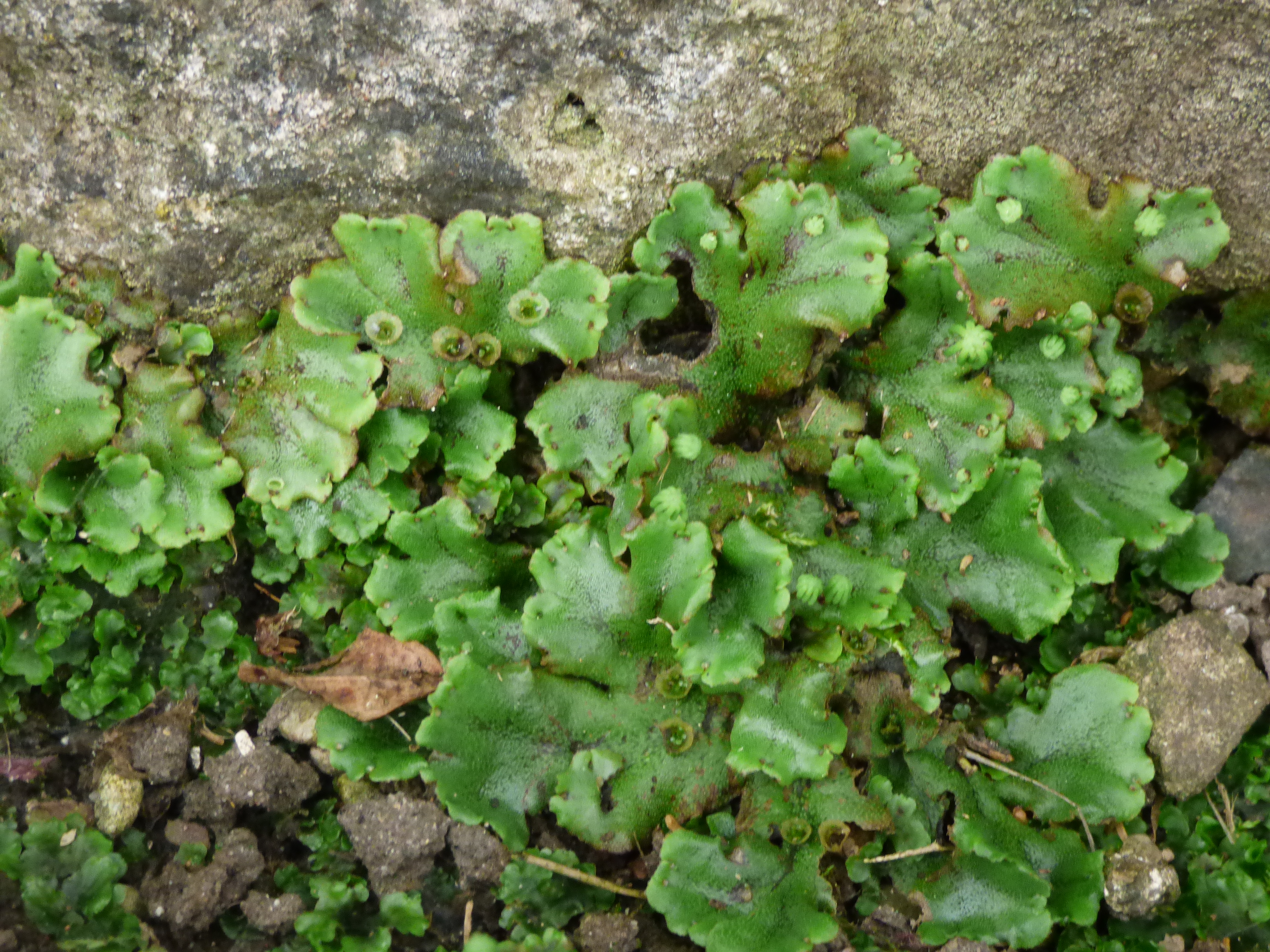
On a recent visit to Tintern Abbey there were not that many wall flowers to be seen. Careful maintenance is obviously required, plants growing from crevices in the stone work can add to the look of the walls but can also hasten their disintegration. In fact the interior region of the Abbey was largely a restricted area when I visited, due to a combination of the possibility of falling masonry and maintenance work to rectify the problem. It was obvious that herbicide had been applied round the bases of the walls. All that survived in these regions was a liverwort called Marchantia.
There are a few flowering plants and ferns growing in the walls but not many considering the age of the buildings. The majority of plants are growing from the top of the walls where their removal would prove more difficult. There was some Red Valerian, though most of it was the pink form, also some yellow flowers which were some species of Hawkbit ( this group is notoriously difficult to identify) There was quite a lot of Ivy-leaved Toadflax, as always, and a few small patches of White Stonecrop. The commonest plants by far were the ferns which were mostly Maidenhair Spleenwort but also some Wall Rue.
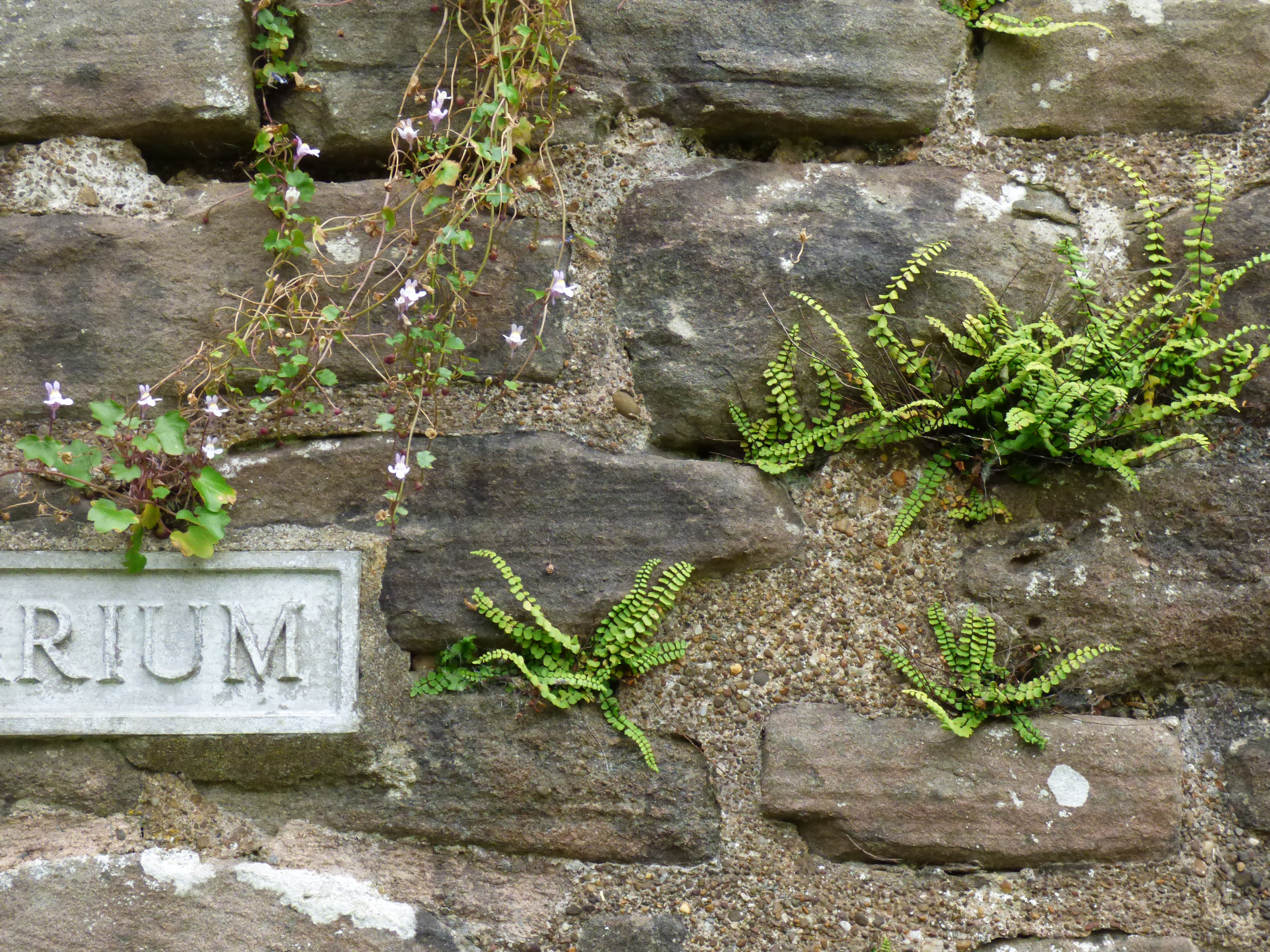
Spleenworts are one of the commonest ferns, there are several species but Maidenhair Spleenwort (Asplenium trichomanes) is by far the most prevalent, infact its distribution is world wide, I suppose ferns have had longer to spread than flowering plants! If we want to get scientific then Maidenhair Spleenwort is a polyploid complex meaning it can have different numbers of chromosomes and this influences the way the plants look so that it has been split into three subgroups and these have different geographical locations and slightly different morphologies. Hey ho, don’t look too closely and they all look the same.
Despite being a ruin this is still the most amazing place, it is set in the Wye valley and so it does benefit from the surrounding scenery. How it would have looked like prior to Henry’s activities one can only imagine but it must have been even more magnificent. It would have been wonderful to see the windows with glass in, no doubt stained glass depicting all sorts of religious scenes, probably also Roger Bigod, Earl of Norfolk. The abbey church was rebuilt under his patronage, he was Lord of nearby Chepstow Castle, in the late 13th century. The reconstruction maintained the original design of the monastery..
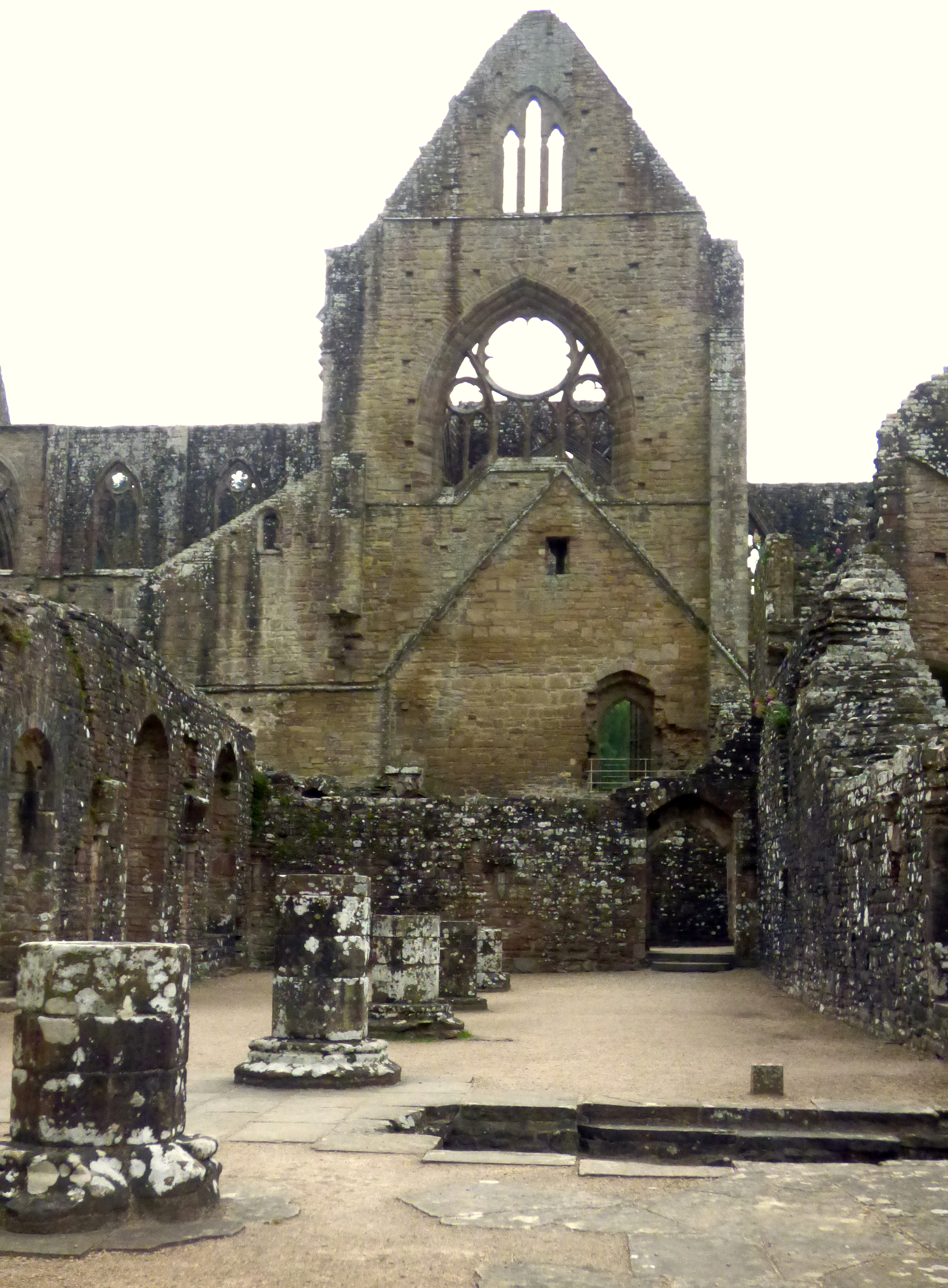
Henry VIII dissolved the abbey in 1536 along with most abbeys throughout Britain through his Dissolution of the Monasteries. On 3 September 1536, Abbot Wyche, 12 monks, and 35 monastic servants surrendered the Abbey to the king’s visitors. The king granted the abbey to the then Lord of Chepstow who sold the lead from the roof. From that point, the abbey lay forgotten, falling into ruin for the next couple of centuries.
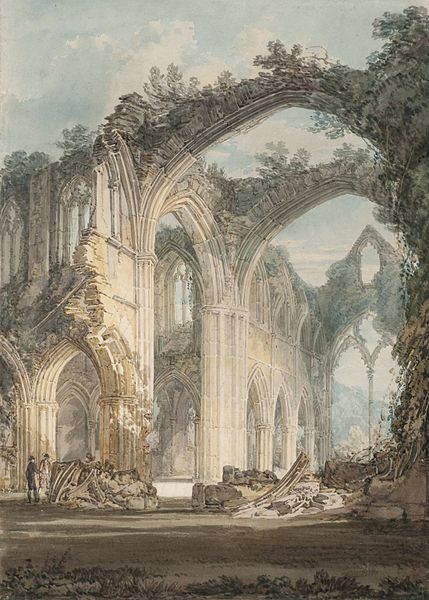
After the dissolution and the removal of the roof for the lead the abbey was largely ignored for the next 200 years, some stone was removed for the construction of local buildings but mostly it was colonised by Ivy. It was later that it became a tourist destination with famous artists, poets and writers visiting. Turner visited the abbey in 1792 when he was only 17 years old and painted it, on canvass that is, not with a pot of paint and a ladder. You can see plenty of plants indeed bushes growing from the walls in his depiction. Also Wordsworth was another famous visitor some time later.
Incidentally there are several different species of Spleenwort, the commonest is Maidenhair Spleenwort but you could come across Green Spleenwort where the central midrib of each leaf is green not brown. There is also Black Spleenwort which has leaflets that are complex not simple and the central midrib has a double groove along it. I describe that fern when visiting a Roman village now called Wall which is in Staffordshire. And finally there is Sea Spleenwort which has a coastal distribution, largely western and it has bright green fleshy leaves. So there is more to Spleenwort than you might have thought.
 Walls and Flowers