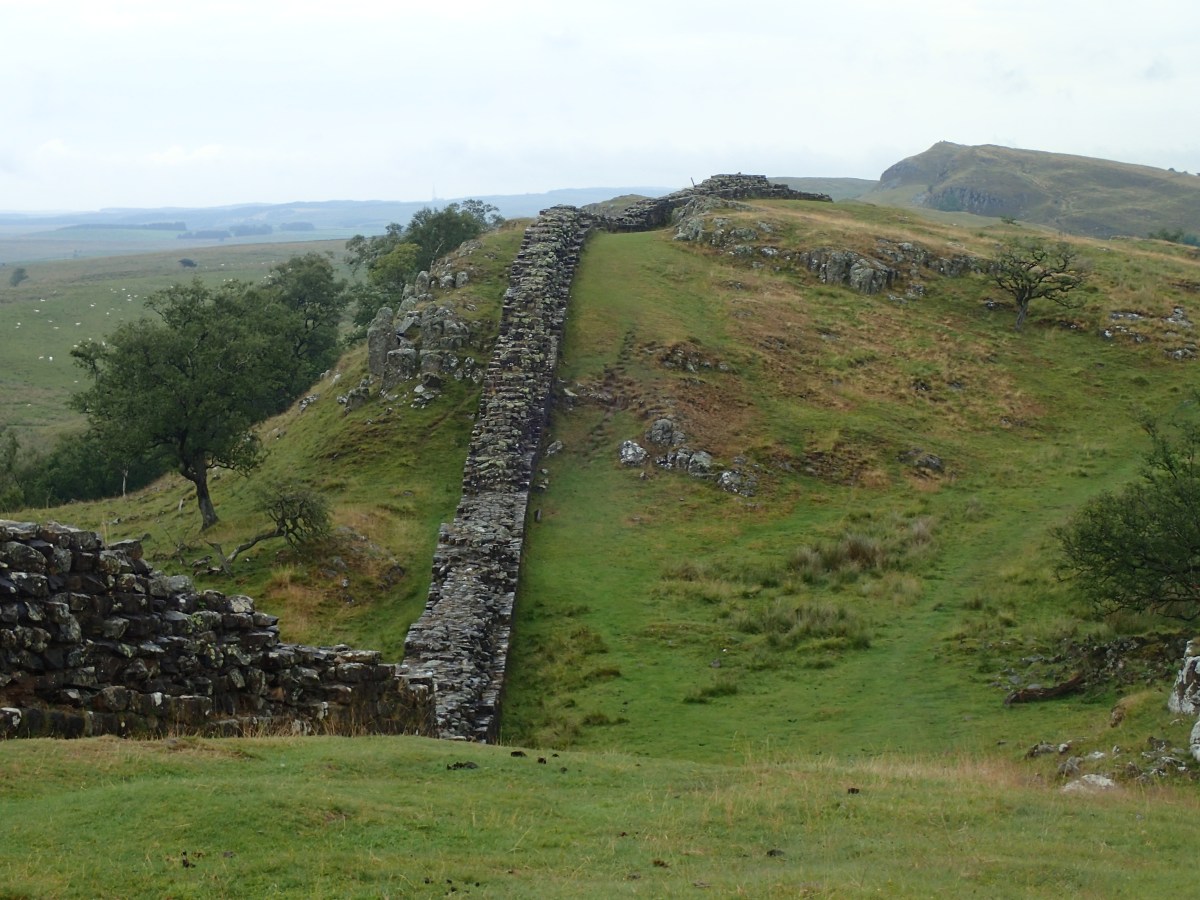
Hart’s-tongue Fern and Hadrian’s Wall

I finally got to visit Hadrian’s Wall about 50 years after I purchased the Ordnance Survey map of the area, back then it cost me 55p and in the bottom corner it has Crown Copyright, 1964. I suspect that I purchased it around 1973, at that time I was quite into ancient history. Apart from reading quite a lot of history books I remember visiting Stonehenge, back then it was free and you could walk right up to it and touch the stones, not so now.

We spent two days at various sites along the wall, working our way from East to West. The scenery is quite magnificent and there are lots of places where you can see the wall stretched out across the countryside and I suspect a Roman legionnaire would still recognise the scene if he could be magicked back into exitance today. The region near Walton Ridge was quite evocative and one of the plants growing there was the Harebell which is the subject of another chapter.

We came across the Hart’s-tongue fern at Vinolanda, and it was the only place where I saw it and even there I only spotted a couple of specimens. Vinolanda is a Roman auxiliary or supply fort about half way along the course of the wall. When the wall was built it had look out turrets every mile, then every so often there were large garrison forts set just back back from the wall, there were also forward forts these were located a little distance Infront of the wall and then supply forts located some distance behind the wall.. At its height there would have been about 10,000 soldiers distributed along the 73 mile wall and add to that there would have been large numbers of civilians, traders and entertainers and all the support folk that a large body of men would have attracted! If you take my meaning.

During the course of the Roman occupation the construction of the forts changed and older buildings were abandoned and new ones constructed. An example is that at Vindolanda there are two bath houses an earlier one constructed around 103 to 105 AD and a later one dating to the 3rd or 4th century AD. This bath house is located outside the main fort as were numerous other buildings housing the extensive community associated with the military camp. The bath would have been used by both soldiers and civilians but probably at different times. The reason it was outside the main fort was because of the risk of fire. Bath houses were heated by furnaces and hot air was ducted underneath raised floors called a hypocaust, this floor is about 80cm above the ground, the space underneath is now providing a home for the fern, I doubt much would have survived there when hot air was being circulated. The floors themselves got quite hot and bathers would wear thick wooden clogs to prevent burning their feet.

Apart from all the stone remains there is a superb museum at Vinolanda with some amazing finds that aerologists have recovered from the site. The shoe and sandal collection is the first thing you see as you enter, the coins, jewellery and glass wear is stunning but perhaps the most amazing finds are small wooden tablets with writing on, lots of them, and they have been translated and they are what folks back then were saying to one another it is the emails of the time.

I cant resist giving you a flavour of what they cover this one, randomly selected, (there are hundreds of them) was translated as saying.

bruised beans, two modii, chickens, twenty, a hundred apples, if you can find nice ones, a hundred or two hundred eggs, if they are for sale there at a fair price. … 8 sextarii of fish-sauce … a modius of olives … (Back) To … slave (?) of Verecundus.”

A shopping list! and they cover a vast range of subjects anything that one person might write to someone else.
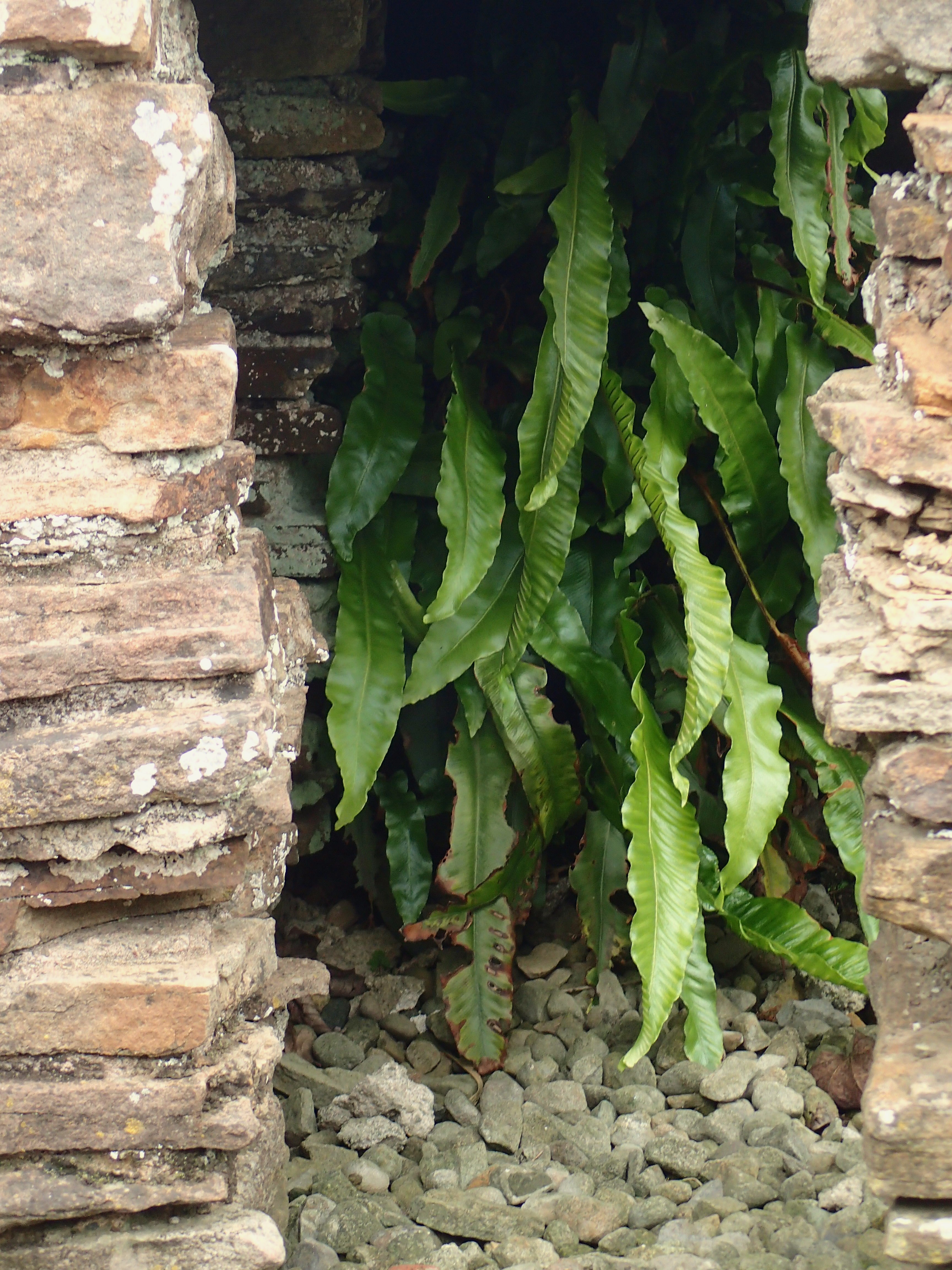
I could go on about the museum and all its contents for much longer but lets switch now to the Hart’s-tongue fern which here was sheltered and protected by growing in the wall of the old underfloor heating. Protected not only from the elements but possibly also from the herbicide sprays that are no doubt occasionally used to keep the walls reasonably weed free. Hart’s-tongue fern is one of the few or only British ferns which has an entire leaf, ie not divided into lots of smaller leaves and leaflets, the typical compound leaf that ferns and some higher plants like Cow Parsley have. The Adders tongue fern has a small rolled up leaf somewhat similar to the spathe on a Lords and Ladies plant so that is the only other British fern with an entire leaf. On the undersides are the distinctive spore producing areas (sori) which turn brown as the spores are produced. This species retains its leaves during the winter but then produces a new batch in the Spring and the old ones gradually die off over the summer.

The scientific name is Asplenium scolopendrium but it is also called Phyllitis scolopendrium. The BSBI (Botanical society of Britain and Ireland) call it Phyllitis so that’s the one I would go for. It is found all over the UK and Ireland and often grows from walls or rocky outcrops, its only restriction on distribution is that it does not like acidic conditions. The species name ‘scolopendriun’ derives from the arrangement of millipedes or centipedes feet as the pattern of the sori on the underside resembles these species.
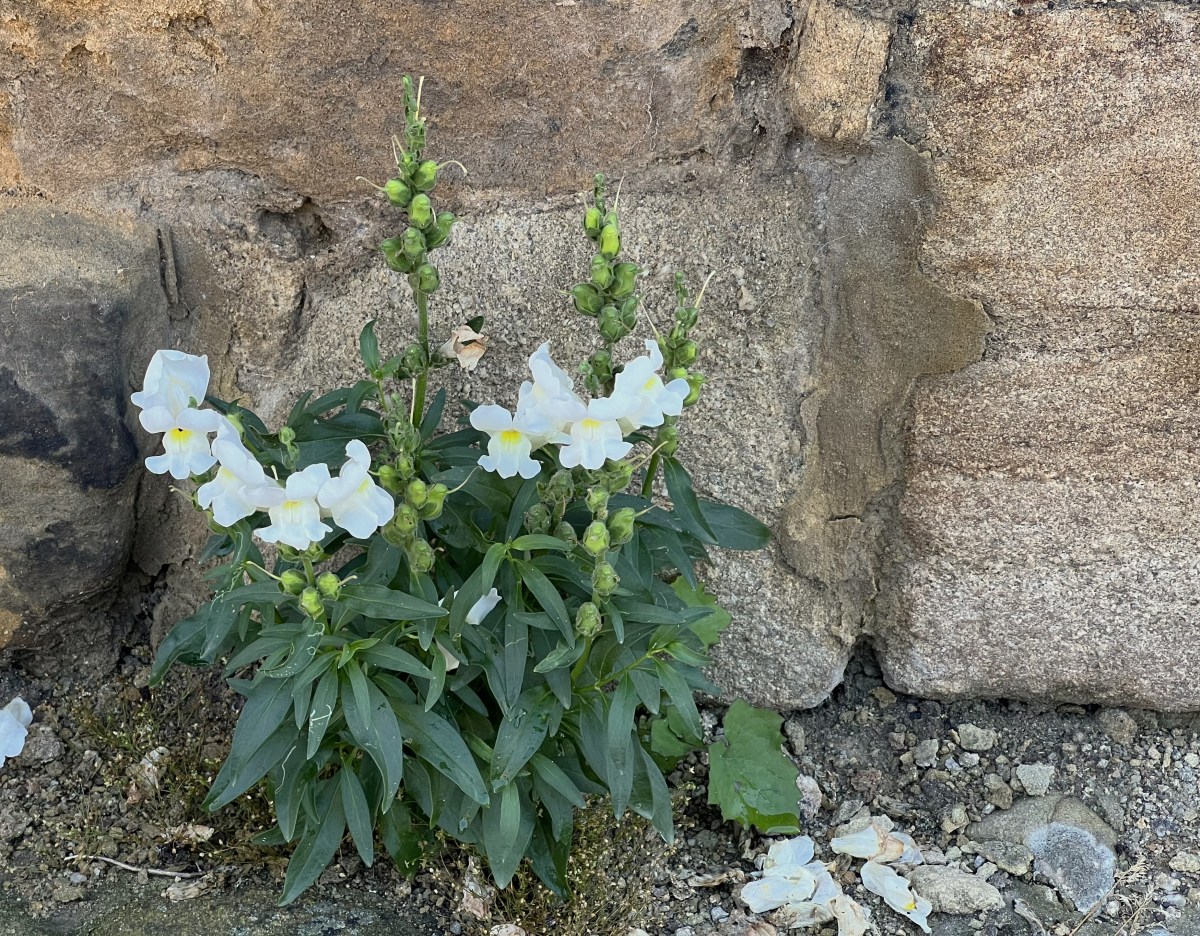
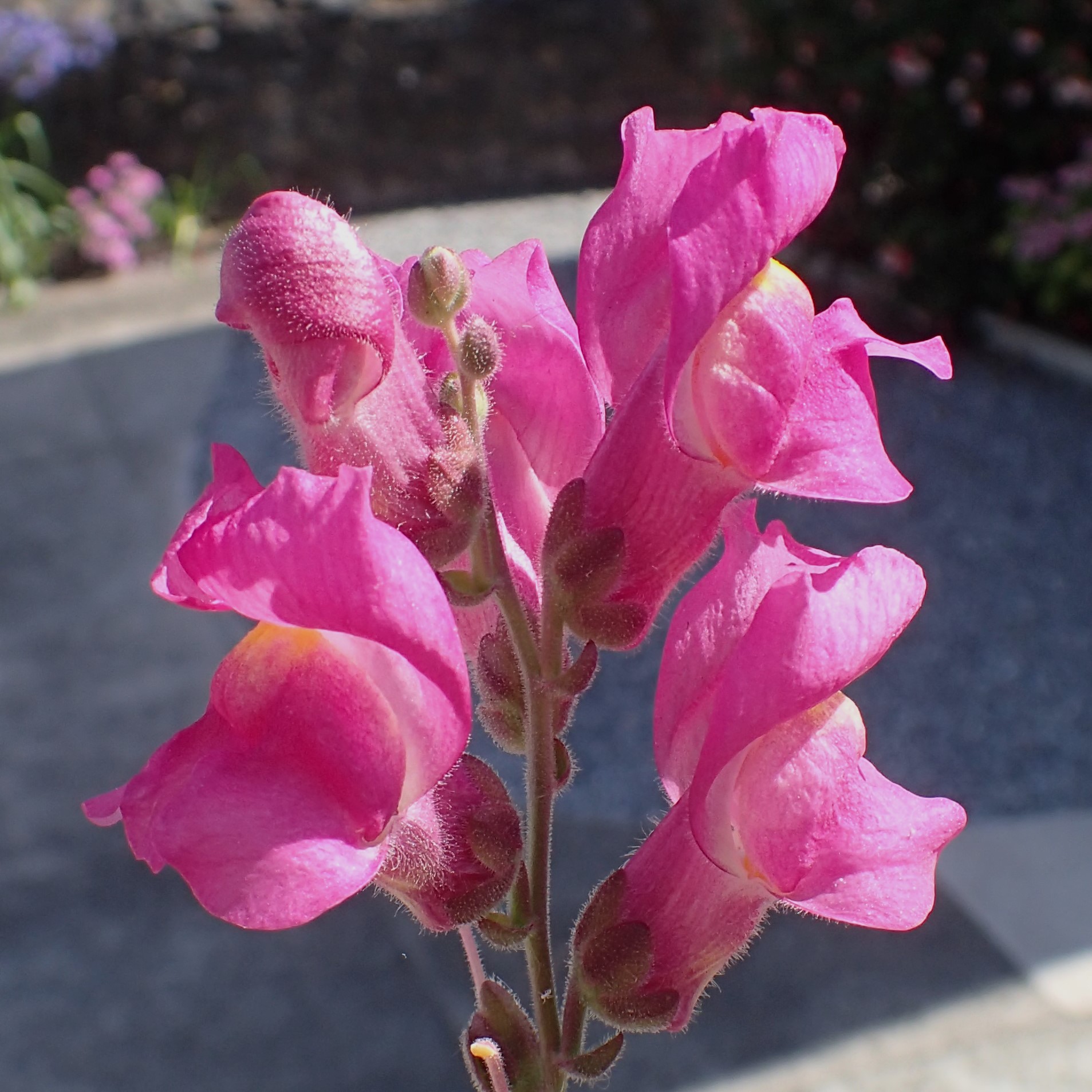
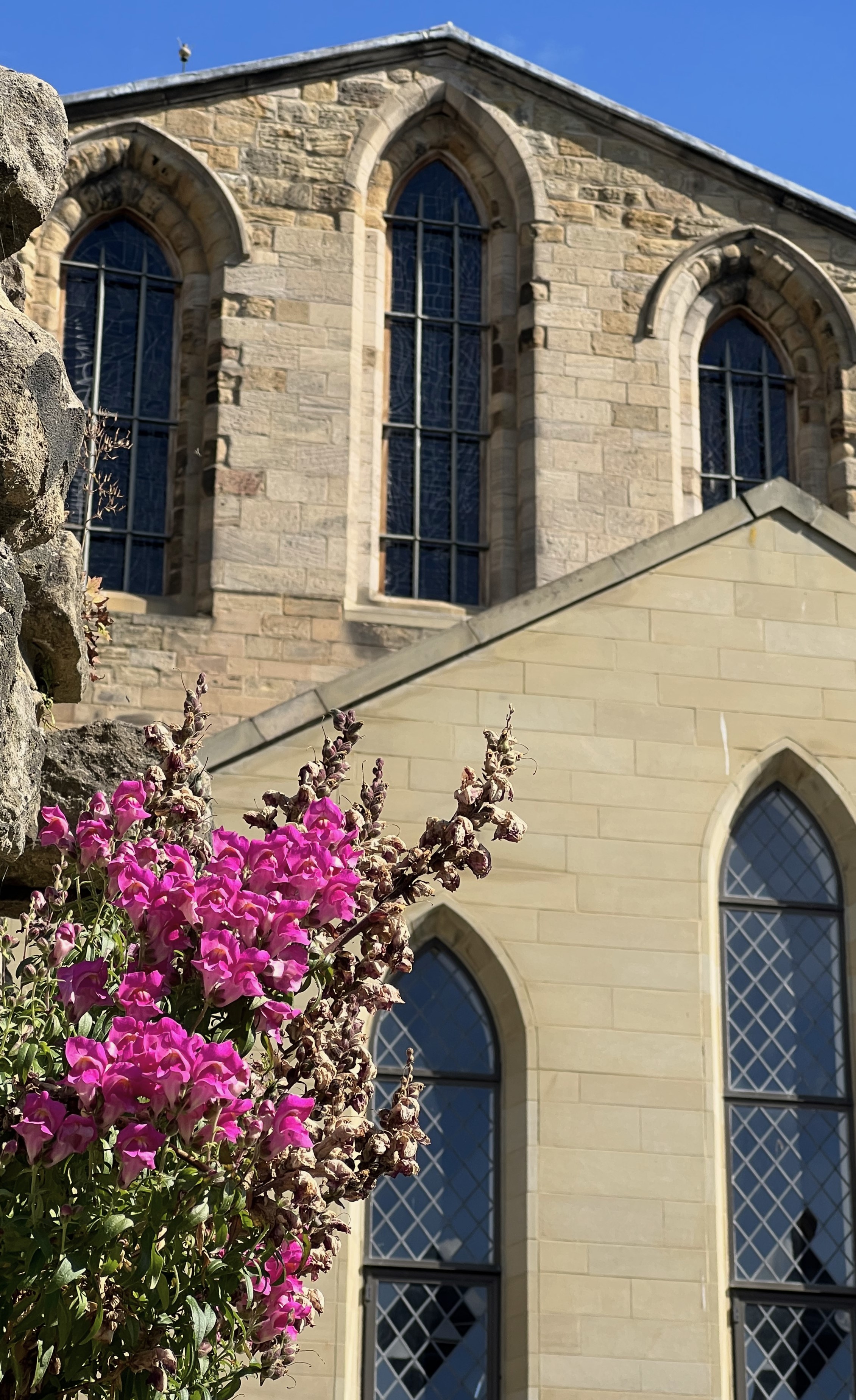
Snapdragon; Hexham Abbey, Northumberland

Snapdragon or Antirrhinum is a garden plant which has long been established in the wild. It is not native being from the Mediterranean and SW Europe. It was first grown here in gardens during Elizabethan times. It has a striking flower which is usually in a rich pink colour although garden varieties can come in various shades, white, cream, yellow and all stations from pink through to purple. The flower is perhaps reminiscent of a dragon and it does snap shut with the upper and lower parts coming together quite strongly. The only pollinators that can force their way into the flower is the larger bumble bees. I remember as a small boy being fascinated by the bumble bees pushing their way into the flowers and then backing out covered in pollen, also along with many other children I would pull one of the flowers away from the flower head and then you could squeeze the sides and the mouth would open.

It is an annual or short-lived perennial herb and is widely naturalised on old walls, waysides, pavement cracks, waste ground and rubbish tips. Populations can be long-lived, and the species reproduces readily from seed. It is less common in the North and in Scotland so Hexham is towards its upper limit. It is usually found close to habitation. It is quite tolerant of dry conditions, it prefers a pH of 7 and is not that frost hardy, thus its preference for southern Britain.

Hexham Abbey was built between 674 and 678, and much of the stone came from the remains of Roman buildings in Corbridge which is three miles away. It was Queen Etheldreda who gave the land to Wilfrid Bishop of York in 673 or 4 and thus it is one of the earliest Christian sites in the UK. What you see today is not what was built back then, it was largely replaced in the 12th and 13th century between 1170 through to 1250. Subsequent additions have been made, but given that every phase of building has been done in the same light honey coloured stone, it helps give the whole building a unity of form.

What does remain of the original church is the crypt and there you can see many roman stones including one that has the names of three emperors engraved into it Septimus Severus ( 193 to 211AD ) and his sons Marcus Aurelius ( 198 to 217 AD) and Geta. The three ruled as a triumvirate after Severus appointed his sons as joint rulers in 198 but when Severus died in 211 then the two sons ruled together but not that harmoniously.

Today the Abbey is well worth a visit, located in the very centre of Hexham and it does have a pleasant court yard with surrounding gardens and an excellent tea room. I was visiting the area with Dr Colin Harwood and thanks have to go to him for the photographs. He obliged by taking the pictures as I had left my camera back at base. As you can see both pink and white varieties grow on the walls.

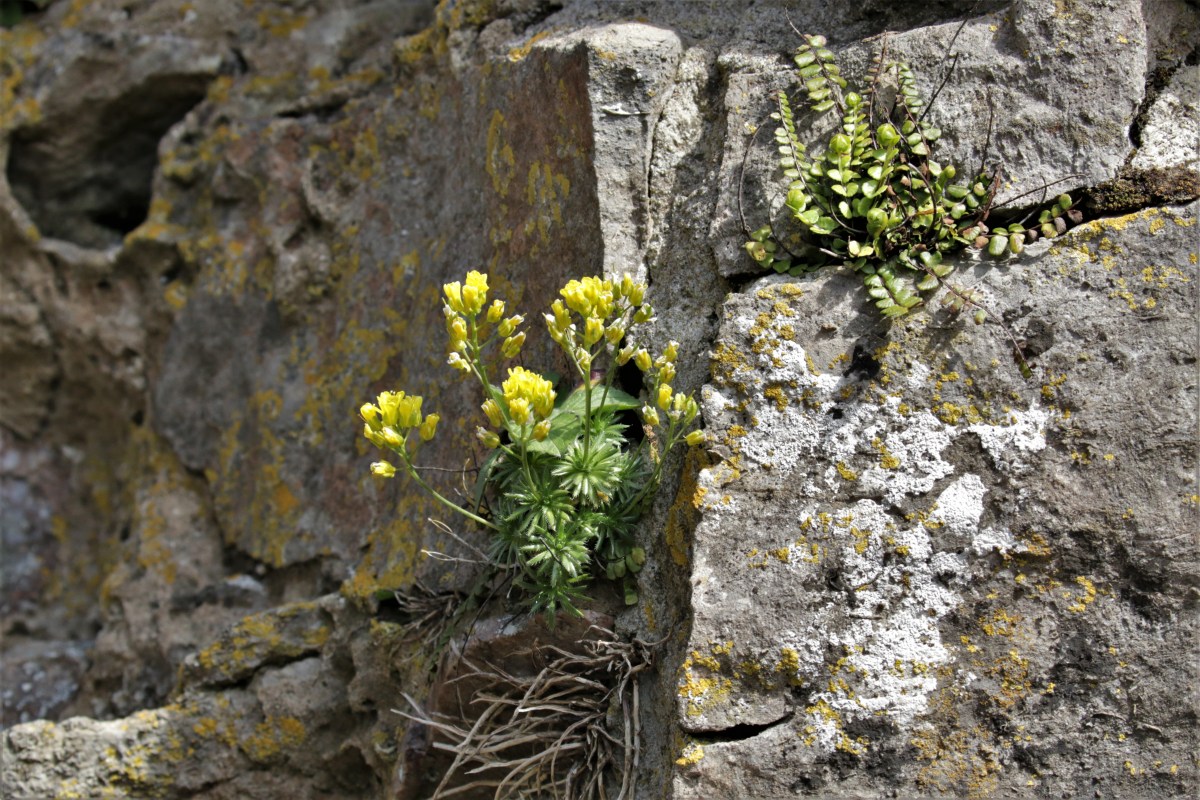
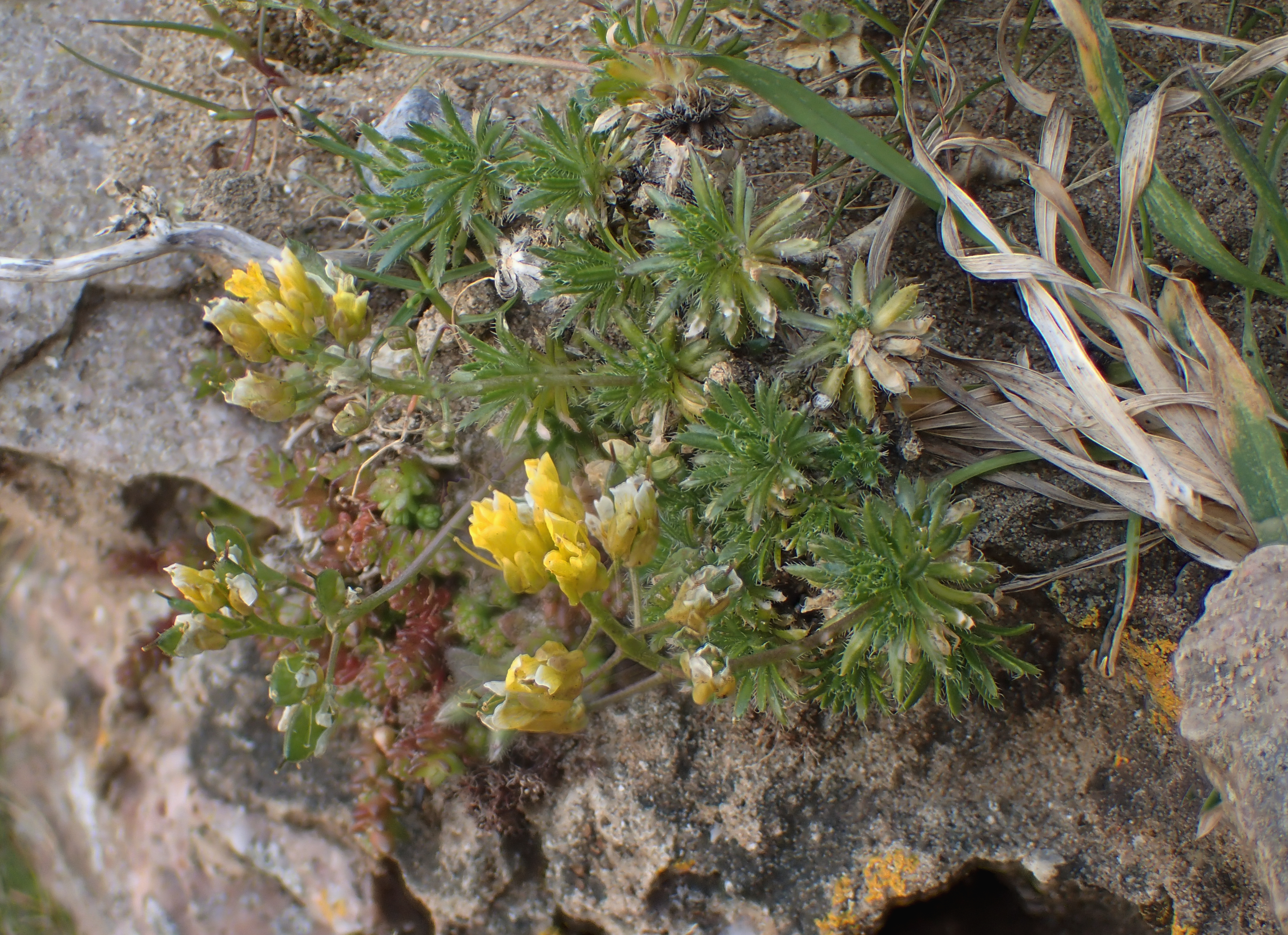
Yellow Whitlowgrass ( Draba azoides) and Pennard Castle, Gower.

This is a plant surviving from the times prior to our last ice age, but only just.

It is limited to a small section of limestone cliffs on the south of the Gower peninsula from Pwlldu to Tears point, which has Oxwich bay in the centre so it only adds up to about 17Km or 10 miles of cliff. It is estimated that there are no more than about a thousand specimens in this area. Pennard castle which was constructed from the local limestone also supports a small population. Two things point to this plant being a survivor from before the last Ice Age. In the vicinity a 33,000 year old skeleton was found, it was named the Red Lady of Paviland because the bones were died red but it was subsequently determined that it was a man not a woman. Now the significance of this find is that it points to the fact that despite the cold it was possible to inhabit this region at what would have been the height of the last Ice age, so if humans could survive there then plants and other animals would presumably also be able to cope. These regions where life was able to carry on during the last ice age are known as ice-age refugiums. The ice cap only came down (roughly) as far as a line from Humber to the Severn so whilst conditions south of this would have been harsh these regions possibly because of the local topography were able to support life.

The yellow dots on the walls to the left of the window are patches of Yellow Whitlowgrass in flower.

Further evidence comes from DNA analysis which shows that the individuals growing in south wales are quite distinct from those on the continent suggesting that this is a continuous line of colonisation and not a reintroduction after the ice age as is the case with most of our flowering plants.

In Continental Europe it has a mainly alpine distribution, occurring between 900 and 3,400 m in the Alps and extending eastwards from the Pyrenees to the Carpathians, and westwards from the Alps to the Jura. A small isolated population in the Ardennes appears to be a pioneer one, not a relict. It is decreasing in places mainly owing to habitat destruction caused by road widening, afforestation or tourist pressures.

Pennard Castle was first built in 1107 by Henry de Beaumont, Earl of Warwick after he had been granted Lordship of Gower by Henry 1 and is believed to be one of at least 7 built by him on  the Gower. The reason was because local Welsh tribes were not so happy with the Norman take over.  The initial castle was a timber ringwork – common following the Norman invasion and consisting of a defensive ditch, ramparts and a timber hall. later the limestone structure replaced the timber. The castle was only occupied until the 1600’s and has gradually declined ever since helped by the wind blown sand etching away at it. Restoration work has been carried out in recent years. On my visit a local who knew all about the importance of the site and the presence of the extremely rare plant told us that a misguided but well intentioned local had carried out some repointing on his own initiative and this had resulted in a big decline in the Yellow Whitlowgrass population. Careful management is needed to preserve this species which so far has survived for maybe 100,000 years.

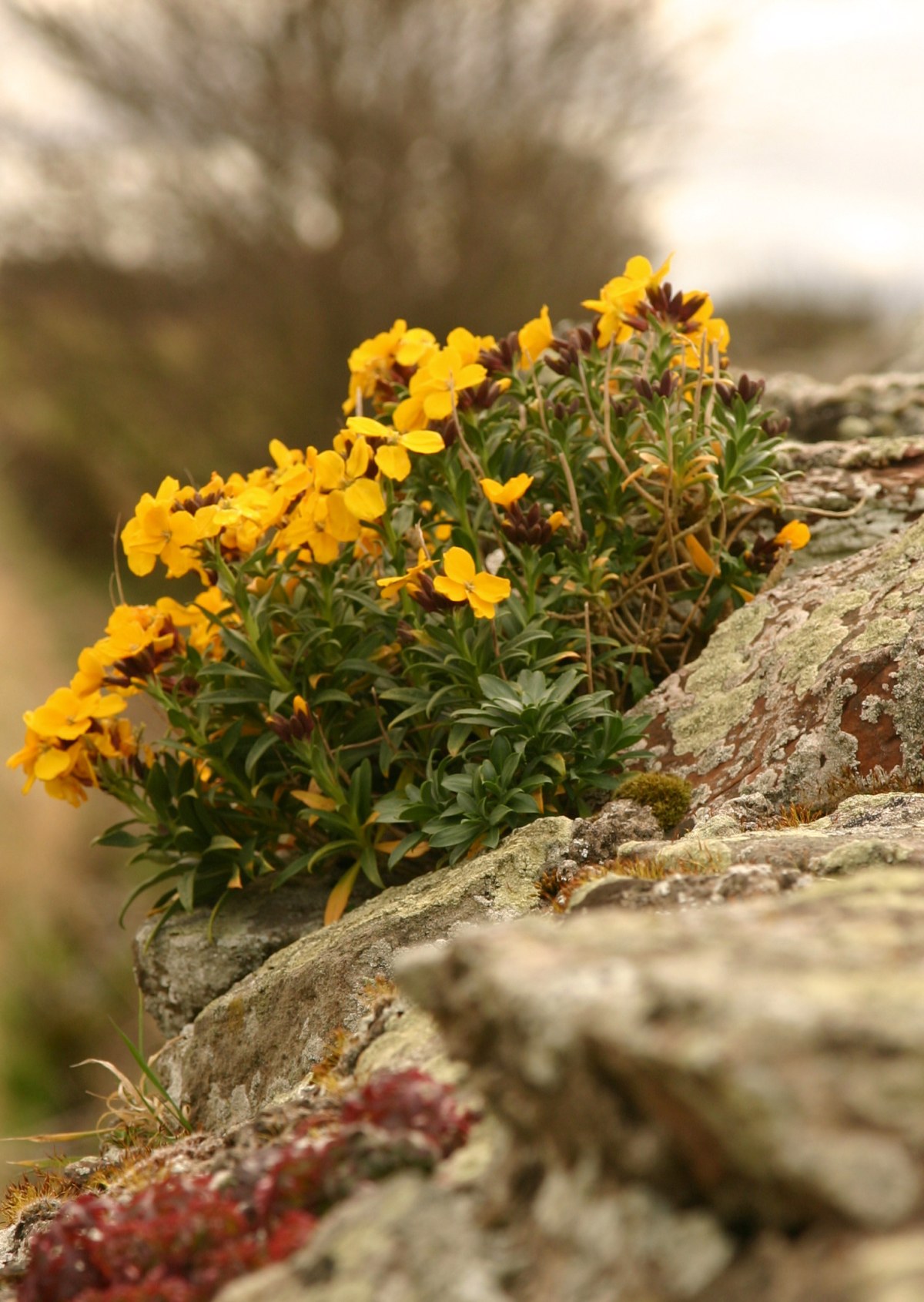
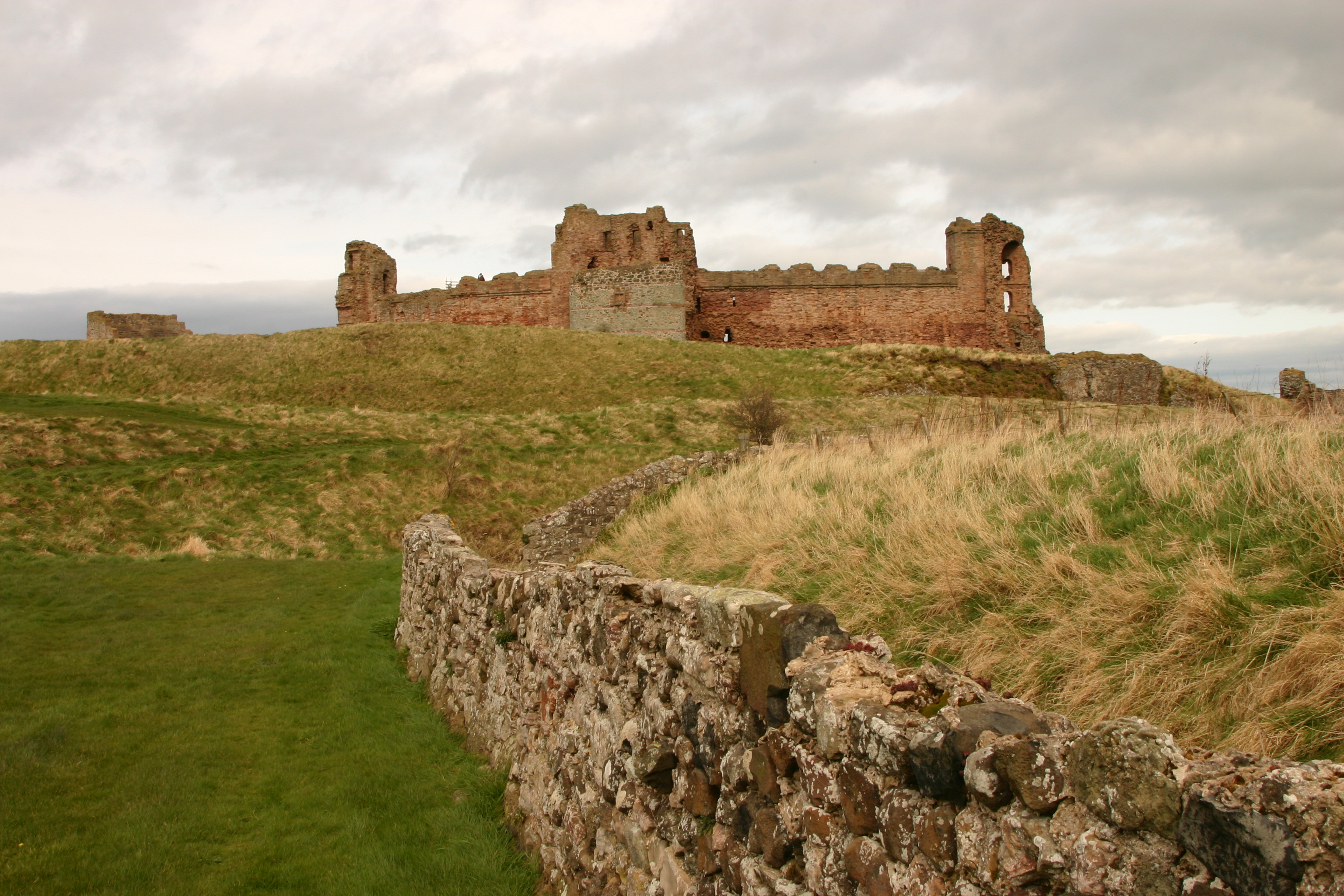
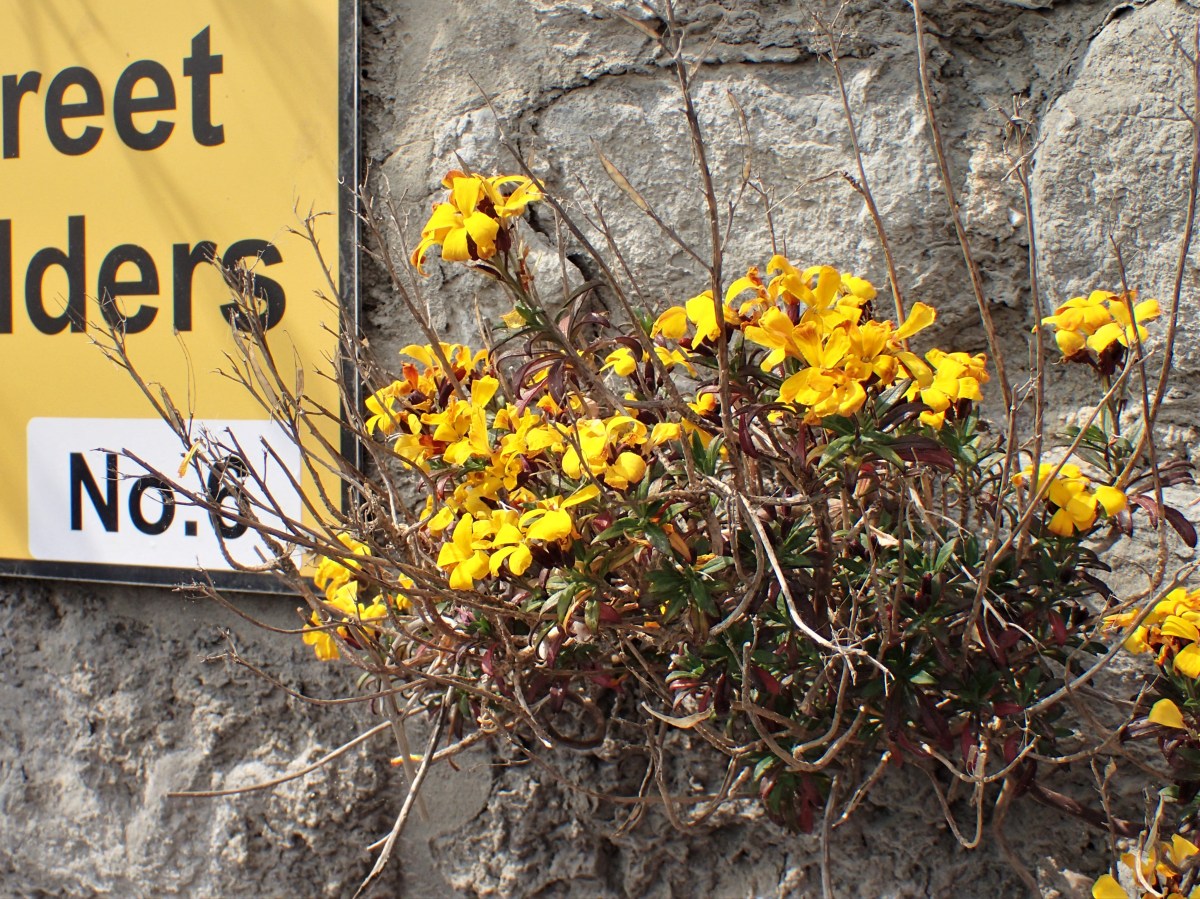
Wallflower and Tantallon Castle Scotland

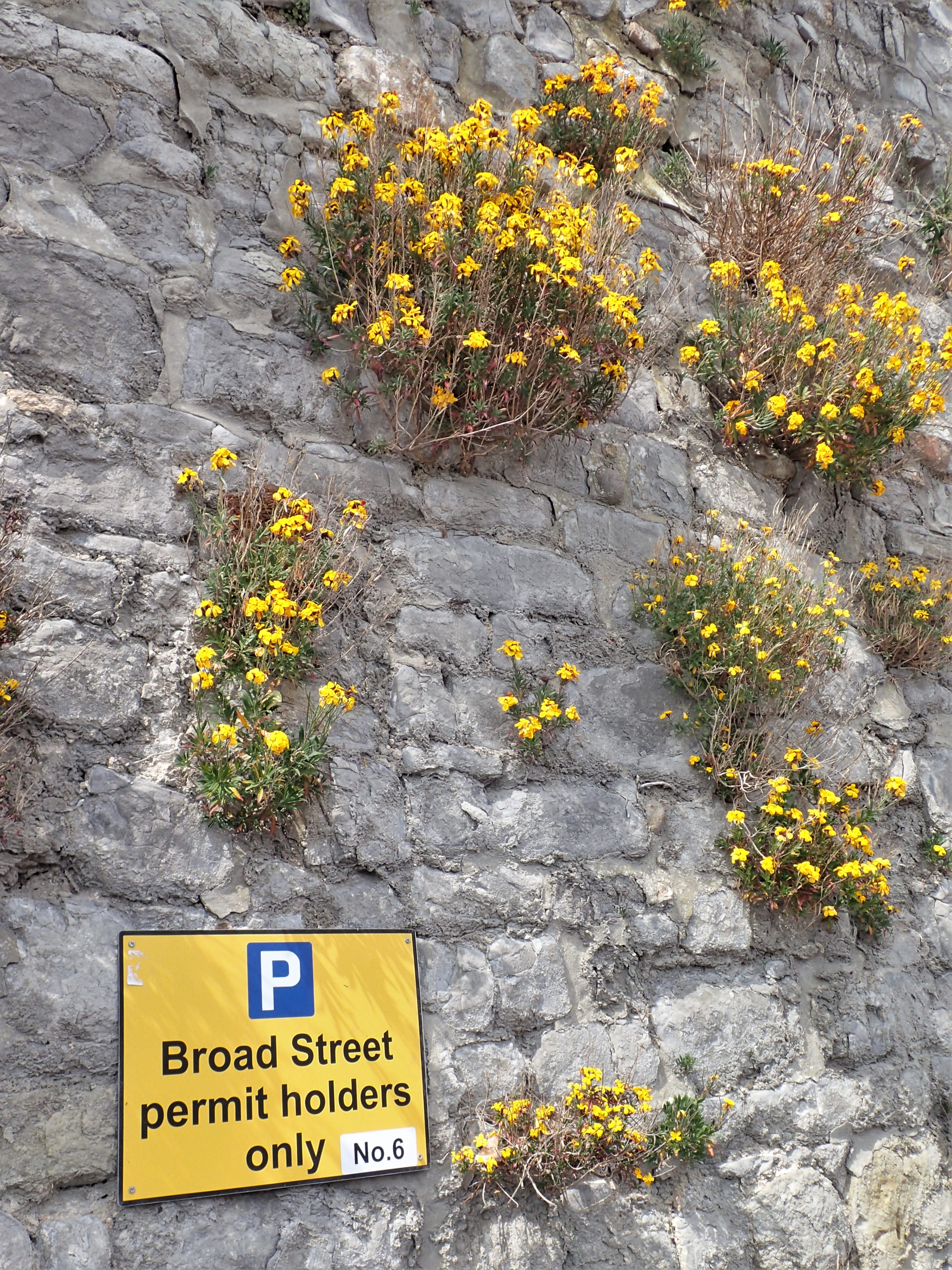
The Wallflower is one of the plant species with which most people are familiar. It is often to be found growing out of walls which, given its name, is just as well but it is also a garden flower. It is not originally from Britain but from southern European and is found right across the Mediterranean and Aegean areas. It has been used throughout time for various medicinal purposes and the list is quite long. It was used by Roman soldiers to treat wounds, a tincture was used to reduce tooth ache, it has been used to treat rheumatism and gout, to bring on menstruation when periods were late and so it goes on. It does contain a substance called cheiranthin which is similar to digitalis derived from Foxgloves which affects the heart rate.

An early reference to the plant appears in a work by Pliny the Elder writing in the first century AD. Some suggest that it was introduced into Britain following the Norman invasion but I see no reason why it could not have arrived much earlier, possibly with the Romans. Either way it has been here a long time. The first record of it growing wild appears in 1548, and there is one in 1777 when Edward Jacob, a local naturalist, records it as Wild Chier growing ‘on old walls and being very uncommon.’ It is now quite common but is recorded less further north and is still uncommon in Scotland, no doubt reflecting its southern European origin. Despite this I found it growing from some of the walls surrounding Tantallon Castle in East Lothian.

It was originally classified as Cherianthus cheiri by Linnaeus but it is now called Erysimum cheiri. The cheiri derives from the Greek word for hand as it was often used in small bouquets held in the hand. It is in the Cruciferae family along with cabbages, brussel sprouts and turnips and as such it has a simple flower structure composed of four petals in a cross. Like most of the family the wild form has yellow petals, but over the years a range of different garden varieties have been bred so that colours ranging from Red to yellow, purple and brown are all available. Personally I prefer the brown or yellow types . It is often grown by gardeners as a biennial. Bundles of bare rooted young plants can be purchased in the autumn and planted out to flower the following year. However if they are left in place and they will go on to flower for several more years. They flower in the Spring and have a wonderful scent. The petals have a velvety texture and they are much appreciated by bees and other insects.

Not all Wallflowers grow on castle walls.

Tantallon Castle is a ruined mid fourteenth century fortress, located three miles east of North Berwick, in East Lothian, Scotland. It sits atop a promontory opposite the Bass Rock, looking out onto the Firth of Forth. The last medieval curtain wall castle to be constructed in Scotland, Tantallon comprises a single wall blocking off the headland, with the other three sides naturally protected by sea cliffs. It was the home of the Douglas clan.

In 1354, William Douglas was given the estates of his father, Sir Archibald Douglas and his uncle, the ‘Good Sir James Douglas’ who was a close friend of Robert the Bruce. These estates included the barony of North Berwick.

William was made Earl of Douglas in 1358 , by which time masons may already have begun to build Tantallon.

The house of Douglas split into two branches in the 1380s: the ‘Black’ and the ‘Red’. Tantallon passed to the junior line, the Earls of Angus known as the ‘Red Douglases’. They owned the castle for the next three hundren years, often clashing with the Crown.

It is possible to see Gannets from the castle. They make Bass Rock look almost white which is no doubt the result of the combined effect of their plumage and the guano. Eider ducks can also be seen,often close to the shore line.

The demise of the castle came during the Civil War when Cromwell sent two to three thousand troops led by General Monck along with much of the artillery located in Scotland, to lay siege to Tantallon. After twelve days of bombardment with cannon a breach was made in the Douglas Tower. The defenders were compelled to surrender. After the siege Tantallon was left in ruins and it was never repaired or inhabited thereafter.

Climbing Corydalis and The Watch Tower Ninewells Wood

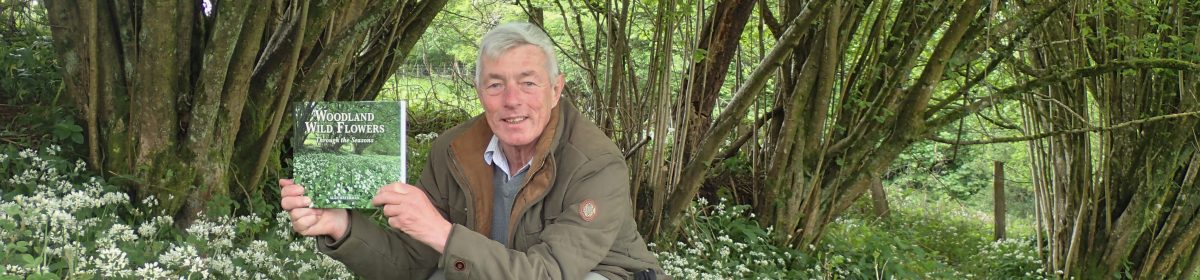
Climbing Corydalis is a delicate little plant it is sort of an annual but it can live longer than a year and often germinates in late Autumn and I have seen it flowering during the winter so it is a bit ‘all over the place’ which also describes its way of growing. It spreads and can climb but it needs help, by the watch tower it is sort of extending up the sides but it is not an out and out climber. It has compound leaves which do have little tendrils on the ends but they are not that strong. The flowers are small and creamy white, it is related closely to the fumitories and has a similar almost pea shaped flower. It grows in shaded woodland and is often found on walls that are shady and surrounding woodland, There is a lot of it in places along the tops of the walls at Ninewells wood but it also grows on the woodland floor especially if there is no competing taller vegetation like Bracken. There is more about Climbing Corydalis in my book Woodland Wild Flowers.

Surrounding parts of Ninewells wood in Monmouthshire there is a substantial wall and located at the top corner looking out towards the Bristol Channel and the Severn Bridges there is a small circular tower.

Now some say these walls and the tower were constructed by Napoleonic prisoners of war and others say it was Italian PoW’s from the second world war. However, I have not been able to find any hard evidence for either possibility. What I have found is that there were Napoleonic PoW’s in Abergavenny and that is the nearest place to Ninewells wood that I have found. Abergavenny is some distance away and given that transport was not very speedy back then, it makes me think that the Napoleonic connection is somewhat tenuous. On the other hand there were a lot of second world war PoW camps in the area. There was one at Chepstow at a camp called the Mount and that had 197 occupants. Also there were 3 camps in Abergavenny, Claremont housing 29, Mardy housing 118 and Llanover Park Camp housing 200 and of course transporting men from further afield was more possible in the 1940’s. I do not know if the PoW’s were Italian or maybe German.

The story is that the tower was constructed so that an overseer could keep watch on the prisoners as they constructed the other walls which mark out the fields to the south and west of Ninewells wood. The walls are certainly well constructed and quite thick, they do have some trees growing out of them

Paul Chamberlain, author of ‘Hell Upon Water: Prisoners of War in Britain 1793-1815’ said: “The French Revolutionary and Napoleonic Wars represented something of a watershed for European combat, as they were the first major conflicts during which large numbers of surrendering troops were taken prisoner rather than slaughtered.

“From 1793 until 1814, over 200,000 French and French allies were held as PoWs, and whilst it’s impossible to put a definite figure on it, several thousand of them would have been held in Wales.

“But the story that they built some of the walls in the area is a local myth, as PoWs were not used on construction projects as it took work away from the civilian workforce.”

There is a good web site about The walls of the Wye Valley and in this it is suggested that the walls near Ninewells wood may be the work of Monks from Tintern Abbey. The stones used in the construction of the walls and tower are all faced and the ones in the tower have a curved exterior which would have taken some time and skill to produce. The question is why was the tower constructed if it was not a watch tower to oversee prisoners? Could it have been used as a beacon for a fire to light up and transmit a messages regarding an invasion? It is located in a position where it could be seen from a long way off..

There are quite a few references to walls being constructed by prisoners of war but it is all conjecture based on earlier references and I have not found any firm evidence. What I can say is that the walls and the tower are very well constructed and apart from some damage to the tower, the walls are in good condition suggesting either a high degree of maintenance or that they are not that old. Also there are some trees growing close to or out of the wall however none look to be more than 50 years old. Also the number of species growing on the walls and tower are not that extensive. There are a few grasses and Polypody Fern, some Sorrel and Climbing Corydalis.

Pellitory of the Wall and Baltimore bay.

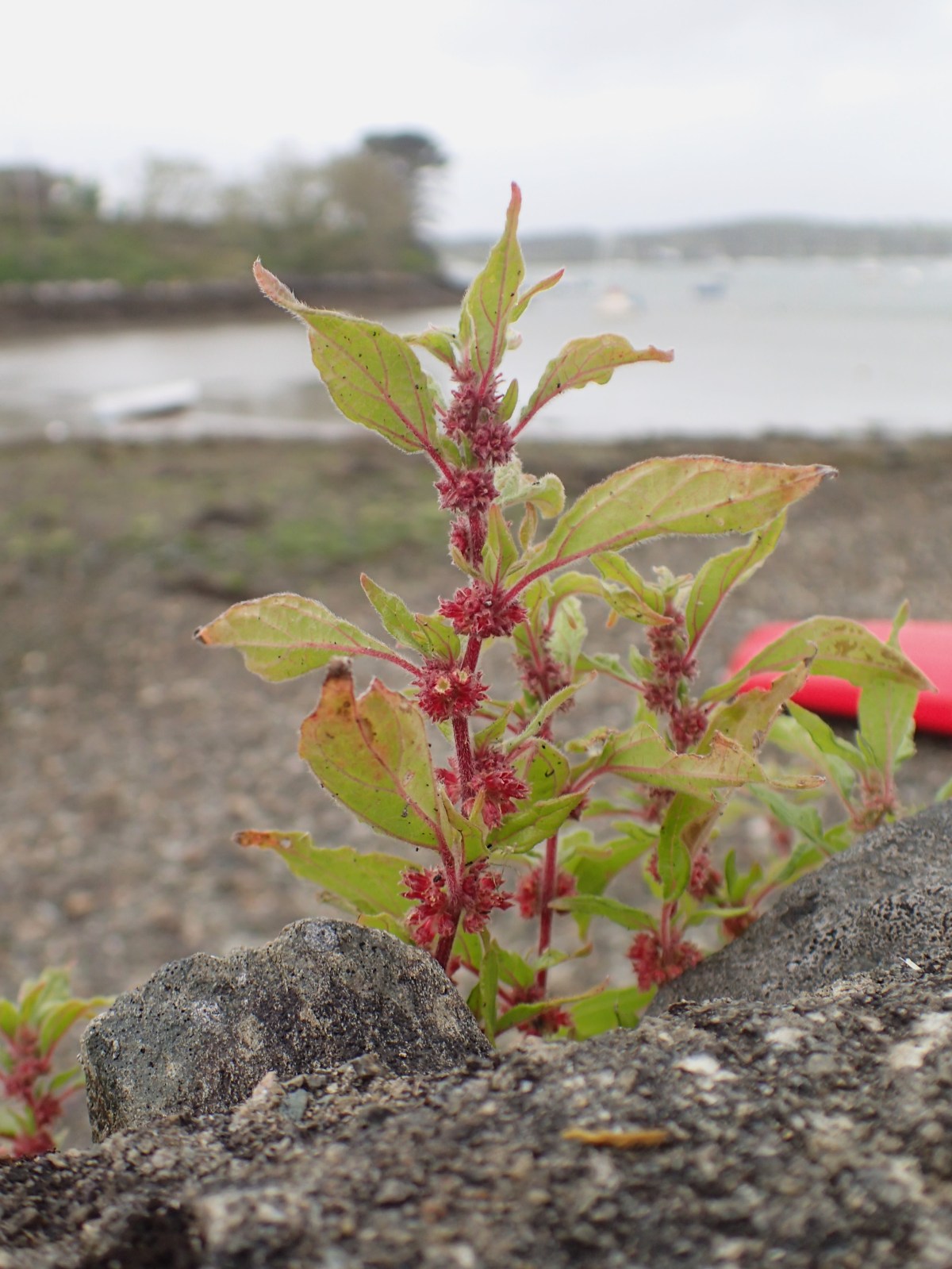
Pellitory of the Wall is an odd sort of name but it does indicate that this plant is almost always associated with walls. The pellitory part comes from peletre which is Old French  or piretre, also from Latin pyrethrum, from Greek purethron, and from pur fire, due to hot pungent taste of the root

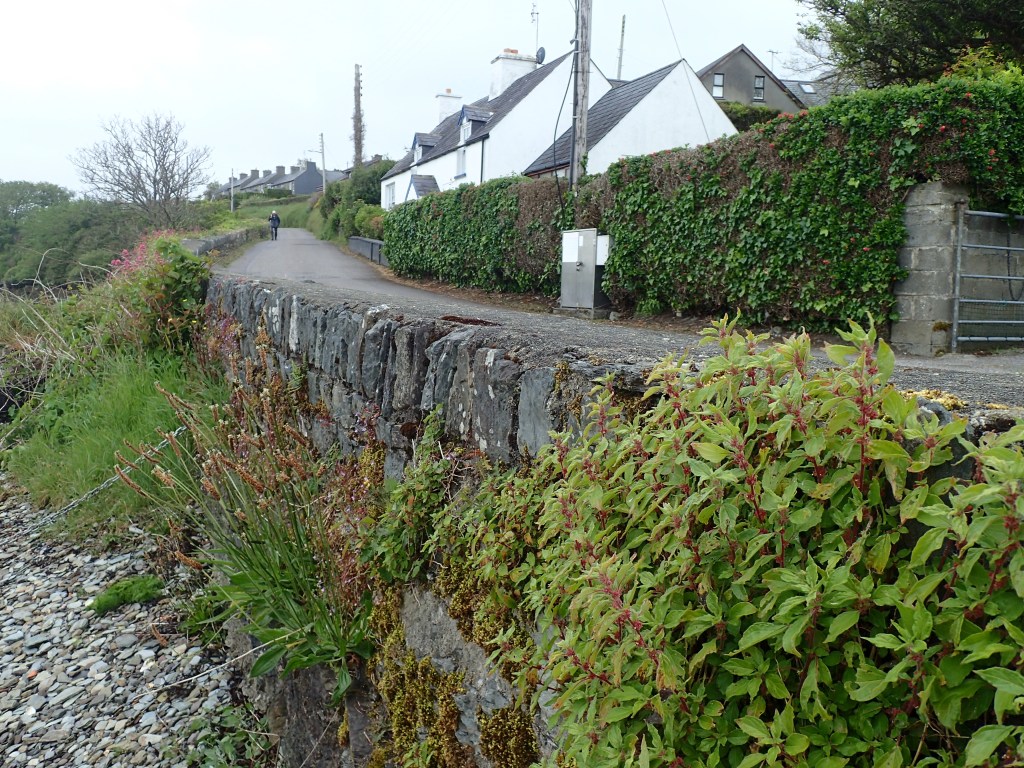
This one was growing out of a harbour wall in Baltimore southern Ireland however it is not found just by the coast but often inland.. I have seen it growing out of old castle walls, I have seen it in southern France and in some Roman ruins in Spain . It also grows close to my home, out of the walls of Tintern Abbey.

Its scientific name is Parietaria judaica, and it has a couple of common names, spreading pellitory or pellitory of the wall. This is a herbaceous perennial and is in the nettle family Urticacae, its flowers are quite similar to those of the Stinging nettle though they are red in colour.. The plant’s pollen is highly allergenic and can cause asthma, in fact in Australia its common name is Asthma weed.

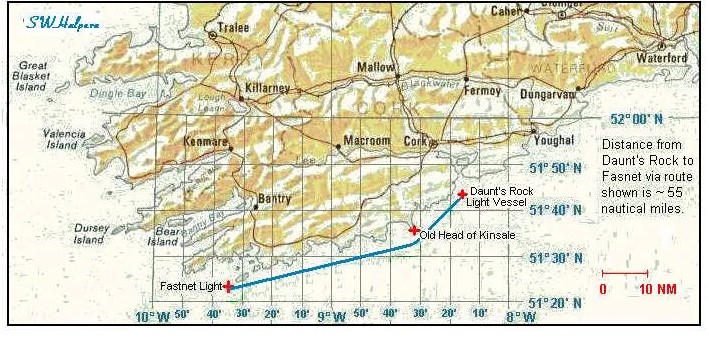
Baltimore is at the very tip of Ireland , next stop the Fastnet Lighthouse and then America; the Titanic sailed past this last point of land on the south coast of Ireland on 11th April 1912. Some of the passengers would no doubt have been on deck looking out as Ireland disappeared into the distance, and for many it was the last sight of land they would ever see. It had set sail from Queenstown which is just outside Cork at around 1.30pm on 11th April. I say around 1.30 because some accounts say 1.30pm, others say 1.40pm and some even 1.55pm. Given that this crossing was also going to be an attempt to break the record for a transatlantic journey I would have thought and accurate record of the exact start time was a prerequisite. It made a brief stop at the Daunt Lightship so that the local pilot could disembark and then it was full steam ahead. It would have probably passed Baltimore just about one hour later.

(Baltimore is on the coast due south of Bantry)

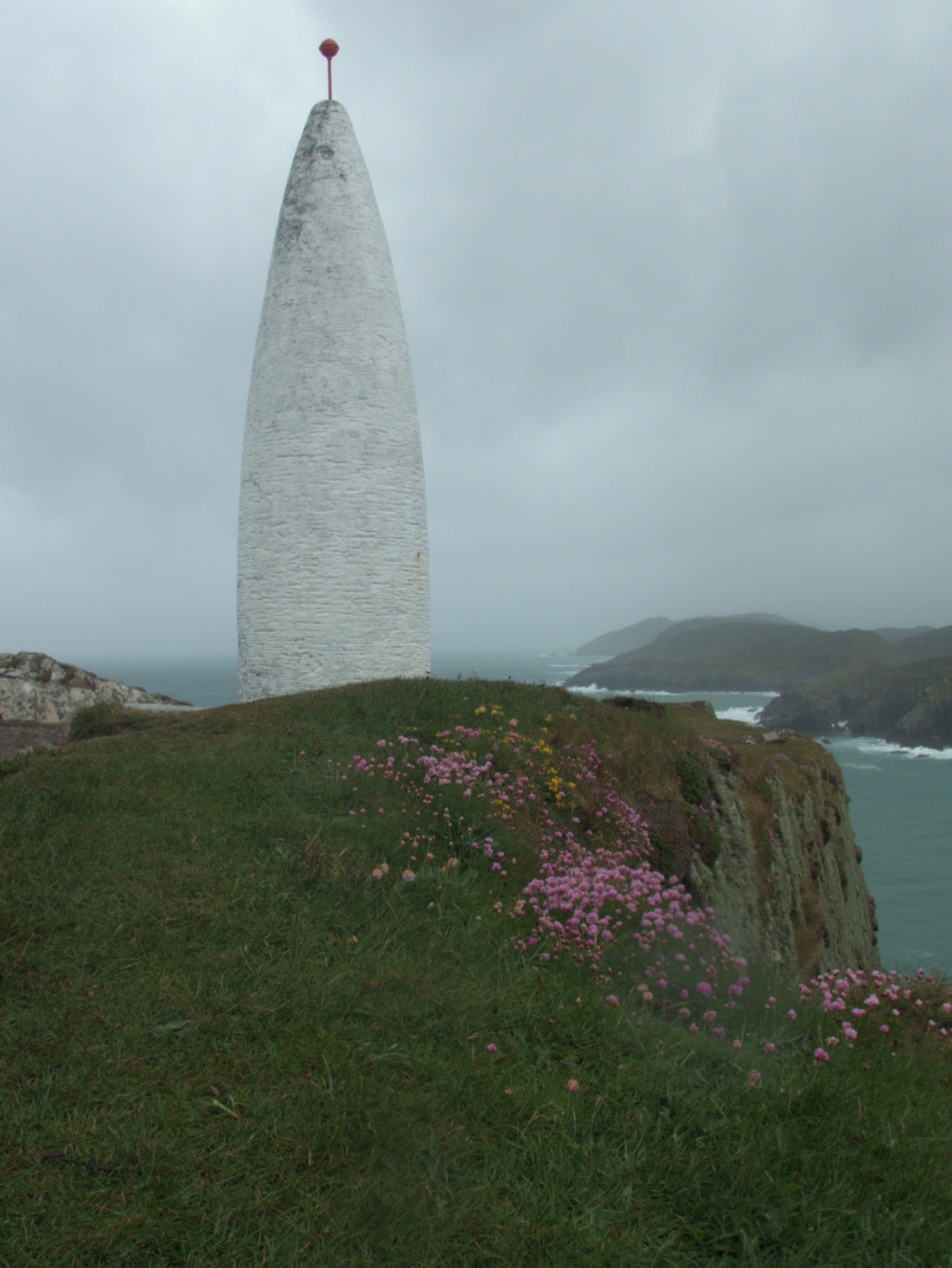
Had you been stood by this wall that is just a short distance along from the harbour at Baltimore you probably would not have seen the Titanic, your view would have been blocked but had you walked on a short distance up to the beacon then you almost certainly would have seen her out in the distance, on route for the Fastnet Light house and then the broad Atlantic ocean.

However a lot would have depended on the visibility, on the day I went up to the beacon you would not have spotted a rowing boat one hundred yards off shore, though I suspect most rowing boats would have not ventured out in that weather.

Contents;

Species Selected

Greater Celandine

Fumitory species

Climbing Corydalis; and The Watch Tower, Ninewells Wood, Monmouthshire

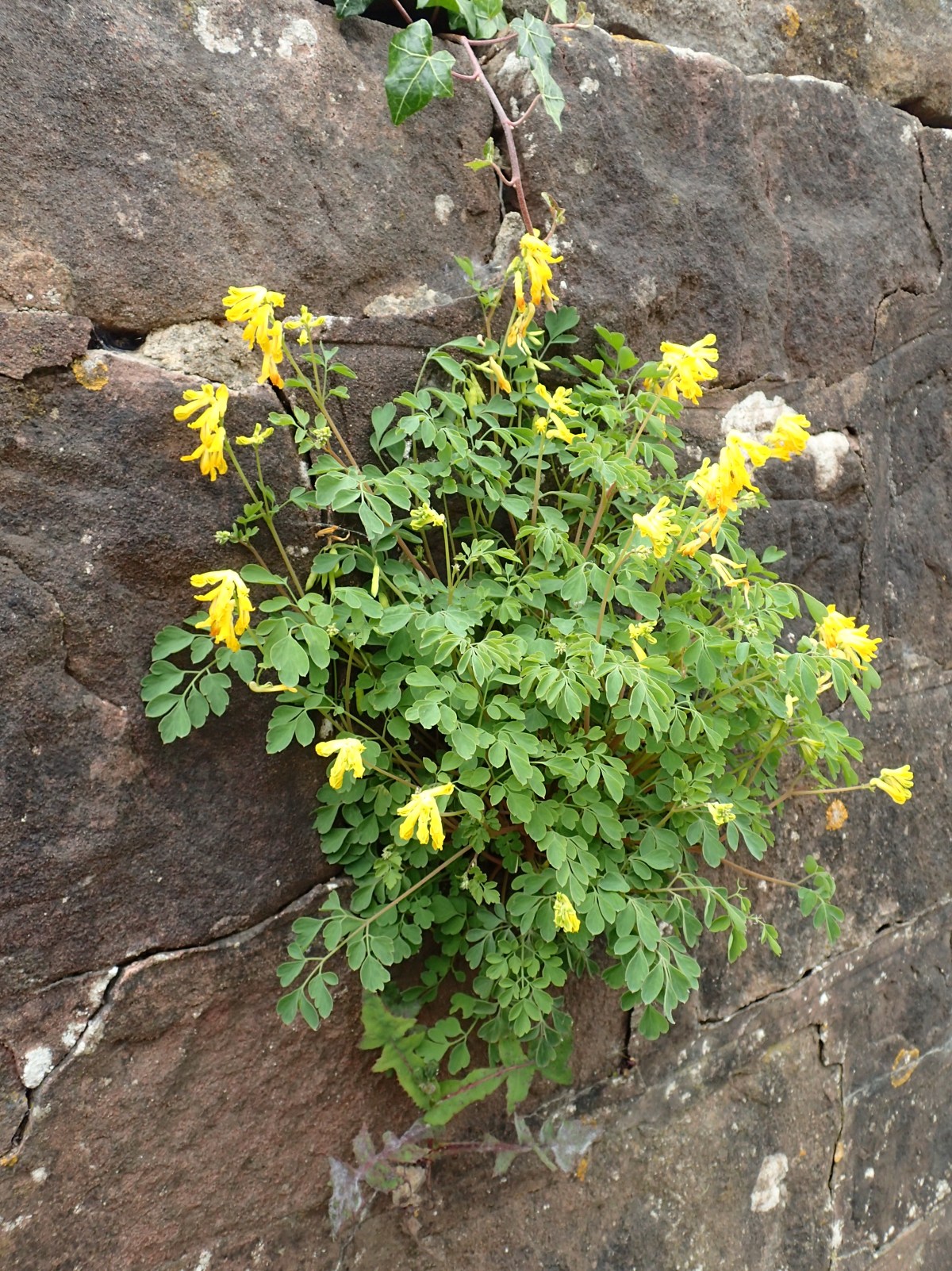
Yellow Corydalis

Pellitory of the Wall; on the Sea Wall, Baltimore, Ireland

Mind your own business

Sticky Mouse-ear

Snow in Summer

Sandwort species

Rock Sea-spurrey

Procumbent Pearlwort

Fiddle Dock

Violet species

Wallflower; and Tantallon Castle Berwickshire Scotland.

Yellow Whitlowgrass; and Pennard Castle, The Gower.

Common Whitlow grass

Wall Rocket

Bittercress

Sweet Alison

Hutchinsia

Aubretia

Rue-leaved Saxifrage

Stonecrop species

Navelwort

House leek

Wild Strawberry

Kidney Vetch

Rosebay Willowherb; and Escomb Saxon Church Co.Durham

Herb Robert

Cranesbill species

Bittersweet

Marjoram

Bugle

Wall Germander

Dark Mullein; and The Roman Theatre at Verulamium (St Albans)

Ivy-leaved Toadflax

Trailing Snapdragon

Snapdragon; and Hexham Abbey, Northumberland

Fairy Foxglove; The ‘Old Bridge’ Ilkley.

Speedwell species

Harebell; and Milecastle 37 Hadrian’s Wall

Wall Bedstraw

Common Cornsalad

Red Valerian; and Mushet Blast Furnace, Coleford ,Gloucestershire.

Feverfew

Mexican Fleabane; and Diglis Basin Worcester

Wall Lettuce

Wall Cotoneaster

Buddleia; and Chepstow Castle, Monmouthshire.

Ivy

Flattened Meadow Grass

Smooth Meadow Grass

Wall Barley

Hartstongue Fern; and Vinolanda, Hadrians Wall, Northumberland

Polypody species

Rustyback fern

Wall Rue; and Weston Grey, Wiltshire

Maidenhair Spleenwort; and Tintern Abbey, Monmouthshire.

Black Spleenwort; and Wall, near Litchfield, Staffordshire.

Maidenhair Fern

That is 60 but some like stonecrop covers several species, Biting Stonecrop also known as Wall Pepper then there is Thick-leaved Stonecrop, White Stonecrop and Large Rock Stonecrop.

Background

My Back Wall

Walls and Flowers; Conception to fruition

Wall Animals

The Wall environment; Life on the Wall

Drystone Walls

Mosses and Lichens on Walls

The History of Hadrian’s Wall, from the wildflowers perspective.

Gertrude Jekyll, Walls and steps

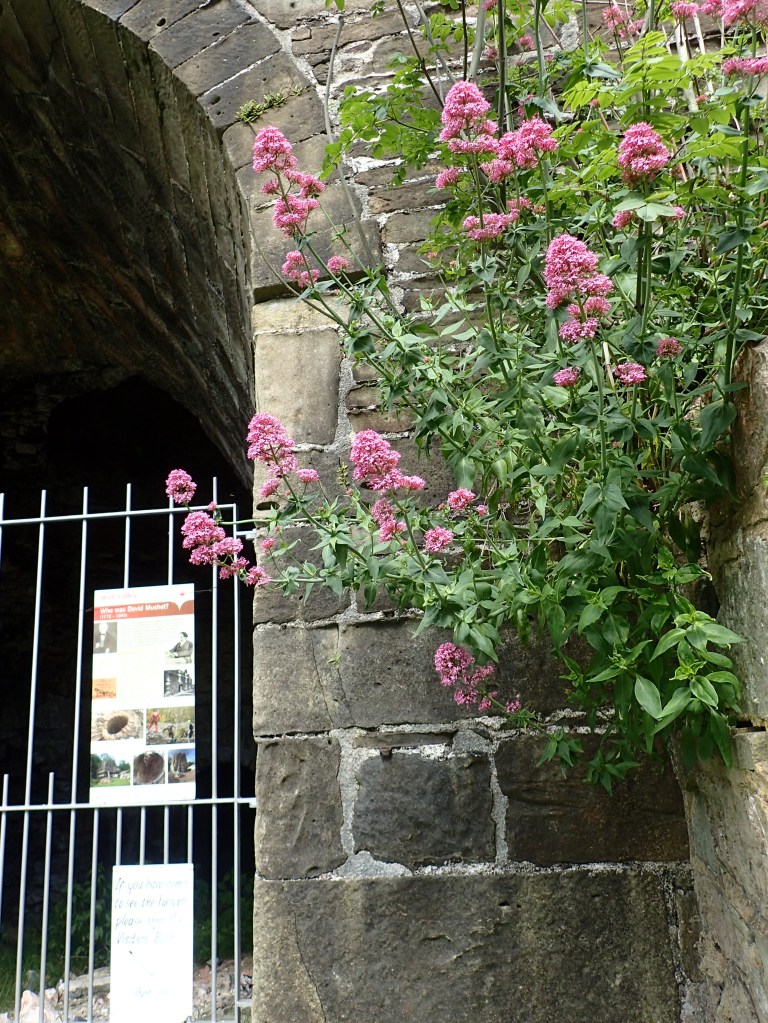
Red Valerian and the Mushet Iron Foundry

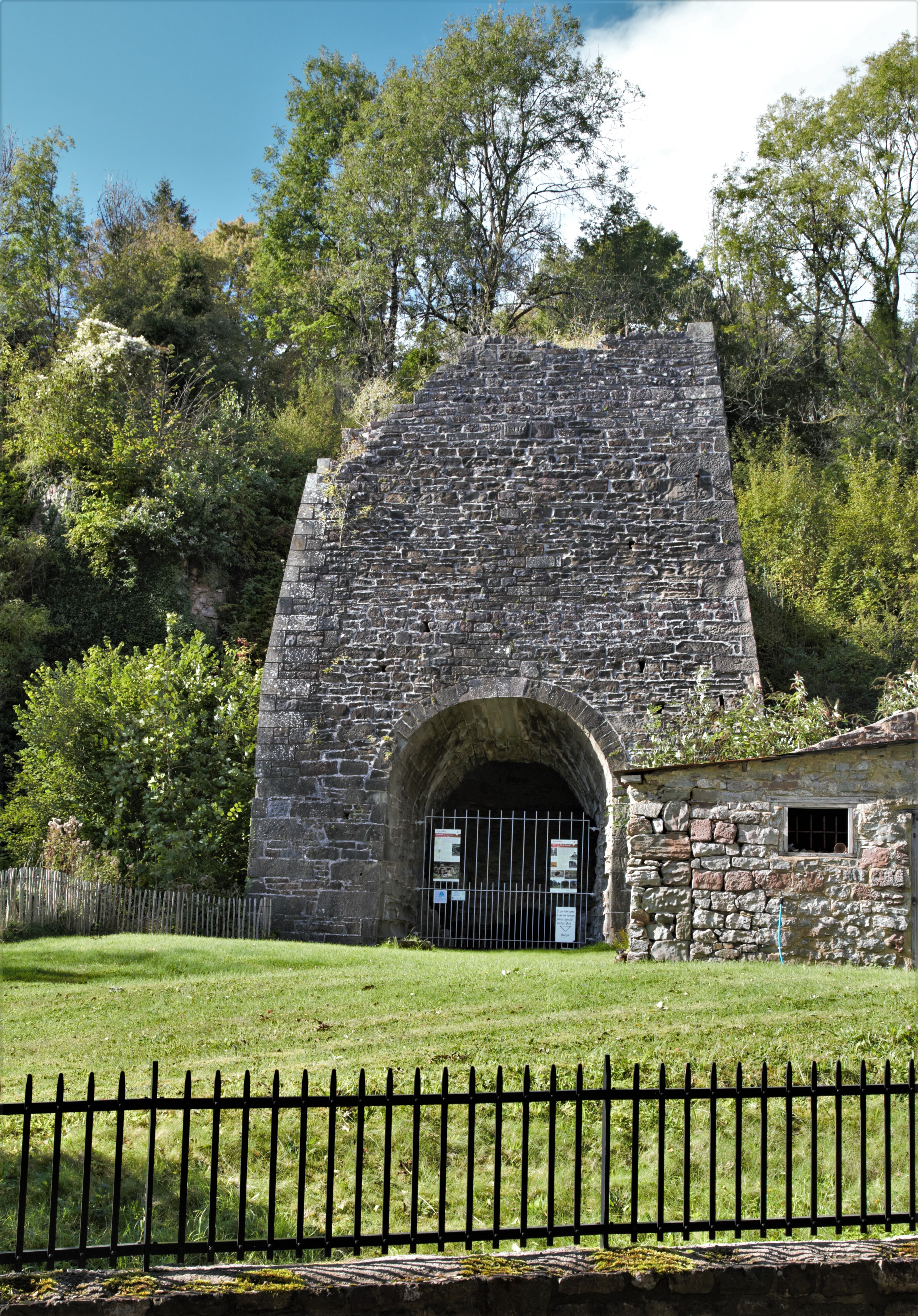
Whitecliff Blast Furnace

The plant growing out of the side of the furnace is a pink version of Red Valerian which may also be white. It is often found near the coast and it is not uncommon to see it growing out of sea cliffs. Although regularly to be found in walls this is not exclusively the case. It is a perennial and some of the leaves usually remain throughout the winter.  In spring it returns to grow up into its branching form, reaching a height of about seventy-five centimetres. Flowering starts from early May and continues right through to October. The flowers are quite striking, especially the dark magenta ones.  They have five petals which then fuse into a tube and extend back into a long spur. This suggests that pollination is carried out by insects with long tongues. I have seen the hummingbird hawk moth, Macroglossum stellatarum visiting these flowers. They are quite fragrant which will also help to attract the moths.

David Mushet( 1772 – 1845) was an expert in iron and steel. He was born in Scotland but moved down to Gloucestershire and the Forest of Dean after a stint at Alfreton in Derbyshire. He was brought in by one Thomas Halford who had built two coke fired furnaces at Whitecliff. These early furnaces which pre dated the famous Bessemer converters involved feeding iron ore and coke in at the top. Gradually the material worked its way down getting hotter and hotter until molten iron and slag came out at the bottom. The iron went into sand moulds and formed what were known as pigs of cast iron. Originally iron had been made with charcoal in the Forest of Dean but this later process used the local coal. However the Forest of Dean coal did not produce good coke and the production at Whitecliff was never profitable. Eighty tons of iron ore and a hundred and twenty tons of coke only produced twenty tons of pig iron. Mushet could see that the process was not economically viable and his partnership with Halford was terminated but he went on to develop the nearby Dark Hill Iron Works which was where a lot of research was carried out. He was succeeded by his youngest son Robert who had success in improving the Bessemer process and developing the worlds first highspeed special steels incorporating Tungsten. The Bessemer Process produced poor quality steel, his improvement involved burning off impurities and introducing carbon and manganese. This had the effect of improving the quality of the finished product, increasing its malleability and its ability to withstand rolling and forging at high temperatures. However it was Bessemer who took the credit and indeed a knighthood and Mushet just got a pension from Bessemer, basically to buy him off.

Introduction;

 Walls and Flowers.

There are flowers which grow on walls and there are walls which have flowers growing out of them and this is about both. The plants which have been selected for this book are those which often grow out of walls, some almost exclusively others commonly but not always found on walls. There are many plants that might just grow out of a wall occasionally and these are not included. One has to draw the line somewhere and I drew it at sixty.

Shown above is a superb specimen of Great Mullein. It is unfortunately one of the rejects as it happens to be growing out of a wall but it is not a plant that regularly does so. However the related species, Dark Mullein, does make the cut as it is commonly found on walls and sunny banks. This Great Mullein is the only one I can recall seeing on a wall.

The sixty chosen species include a few grasses which are, after all, flowering plants, and also some ferns which are not. Plants which are almost exclusively found on walls are species such as Ivy-leaved Toadflax, Yellow Corydalis and Mexican Fleabane. These three all happen to be introduced species. Some plants have become so much part of walls that ‘wall’ is part of their name, for example Pellitory of the Wall, Wall Bedstraw, Wall Rue which is a fern and the most famous one of all – the Wallflower.

Pellitory of the Wall

The other aspect of the book is the walls themselves and each plant has been photographed growing on a particular wall which may be famous, may be characteristic of a certain region such as dry stone walls which vary from place to place or it may be just somewhere that I visited.  I will cover walls as far apart as Hadrian’s wall, The Antoine wall (which is even further north), the sea wall at Baltimore in southern Ireland, and closer to my home I have the drystone walls of the Cotswolds and the walls of the first iron smelting works just up the road from where I live.

The flowers obviously predate the walls, so the plants we now find on our walls had to live somewhere before man started his constructions. This would have been cliffs, mountain sides and rocky gravelly places. When man began to put up his buildings, fortifications, and boundary markers the plants were already adapted and could take advantage of these new opportunities. It is a difficult habitat though and I will explore the challenges that colonising walls presents.