Mexican Fleabane and Diglis Basin

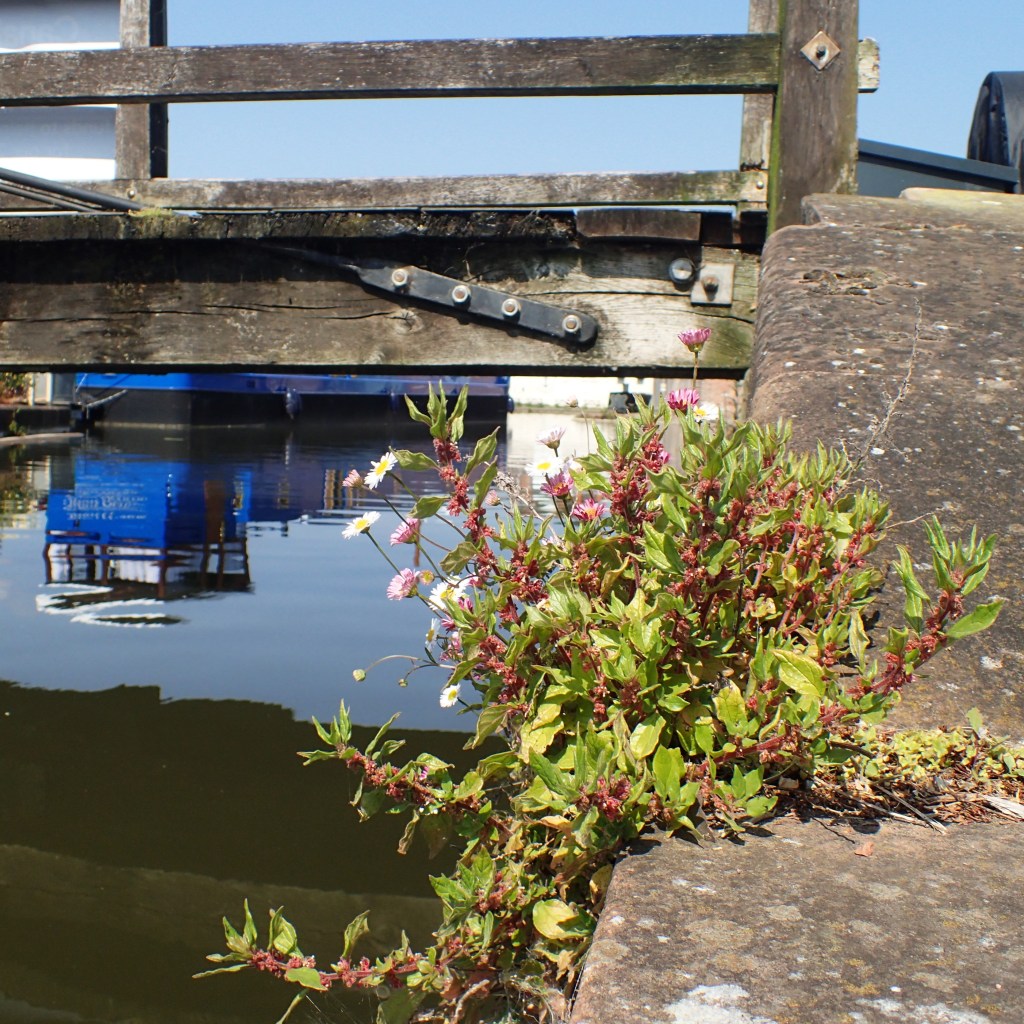
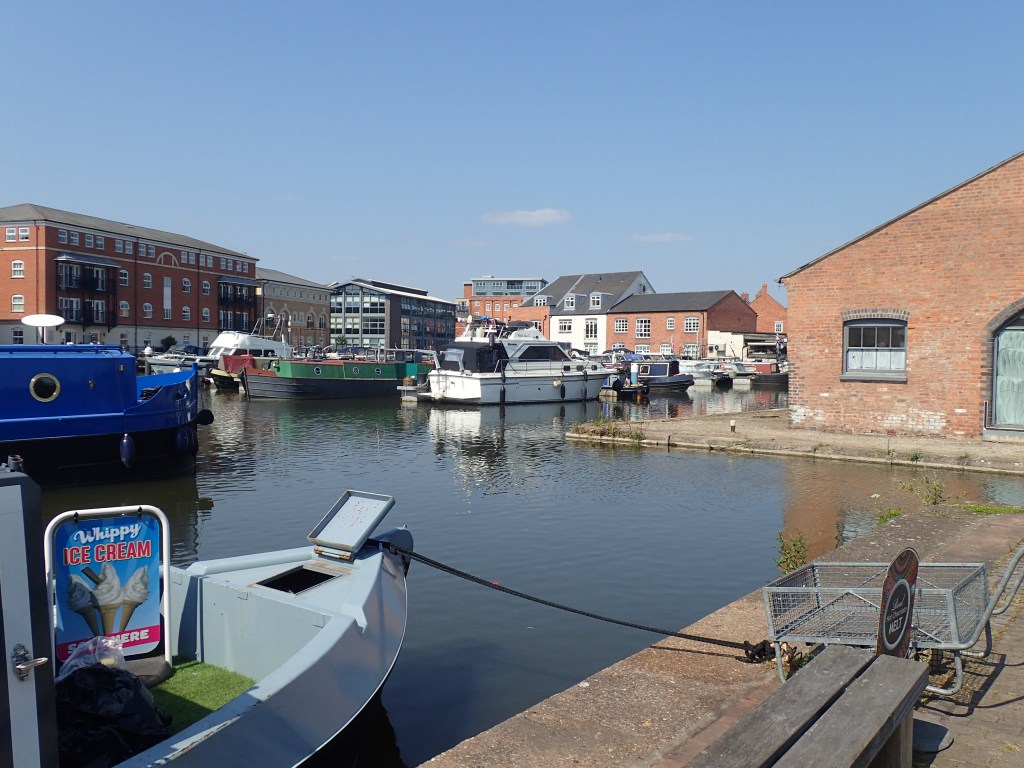
Diglis Basin or to give it its full name Waterside and Marina is at the junction on the River Severn in Worcester and the Birmingham Worcester Canal. On the walls of the canal and marina were various plants but the one that I am featuring here is the Mexican Daisy.

Looks like a Daisy

There was a good mix of wildflowers including the common Pellitory of the Wall along with Valerian and Dock but there was also some Skullcap which is much less common and this was the only place I have seen it growing from a wall. There was also some Marsh Bedstraw. Photographing them was somewhat precarious as it often involved leaning over the wall with the drop down to the water in the lock some distance below!

Here growing mixed with another common wall plant called Pellitory of the Wall.

The connection from Worcester to Birmingham was conceived so that materials could be transported all the way from Gloucester or Bristol by barge into the industrial heart of England. Construction began in 1792, the canal was built to a double barge width as the traffic load was expected to be quite high. One of the beneficiaries was Cadbury chocolate based in Bournville just south of Birmingham. The milk was transported to the factory by barge and the cocoa by rail.

The dock and connection to the River Seven was completed in 1893. The canal is 29 miles long and rises from start to finish by 428 feet. This involves 58 locks of which 30 are located in one short stretch known as Tardebigge which is the longest ‘lock flight’ in Europe… not for the faint hearted.

The Marina.

The canal has had mixed usage over the years but the development of an Oil Depot by Shell in 1926 gave a boost to trade but that eventually closed in 1968. Since 1992 the canal has been maintained by the Canal Conservation area.

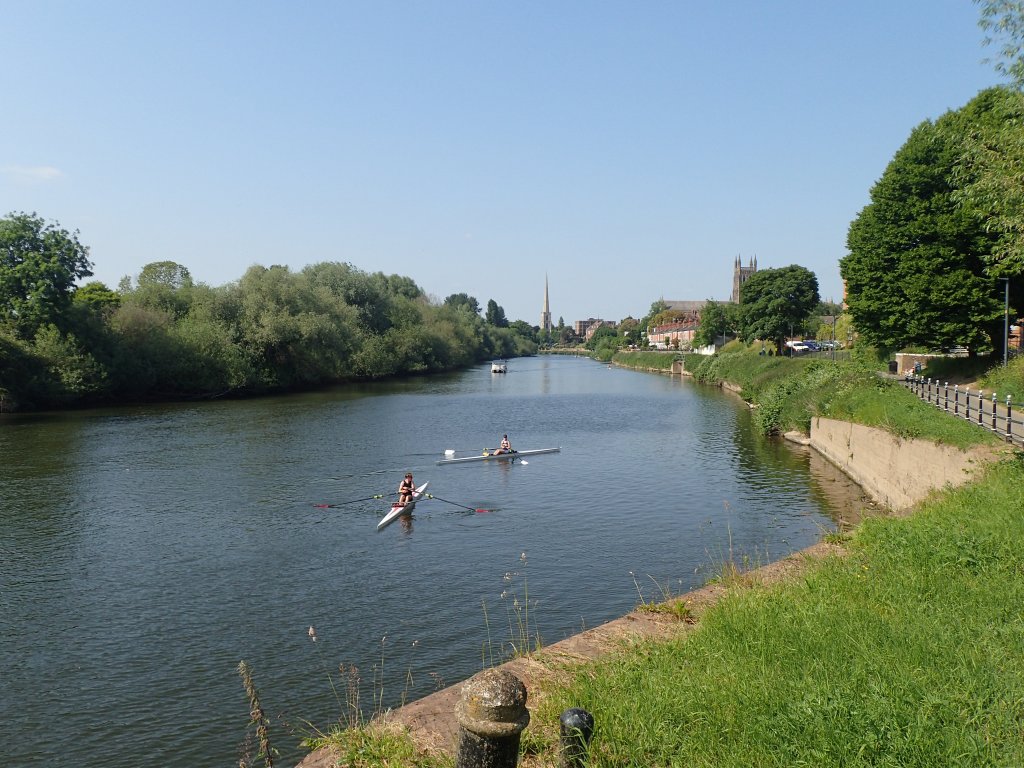
The river Severn with Worcester Cathedral just visible behind the trees.

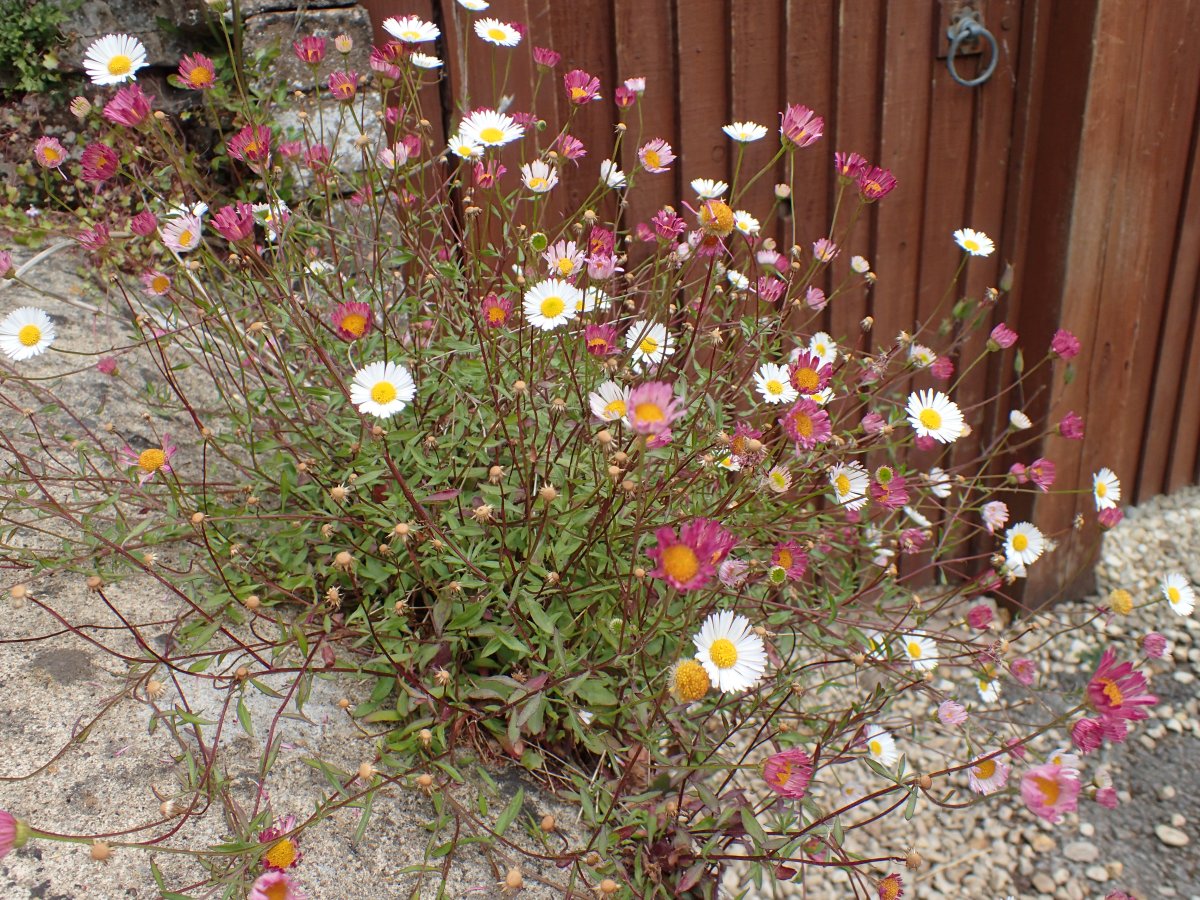
Mexican Fleabane as its name suggest comes from Mexico and central America, it first made an appearance in Britain back in the 1890’s. It looks almost exactly like a daisy, except that it is more straggly and does not grow in your lawn. It is quite happy growing out of walls and is one of the most tolerant plants of dry conditions. Quite good if you live in Mexico. Back in 1970 when Mexico hosted the Football World Cup the newly commissioned Aztec stadium had its walls softened by planting this species between the concrete blocks used in its construction.

The slight differences between the look of this plant and daisy is that the flowers are very slightly large and the leaves are longer and narrower. It is a perennial and flowers between May to September. It is quite tolerant of coastal conditions but is also found inland. I t is not so common in Northern Scotland or Ireland.

Spot the difference.

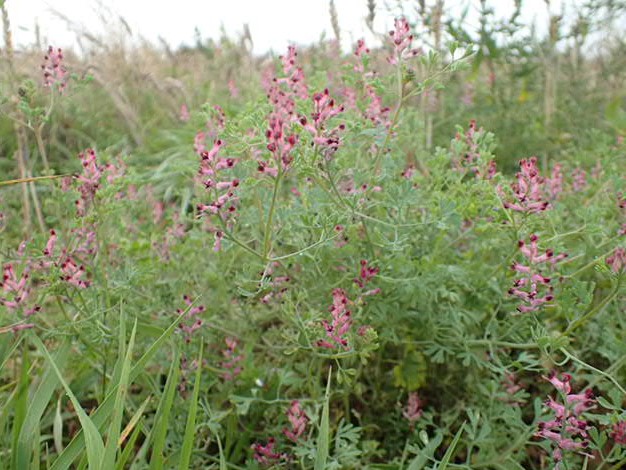
Fumitories (Fumaria sp.)

There are several species of Fumitory, there are about ten in Britain, the commonest is simply called Common Fumitory, however this is less likely to be found on walls, more likely on a field margin.

The ones that can be encountered on walls are called Ramping Fumitories and there are six different species of these, they tend to be more robust and have larger flowers than the Common Fumitory. So that accounts for sevenspecies. The other three are less robust than Common Fumitory and again are often arable weeds so not associated paricularly with walls. These are called Dense Flowered Fumitory, Fine-leaved Fumitory and Few Flowered Fumitory.

The Ramping Fumitories of which there are six, as I said, are called Common Ramping Fumitory,Tall Ramping Fumitory, Martin’s Ramping Fumitory, Purple Ramping Fumitory, White Ramping Fumitory and Western Ramping Fumitory. Two of these (Martin’s and Western are very rare and both are only found in Cornwall. So this narrows it down to just 4.

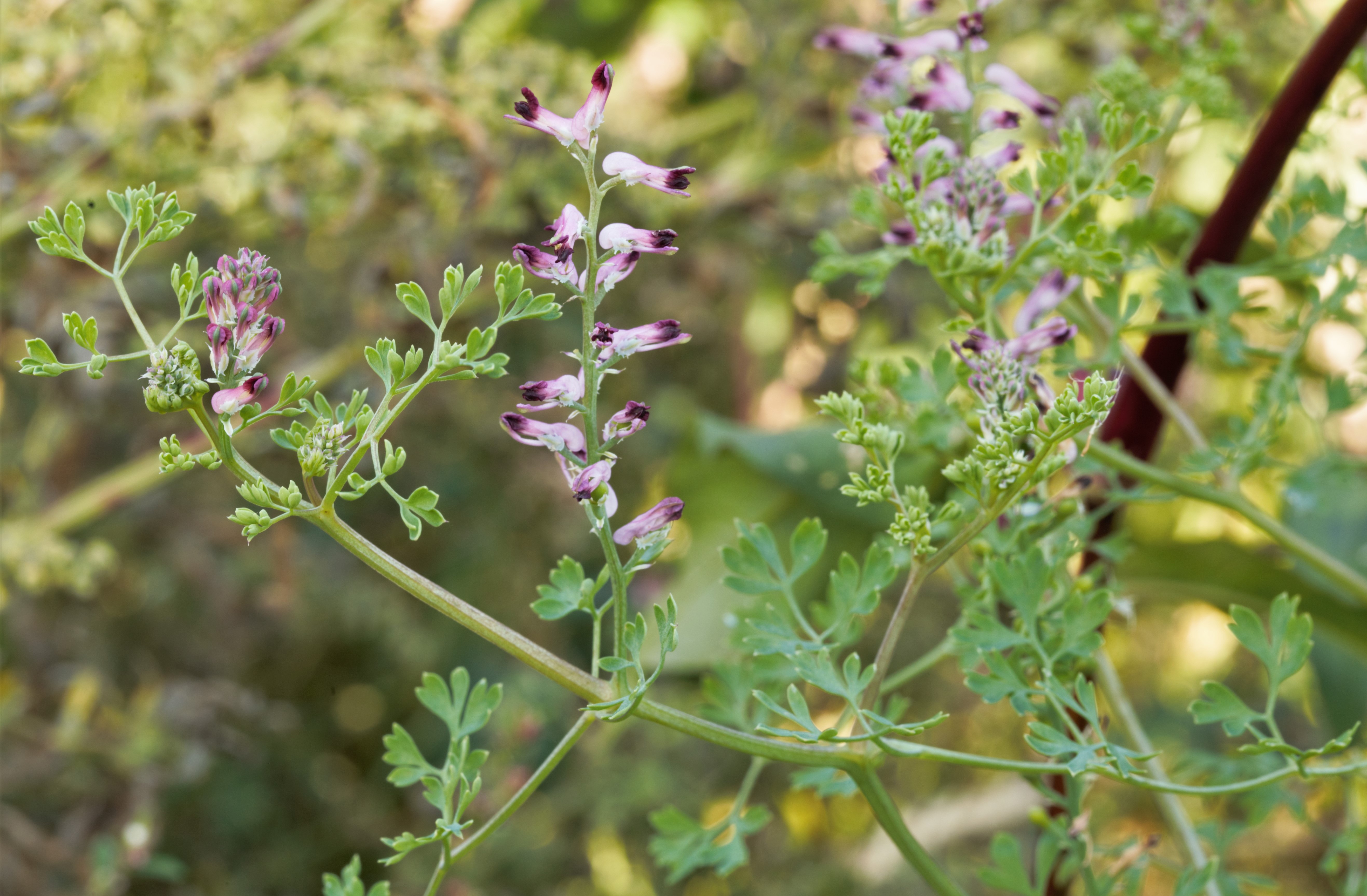
All Fumitories are very similar, they are all annuals and all spread out and have small purplish flowers. This makes the identification quite difficult. Their flowers are borne on a spike and are to a greater or lesser extent purple. The individual flowers are like little tubes which split at the opening into a two lipped arrangement. The photograph shows a Ramping Fumitory, how do we know? Because Common Fumitory has longer spikes with normally more than20 flowers in a spike, this has about 14 per spike.

The flowers of Common Ramping Fumitory tend to be purple all over allbeit a darker purple towards the tip. Tall Ramping Fumitory tends to grow taller but thats not much good for ID unless you have the two side by side to compare. The key diagnostic featue is that in Tall Ramping Fumitory the flowes are almost white at the base and become more purple towards the tip. Purple Ramping Fumitory as indivdual flowers which are more purple and also purple all over and finally White Ramping Fumitory as you would expect has flowers which are predominantly white, creamy white in fact with just a purple tip pointing out at the end of the flower tube. Simple! so I think the illustrated flower is Tall Ramping Fumitory.

F. muralis is the Common Ramping Fumitory and the most likey one to be found on walls it is native to temperate and Mediterranean regions of western Europe and western North Africa. It also grows in open bare patches and is considered a weed of pastures, roadsides, gardens, footpaths, coastal shrub lands and disturbed areas. The scientific name ‘muralis’ suggests it likes walls.

Tall Ramping Fumitory (Fumaria bastardii) is more likely found as a weed in fields and has a much smaller range, being western and coastal.

Incidentally the name Fumitory comes fom the grey green leaves and the spreading habit of the plant which vaguely looks like smoke close to the ground…. you need plenty of imagination but then thinking up different names for all the thousnds of flowers probly demands that so the etymology is thus Middle English fumeterre, from Anglo-French, from Medieval Latin fumus terrae, literally, smoke of the earth, from Latin fumus + terrae, genitive of terra earth. So now you know. Also as with many plants it had medicinal uses and one was to treat eyes and Pliny says that rubbing the juice into the eyes causes them to water like smoke had got into your eyes ! ? However I would think the juice of most plants when rubbed into your eyes wouls cause then to water.

This article is incomplete it needs to be linked to a famous or interesting wall that has Fumitory growing on it. Any suggestions?

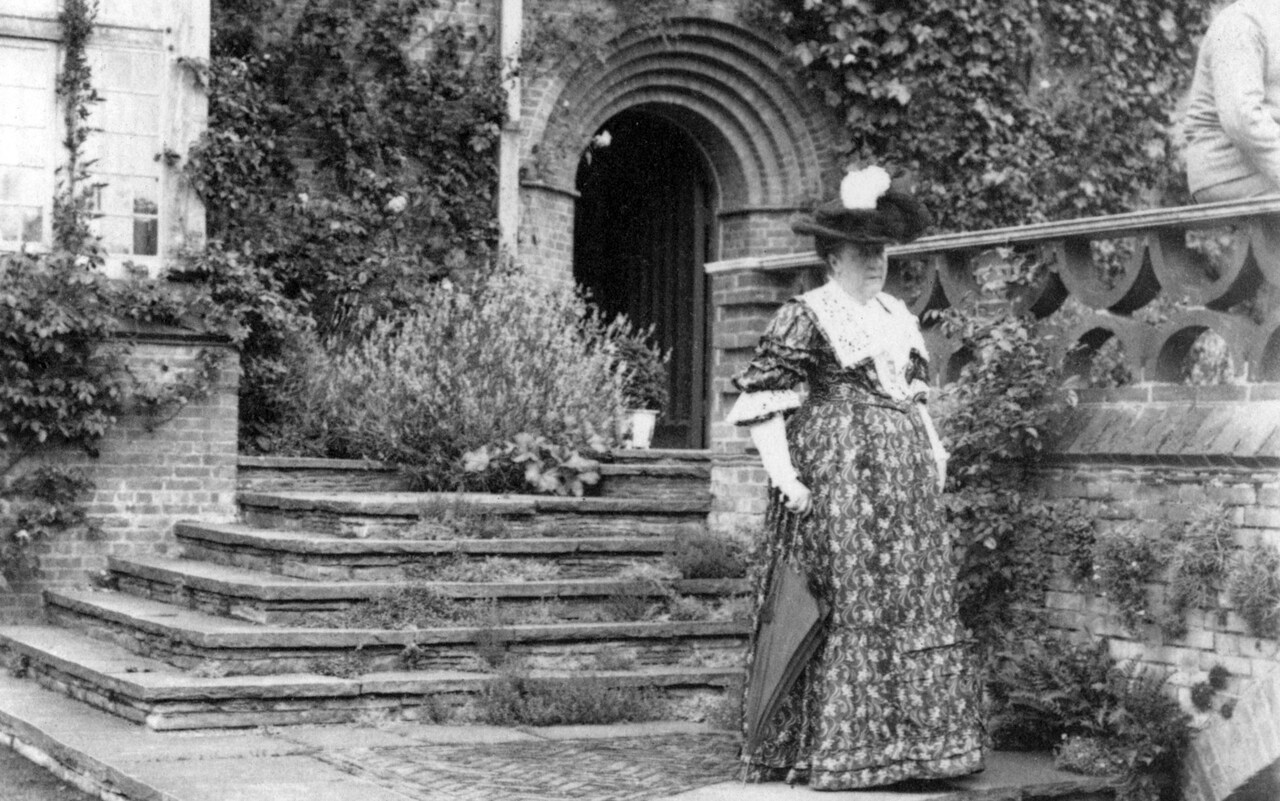
Gertrude Jekyll

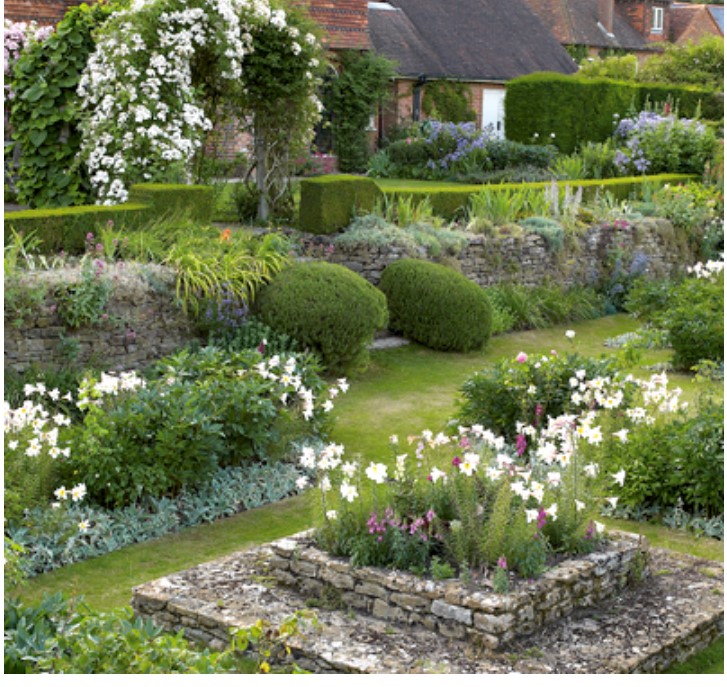
The famous turn of the century garden designer was a great exponent of walls and natural planting. Turn of the ninetieth century that is, she was born in 1843 and died 1923, her hey days in terms of garden design were the 1880’s to 1920’s.

She originally studied to be an artist, the arts and crafts movement had a big influence on her, the likes of Turner, Ruskin and William Morris. It was later that her failing eyesight caused her to leave painting and turn to garden design. Also at this time she became friends with Edwin Lutyens a young architect, also influenced by the arts and crafts movement. Her family lived in Godalming in Surrey, their house was designed by Lutyens. Subsequently she collaborated extensively with him, he designed the house and she worked on the garden. She designed over 400 different gardens and there are many that survive and are indeed still open to the public. She also wrote books and numerous articles for publications such as Country Life and as said she was an artist and also a photographer.

Reading her books gives you a strong impression of what she was like. I would say knowledgeable but not to be messed with. Her opinions were very much to the point and there could be no arguing. Her book Wall and Water Gardens published in 1901 has extensive descriptions of the designs and types of walls and suggestions for what should be planted in or on them. She has lists for walls situated in the sun and suggests plants like Cheddar Pink and Stonecrops Then for walls in the shade she has Ferns , Mossy Saxifrages and Snapdragons which she says can be used in sun or shade.

She mentions lots of native plants which she considers suitable such as Mulleins, Stitchwort, Shinning Cranesbill Wall Pennywort, Welsh Poppy and Red Valerian.

Here are a couple of quotes from her book, this talking about lawns. ‘how many gardens on sloping ground are disfigured by profitless and quite indefensible steep banks of mown grass! Hardly anything can be so undesirable in a garden. Such banks are unbeautiful, troublesome to mow and wasteful of spaces that might be full of interest. If there must be a sloping space and if for any reason there cannot be a dry wall, it is better to plant the slope with low bushy or rambling things. ‘

And this about brick walls. ‘often the wall that one would wish to make the home of many a lovely plant is of the plainest brick or stone, and the mortar joints are fairly sound. Still the ardent wall gardener is not to be daunted, for, armed with a hammer and a bricklayers cold chisel he knocks out joints and corners of bricks (when a builder is not looking on) exactly where he wishes to have his ranges of plants.’

I think these quotes get across the nature of the lady, formidable to say the least.

Mosses and Lichens on Walls

Whilst I am concentrating on what are known as the Vascular plants that inhabit walls one should not ignore the more primitive ones like the mosses and lichens. Incidentally vascular refers to having veins, well whilst plants do not strictly have veins and certainly not blood they do have specialised areas for transporting materials like water, sugars and minerals from place to place, the phloem and xylem and that is what vascular refers to and it is the flowering plants, conifers and even the ferns which are vascular.

Mosses and lichens are often referred to in one breath, but they could not be more different. They grow in similar places but in terms of their position in the classification of living things they are quite wide apart. Mosses are perhaps the easiest to understand and so lets deal with them first.

Mosses are a group of primitive terrestrial green plants. There are more primitive ones called Liverworts but as land plants evolved from aquatic species like algae then the Liverworts are still vey dependent on water and generally you do not find them on most walls. Mosses on the other hand have evolved so that some of them can survive in very dry conditions, having said that they do need wet conditions occasionally in order to reproduce. Mosses have also evolved so that they have a structure which is recognisably plant, ie they have a stem with leaves on and below the stem is a root like region, not proper roots but things called rhizoids which are primitive roots, they do the same job though in that they attach the moss to the substrate and help with absorption of water and minerals.

The mosses most commonly found on walls are those that grow in a compact little group so they look like a little green cushion, however if you carefully pulled it apart you would find that it is composed of lots of individuals all with a stem and tiny leaves and rhizoids at the bottom, just all squeezed together. This probably helps them retain moisture and survive. There are lots of mosses which can be found on walls but here are the most common ones. If in doubt then best to refer to the British Bryological Society.

Here are a couple of them.
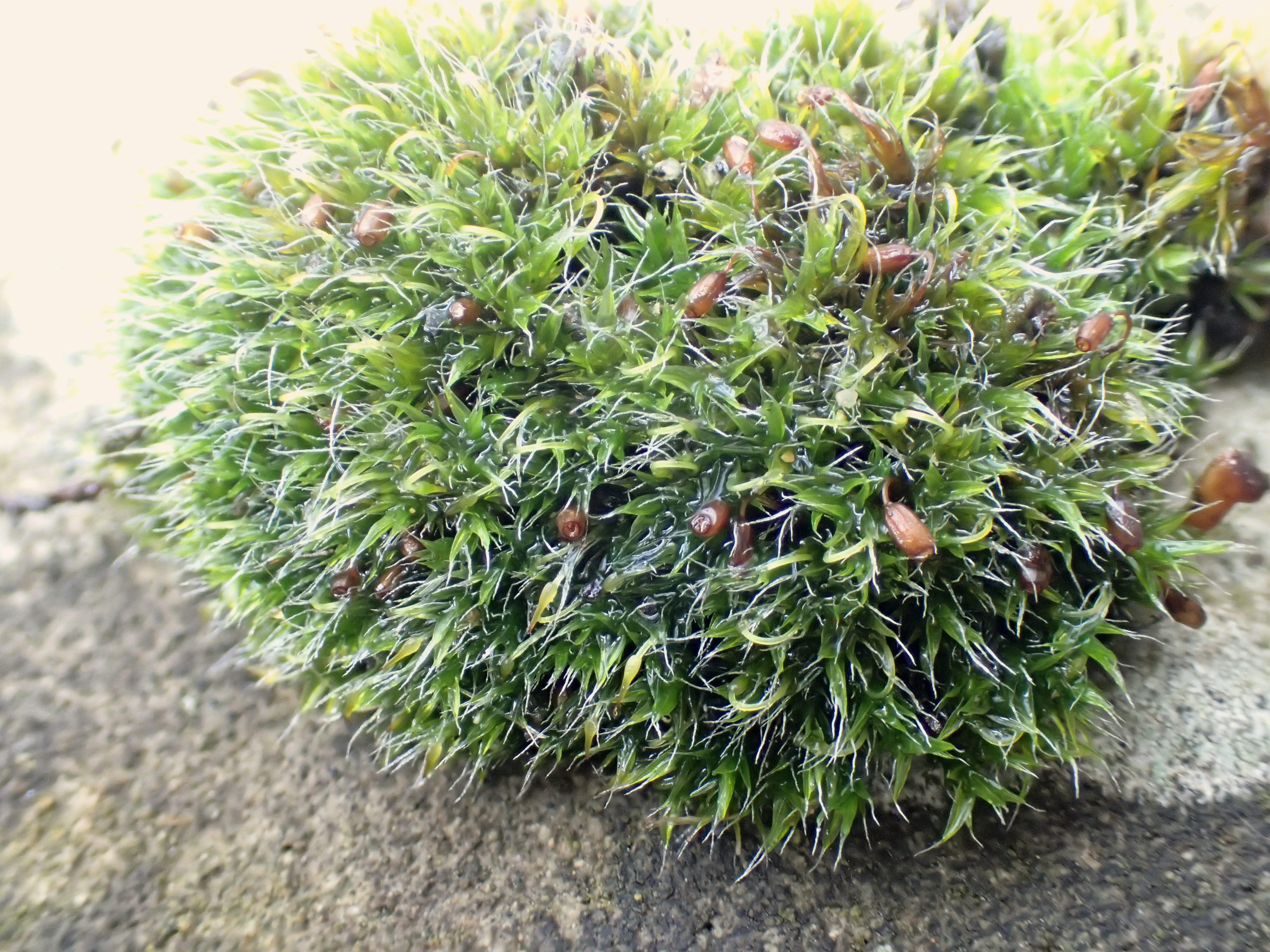
This is a cushion shaped one and you can see the brown spore capsules I think it is Grey Cushion Grimmia (Grimmia pulvinata)
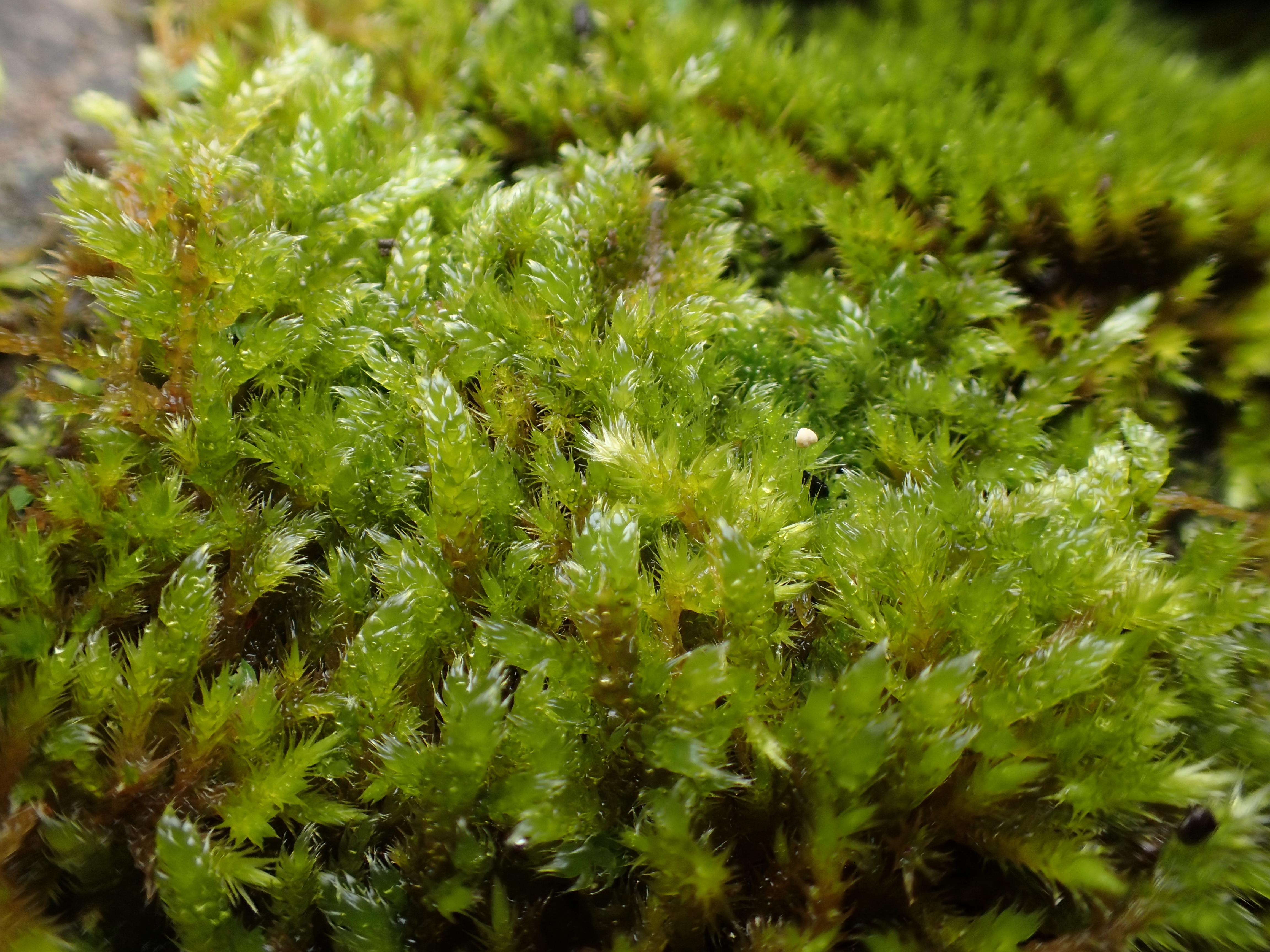
This is one of the few that grows out more like a mat and is called Silky Wall Feather-moss (Homaloththecium sericeum)

If you are in an upland area then the commonest one is called Woolly Fringe-moss, ( Racomitrium lanuginosum)

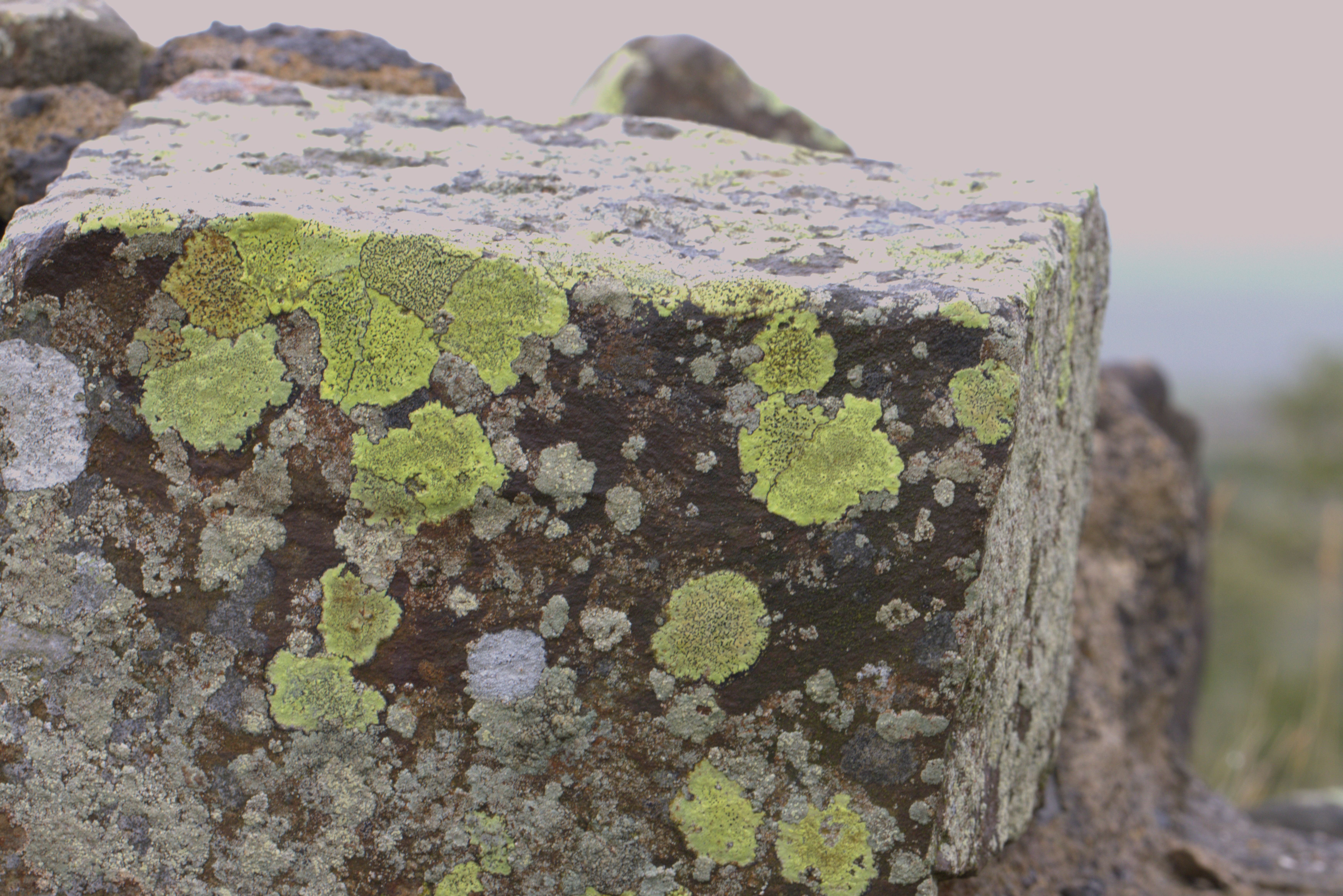
Lichens are another ‘kettle of fish’ what is the derivation of that one? Lichens are a symbiotic relationship between two different species, they are a combination of a fungus and an algae, and together they get on very well and can inhabit some of the most inhospitable places on earth. They are very slow growing and the one thing they can’t cope with is an unstable substrate, so they need something nice and fixed and steady to grow on, such as walls, gravestones, rocks and tree trunks. The basis of a symbiotic relationship is that each partner brings something to the table and they help one another, some would suggest it is like a marriage, I suppose that is not always necessarily the case! In the example of lichens the algal partner photosynthesises and produces complex foods like sugars which it then shares with the fungus….ahh. The role of the fungus is less easy to define but it sort of provides shelter and the algae which could not cope alone with the dry conditions is embedded in the fungal threads and thus protected.

As with the mosses there are lots of lichens that grow on walls, in fact far more and they subdivide into different types.There are those that just encrust onto the surface of the rock, others form a flat structure known as a thallus some produce a branching structure and are known as foliose and then there are others which produce upright little bodies sometime with the shape of a wine glass, these are called fructose. Fascinating and complex and unless you are an expert then often quite difficult to identify.
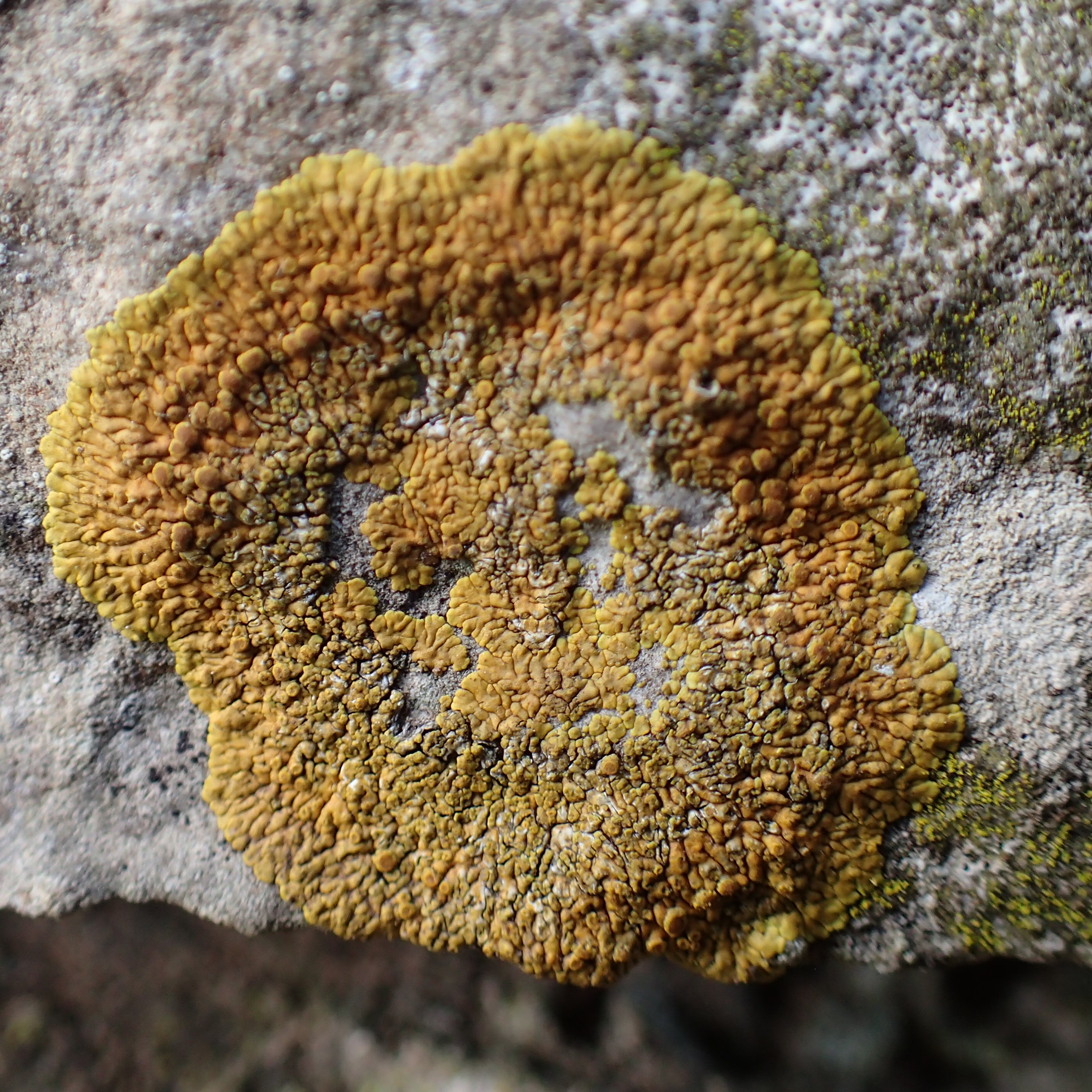
Acloplaca flavescens sorry they do not have common names.
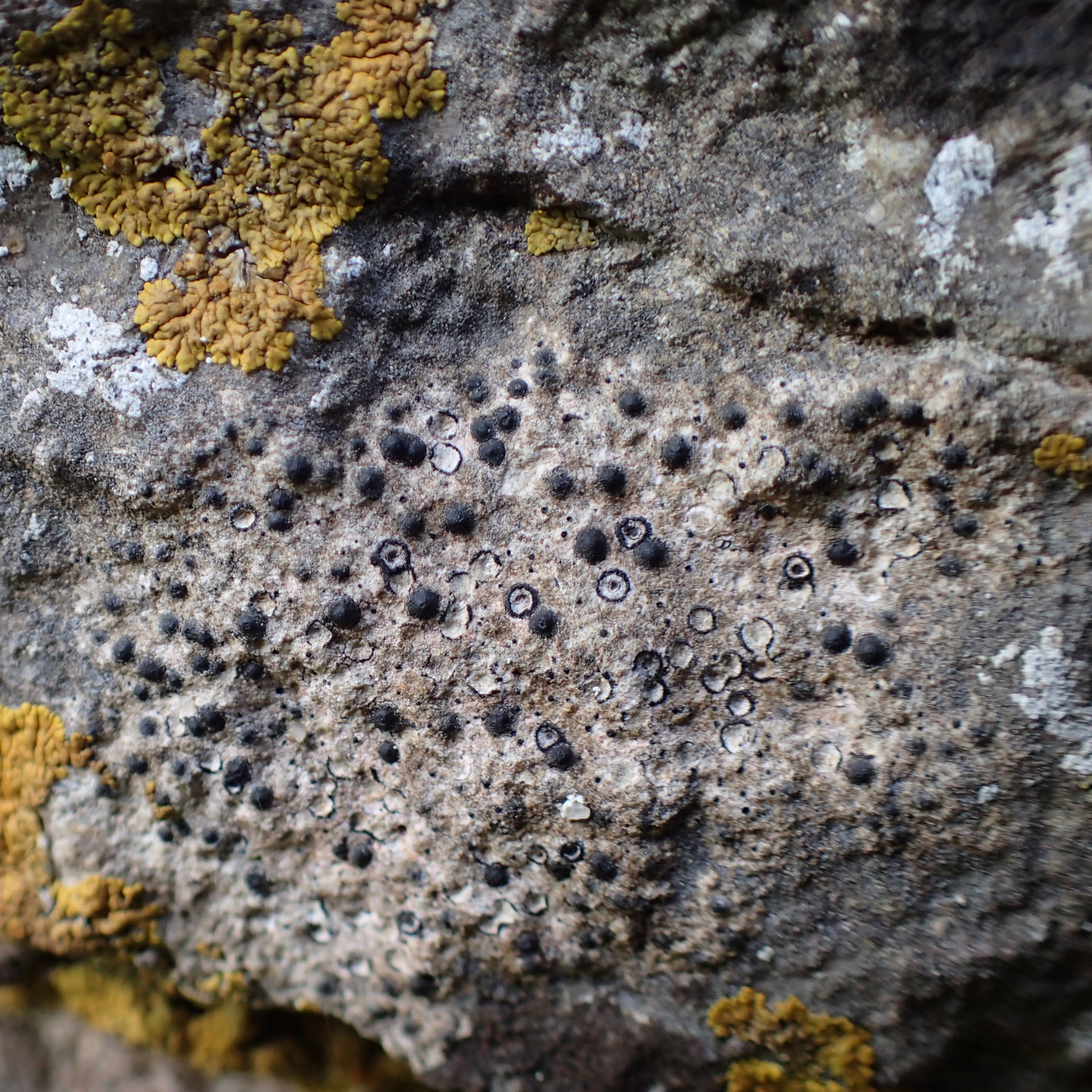
Acrocordia conoidea , this and Acaloplaca are both of the encrusting type.
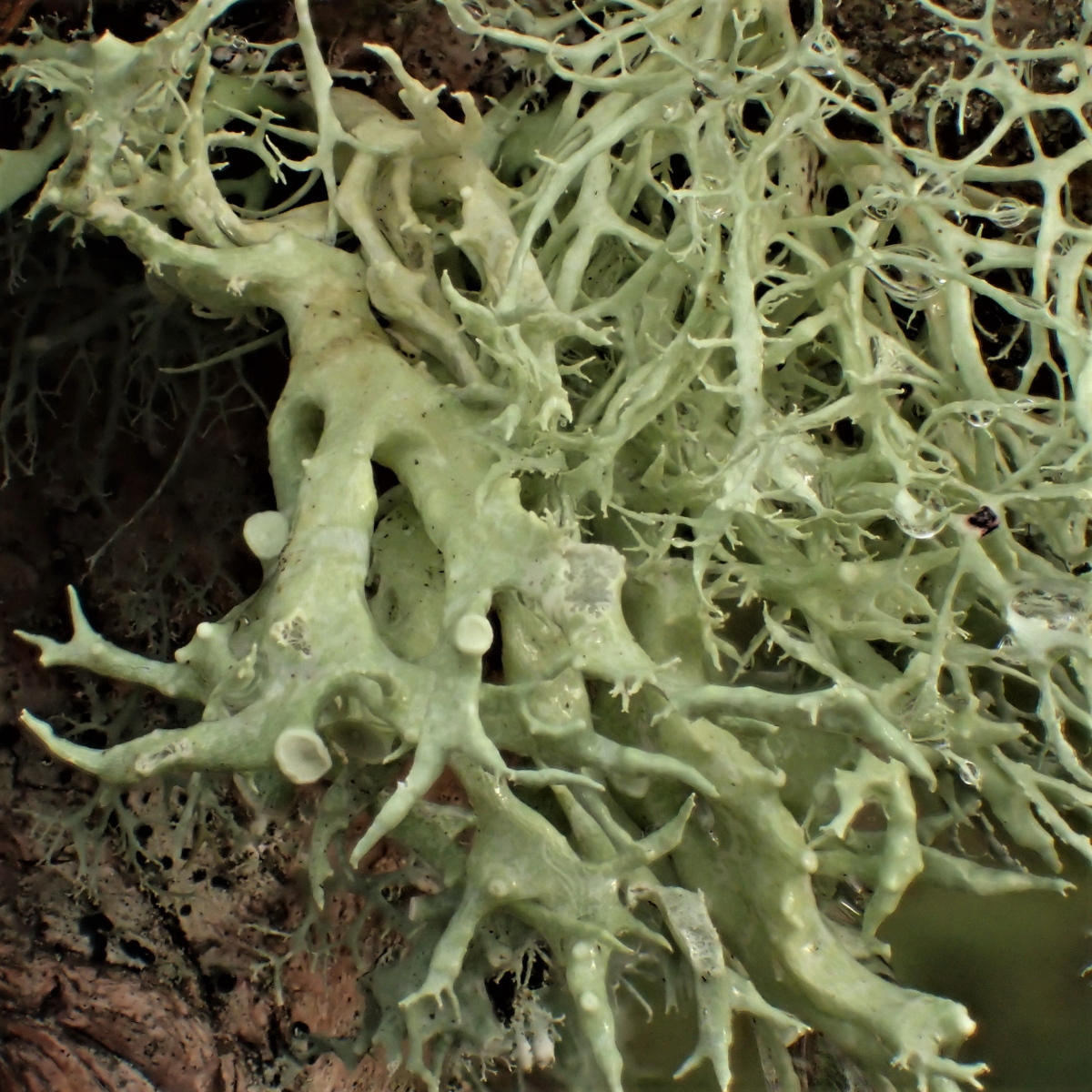
A foliose lichen, more often found on trees and called Ramallina.

This is one that produces little cup shaped structures. There are many that do this and most are in the genus called Cladonia so if you see something like this you can say ‘Hmm, looks like a Cladonia species.’ and you will sound knowledgeable and you will be right but there are vast numbers of them, this one could be Cladonia pyxidata, but I am not sure.

Apart from being beautiful and fascinating and an integral part of the plant life on walls, the mosses and lichens perform one very significant role in the ecology of walls and that is the development of organic material in between the rocks or bricks that make up the wall. The mosses in particular but also the lichens will over time die and break down, decompose and get washed into the cracks and crevices along with small particles of rock and gradually a substrate or soil will build up and this is essential for the large vascular plants which subsequently will colonise the walls. So these little plants the mosses and lichens are the forerunners, the pioneer species which start off the colonisation. They will be the first to arrive as they are dispersed by microscopic spores that blow on the wind and then once they land and if conditions are right they will set the whole long succession in progress. and they look great.
Walls and Flowers; conception to fruition

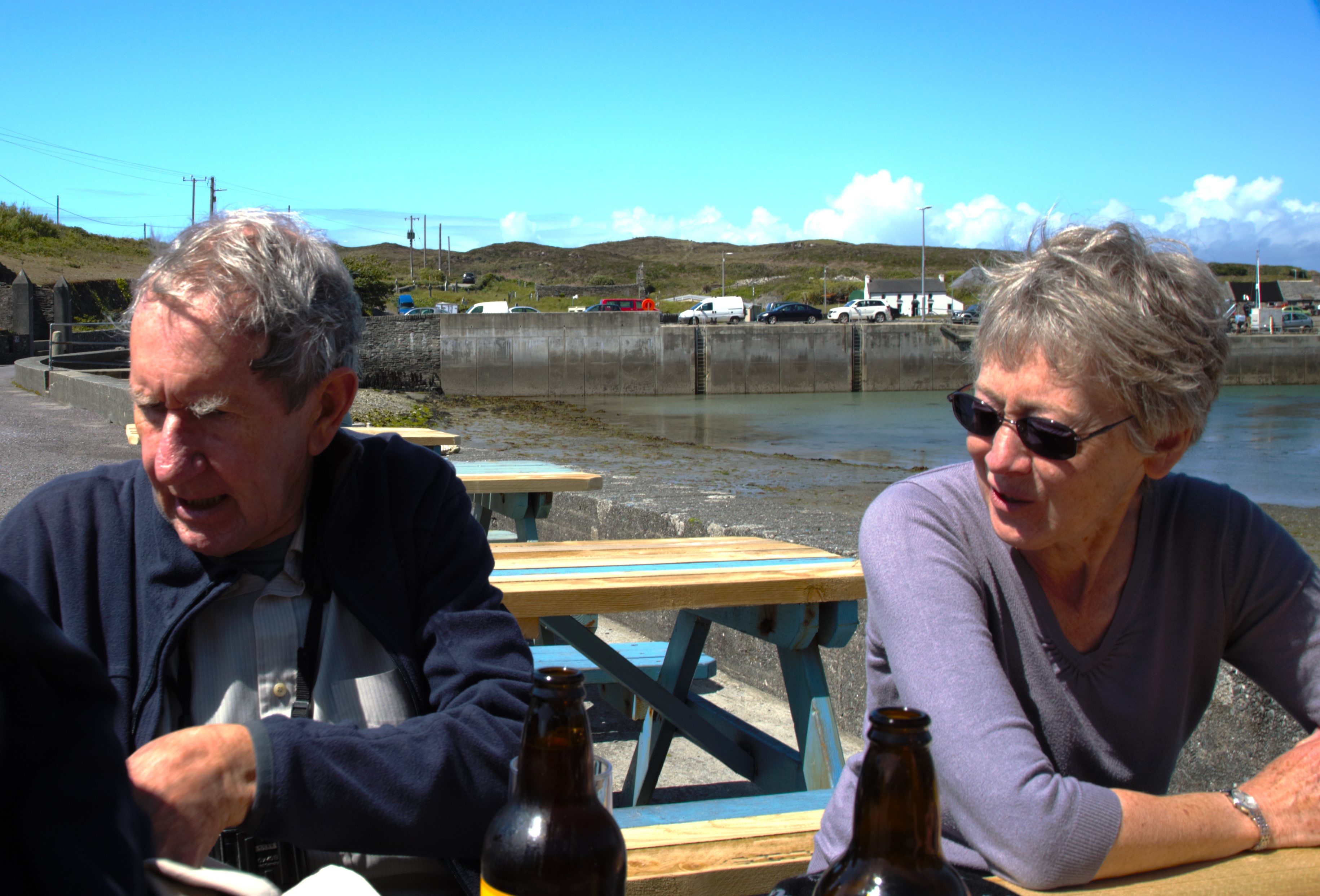
Well it all started in Baltimore which is a village at the very southern most tip of Ireland. Next stop USA. I was on holiday with my wife and some good friends Carol and David and we developed the idea.

There are two strands to the conception. One is that both David and I have gardens surrounded by and containing old walls, however the walls round my garden are blessed with numerous plants growing from the cracks and crevices. David’s walls are however fairly bare or at least they were at that stage and we were discussing the walls in Baltimore which have a good mix of various ferns and wild flowers sprouting from them. The conversation ranged through the reasons why David’s walls were less populated than mine, how he might improve that situation, what type of plants favour walls and why and how to introduce plants to walls.

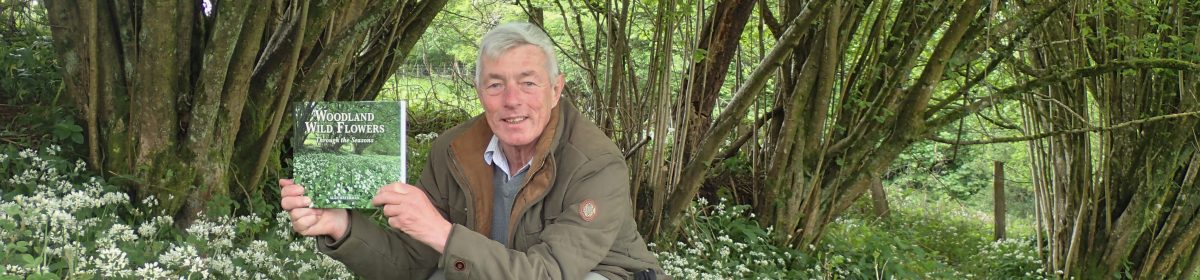
The second strand to the conception regarded publication of books and David was enquiring how my book on Woodland Wildflowers was doing and he also knew I was writing a second one about Coastal Wildflowers and wanted to know where that one was. Well that one is a bit stalled as the publishers were unsure as to whether Coastal Wildflowers was a cohesive grouping and if it were then how interested folks might be and they had asked me to wait some time to see how book one gets on and so I was somewhat in limbo. David said what about Wall flowers? a quirky sort of subject can capture peoples imagination, the classic example is the book about Log piles by the Norwegian writer Lars Mytting, which has to date sold 175,000 copies!

So it was chewed over and various plants and of course some ferns came to mind, several species actually have ‘wall’ in their name and one that was the growing in the Baltimore area was Pellitory of the Wall. I guessed that there were a good 50 or so plants which are often found in close association with walls. Then another idea developed, David is a great ideas man. I am not sure if this second idea was his or mine it just developed and it was that an element of the book should be about the walls. Each plant should be photographed growing from a wall which would then be described and form part of each chapter of the book, so it would be 50 plants and 50 walls. Famous walls could be visited photographed and written about. Very soon a list of walls was developing some sensible and some more fanciful. Obvious contenders were Hadrian’s Wall, The Tower of London, famous churches, bridges, gardens etc, more fanciful were Wall Street and the Great Wall of China. No it had to be British and Irish walls and the plants growing out of them.

This was all back in May and the first photos were of the Pellitory of the Wall growing out of the harbour walls round Baltimore. Subsequently I have developed this blog and visited various locations around the country, like Hadrian’s Wall, Verulamium, Tintern Abbey and a place called Wall which is in Staffordshire along with quite a few others. I have decided on which plants need to be included and it is actually about 60 different species, I have also written a few background articles such as one about the Wall environment another about wall animals and there are a few others lined up.

Progress has stalled a bit now as it is Autumn and most wall plants are Spring and Summer flowers. I have though contacted the publishers, Merlin Unwin, to see what they think of the idea. I sent them some sample pages, about 25, the same as they required when I first contacted them about my book Woodland Wildflowers. I sent this submission off on 9th September so now its wait a see time. There is a lot of wait and see in the publishing game I have discovered !

As for the fruition well however it turns out I will complete the exercise, publishing is just the icing on the cake, What I enjoy is the searching out the flowers, the photography and in this case researching the walls, their history, construction and everything about them. I want a good range of walls not all ruins and churches, so its some new and some old, some famous and some just odd. I want to find a wall with an old Walls Ice Cream advert on it and then an interesting plant next to it. Should keep me busy.

Wall Rue and Easton Grey, Wiltshire.

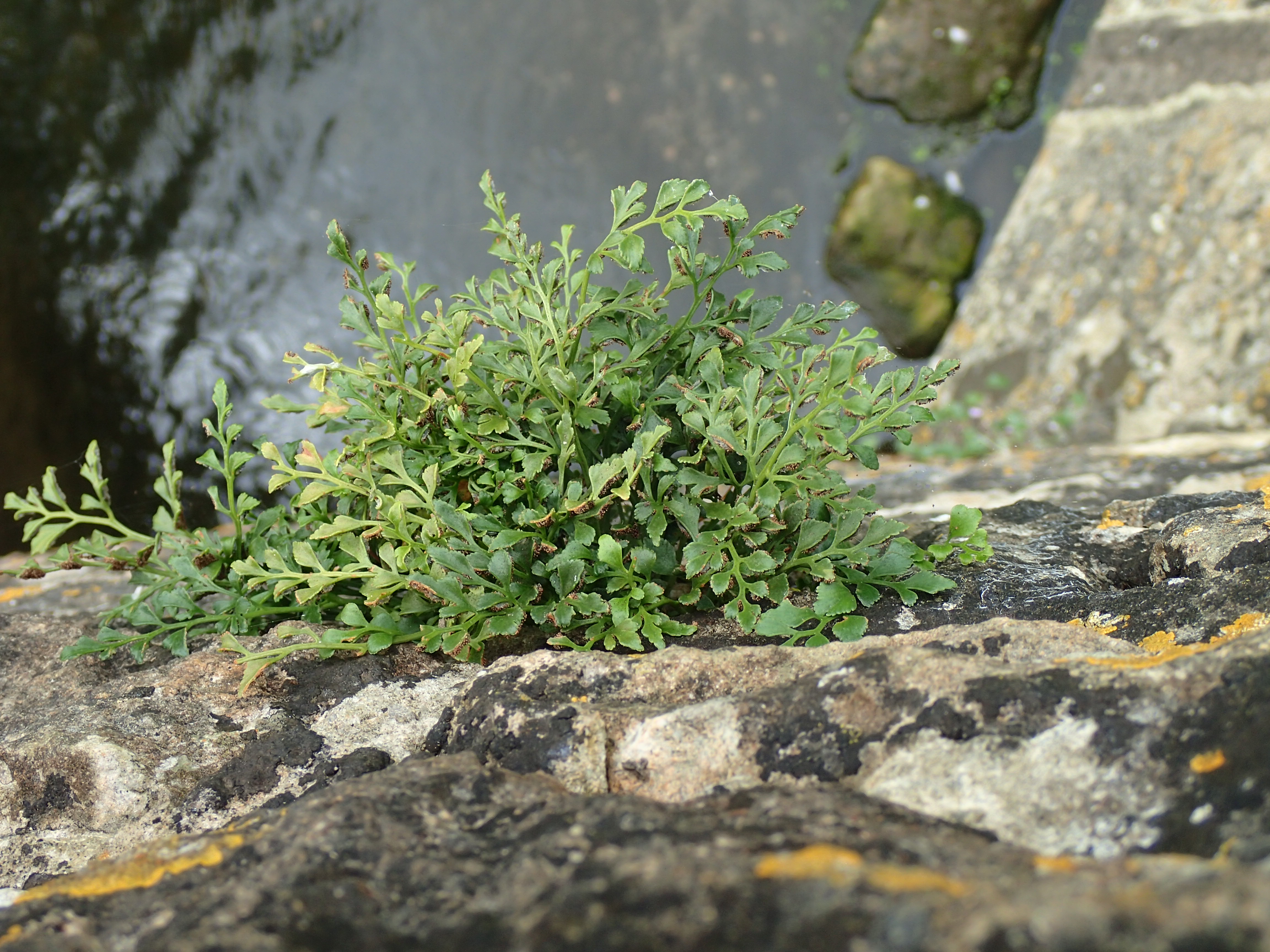
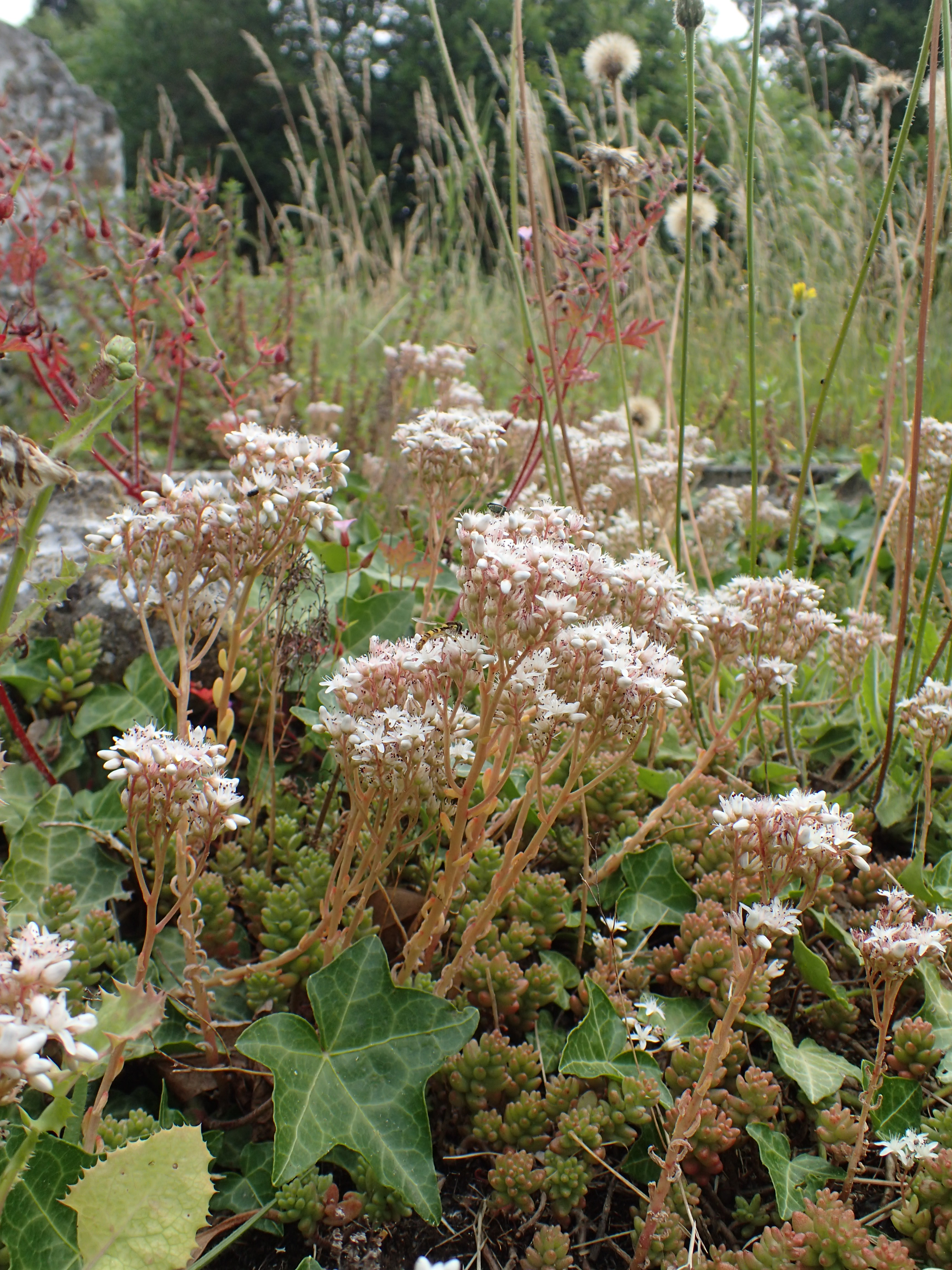
Wall Rue is a fern and is commonly found in walls as its name would suggest, and often in company with Maidenhair Spleenwort with the latter being the more dominant of the two. Not so on the old bridge over the River Avon in Easton Grey where there are just two plant species, Ivy-leaved Toadflax and Wall Rue.

Asplenium ruta-muraria is the scientific name. It is blue green in colour, the same as the herb Rue. It is a small fern and grows in a compact tussock , not a spreading frond. It does not smell like its name sake the herb Rue which has a pungent and disagreeable smell and is not much used in cooking any more. Back in the day it was sometimes used in small quantities mostly for medicinal purposes. In some countries, for example Ethiopia, it is still used in cooking.

Wall Rue prefers alkaline conditions so limestone walls or walls where a lime mortar has been used to hold the stones together are to its liking although according to the BSBI, Wall Rue prefers a pH of 7 whilst Maidenhair Spleenwort prefers a pH of 8.

Easton Grey, near Malmesbury, is a Cotswold village through which the River Avon passes. There are several River Avons in Britain, nine to be precise! Avon means river in the Celtic language and Afon is the word for river in Welsh so the River Avon is the River River! The River Avon passing through Easton Grey ends up passing through Bristol and into the Bristol Channel at Avonmouth and so is sometimes referred to as the Bristol Avon or Lower Avon, It rises at Acton Turville near Chipping Sodbury in Gloucestershire and is seventy five miles long in a circular route, passing through Malmesbury, Tetbury, Bath and Bristol. Despite being only a few miles from the source, the bridge at Easton Grey is the seventh crossing point downstream. There are three arms of the river. The one at Easton Grey is called the Sherston branch. The originating source is debatable. Some consider the Tetbury Avon which rises at Wor Well to the north east of Tetbury to be the main source but whatever the source the three tributaries join in Malmesbury.

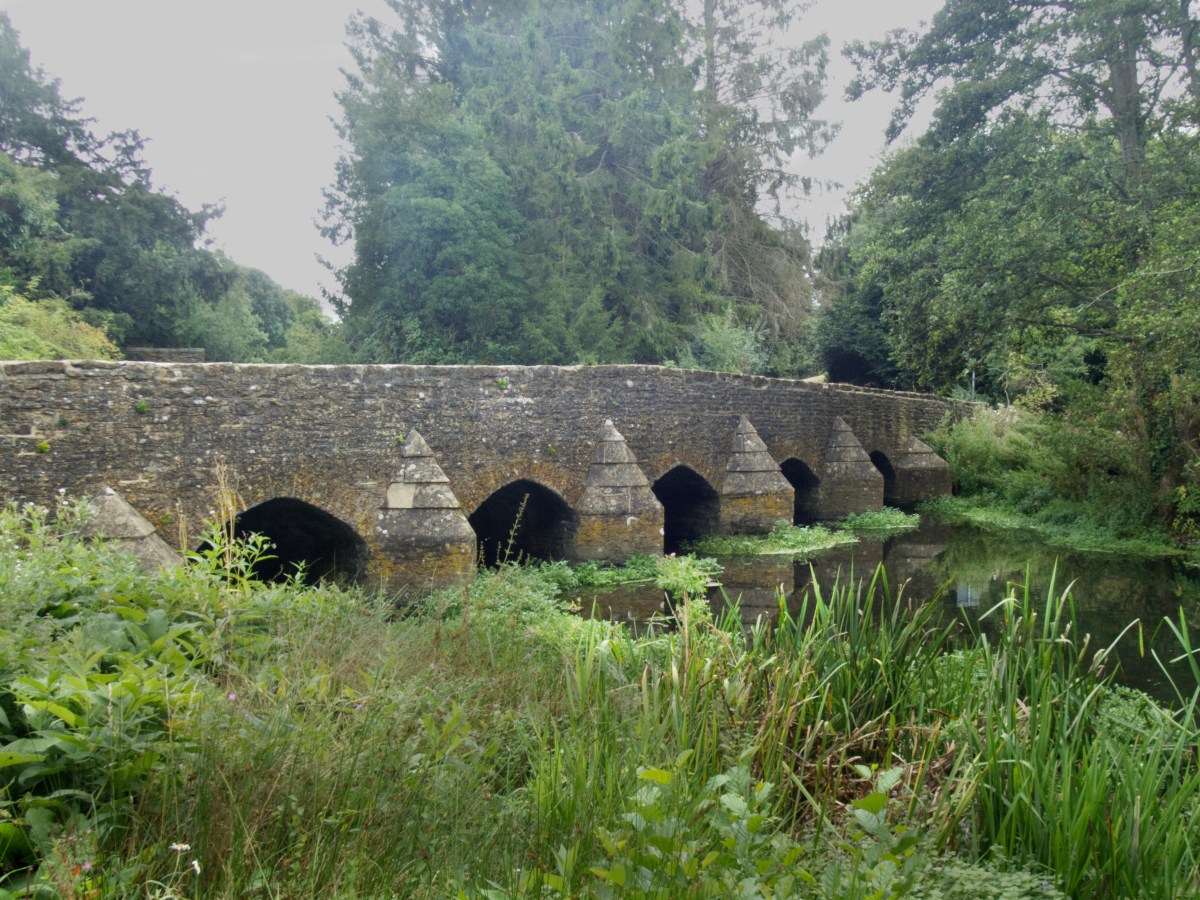
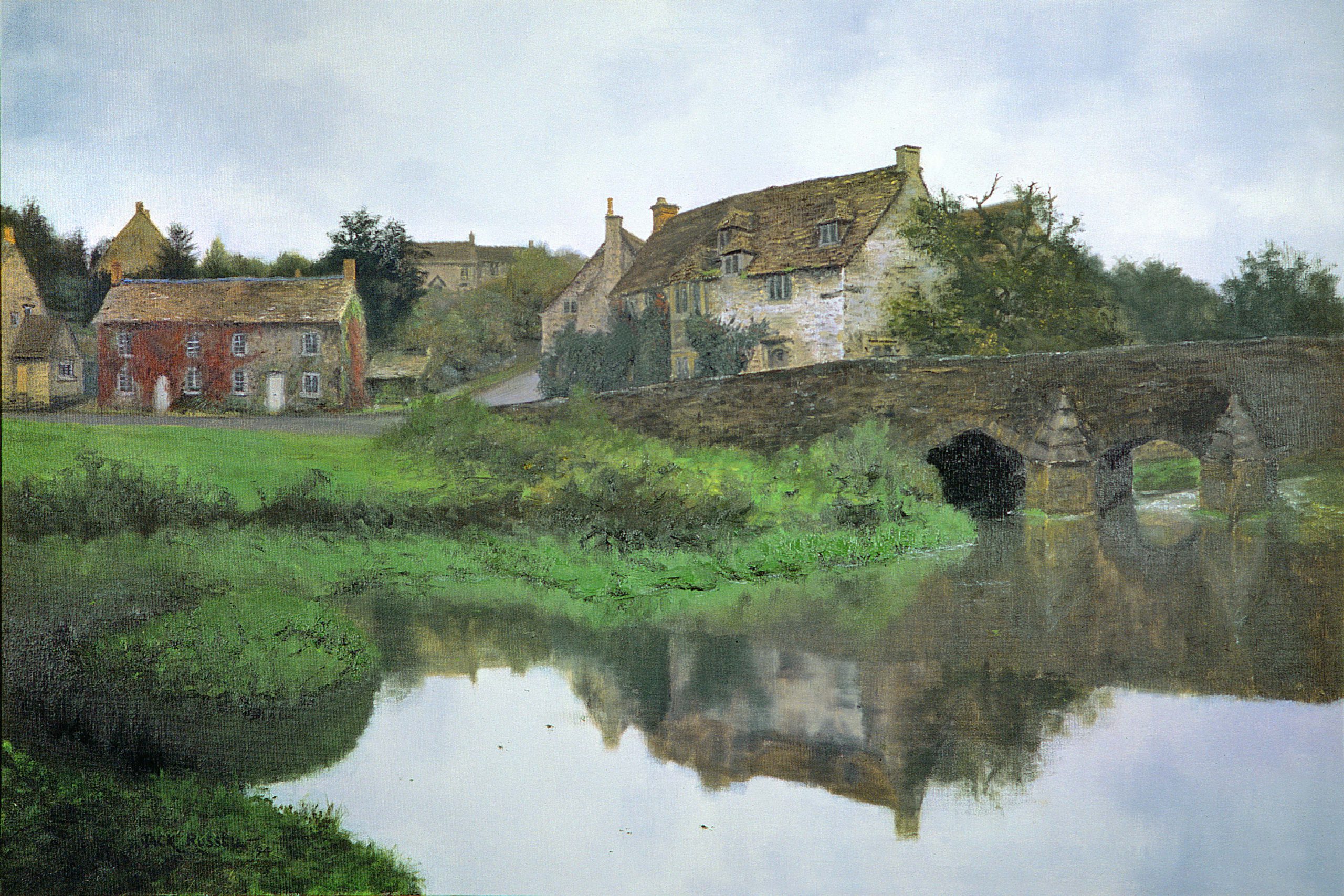
The bridge at Easton Grey is comprised of five pointed-arched spans. On the northern side there are six projecting triangular cutwaters buttressing each of them. It was probably constructed in the sixteenth century, and is made from local Cotswold stone which is ideal for Wall Rue Fern. It is very picturesque and is often the subject of photographs. The local artist Jack Russell has painted it. He was also rather good at cricket, playing for England as wicket keeper!

Not only is the bridge picturesque but so too is the little hamlet surrounding it, not least the house on the opposite side of the road called Bridge House. A local historian recalled that this house might have a connection to Edwin Lutyens. It was possible that he combined the original row of cottages into one property and that Gertrude Jekyll with whom he often collaborated had some influence over the garden. However I can find no reference to this elsewhere. My historian contact wonders if he heard about this in a Wiltshire monthly magazine or possibly when he attended an antiques auction there in or around 2000. I have found reference in an article by British Listed Buildings to the building undergoing major refurbishment in 1923 with an arts and crafts style circular chimney breast being a feature in one of the rooms. That is the closest link to Lutyens that I have been able to find

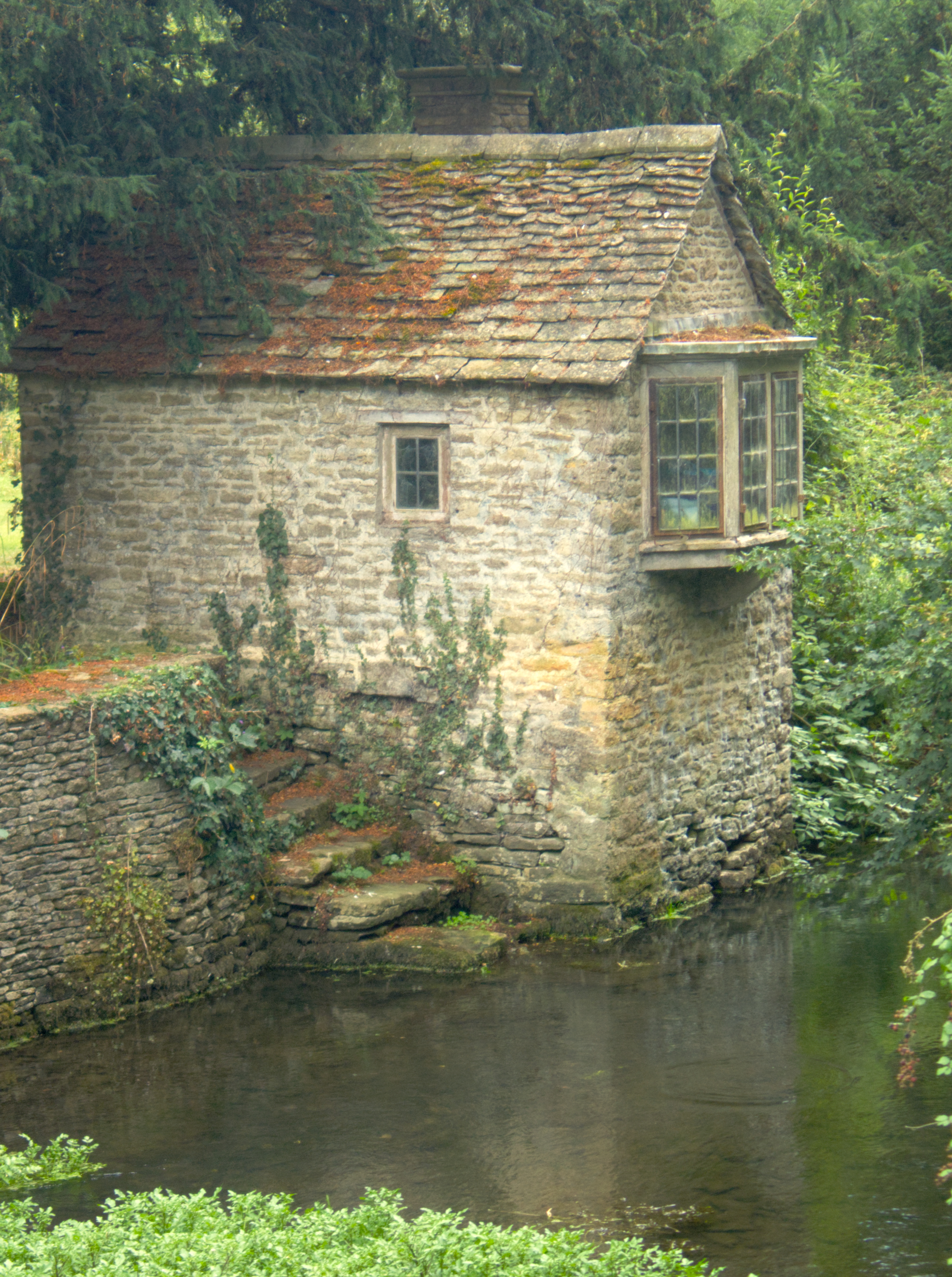
It has a very charming so called ‘fisherman’s cottage’ in the garden overlooking the river.

Gertrude Jekyll did however design a garden in Hampshire at a village with a similar name called Upton Grey. This was around the Old Manor House which Charles Holme purchased, and then rented to tenants for the rest of his life. The property deteriorated and eventually Holme commissioned a local architect Ernest Newton to refurbish it, keeping many of the original timbers. Today’s Edwardian decoration encloses oak rooms, a 16th-century staircase and original roof timbers. Newton’s house was finished in 1907. Gertrude Jekyll created a four and a half acre garden around it.

History of Hadrian’s Wall.(from the plants point of view)

There has been much written about Hadrian’s wall over the years. Gildas was the first to write about it in or around 560AD but already a lot had been forgotten and his descriptions are quite muddled. There follows a brief synopsis but what I want to concentrate on is the plants and their colonisation of the area.

Undoubtedly the most famous wall in the Britain it was, as the name suggests, built under the orders of Emperor Hadrian, in 122AD. It was however campaigns of Julius Agricola which had pushed the Roman influence to the far north of Scotland by 84AD. He even sent ships further north still and reached the Orkneys but his gains were not maintained and much of Scotland was subsequently abandoned and so when Hadrian visited he decided to fortify a line from the Tyne to the Solway.

The seventy three mile wall took just six years to construct. Initially some of it was stone and the western section was a turf bank. This bank was subsequently replaced with stone. There is also a large ditch called a Vallum which is three metres deep with parallel mounds along the edges and which follows the line of the wall on the south side. After Hadrian’s death in 138AD the next Emperor, Antonius Pius, decided to build another wall further north between the Firth of Forth and the Firth of Clyde, known as the Antonine Wall. This was shorter than Hadrian’s Wall at just thirty nine miles but it had more forts. Construction began in 142 AD and took twelve years to complete. It is mainly comprised of an earth bank formed from turfs. It was abandoned shortly after Pius’ departure and Hadrian’s Wall marked the northern edge of Roman influence.

The chances of many plants colonising the walls whilst it was being maintained by the Romans is probably small. Back then the wall and the forts would have been covered with plaster and then painted quite brightly. It would not have looked like it does today. The locals might have described it as a bit of an eyesore across the beautiful Northumbrian and Cumbrian landscape but it was there to make a statement and painting it white and other bright colours certainly did that.
Some plants may have grown along the top, in between the cobble stones and down in the Vallum. However I suspect that maintenance was quite rigorous. The soldiers would have needed to be kept busy to prevent boredom and possible misconduct, so tasking them with weeding and repairs would be an obvious way to occupy them. I once recall seeing some squaddies at an army base in Cyprus mowing the playing field. There was not a blade of grass anywhere to be seen as it was dry bare soil but still they mowed up and down obeying instructions.

Colonisation probably did not get underway until sometime after 406AD when the Romans withdrew. Even after that date there is evidence that local rulers maintained sections of the wall and some of the forts for anything up to two hundred years. It would in any case have taken time for plaster to fall off and cracks to develop. The first colonisers would be plants dispersed by seeds or spores. Spores blow long distances on the wind and so mosses and lichens would be the first plants to show up, exactly as they do today on gravestones or rock -formed coastal defences. They would have paved the way for subsequent, larger species, as over time they died and got washed into the crevices between the stones so that gradually a type of organic soil would have developed. This would provide not only a source of water but also nutrients for the ferns and flowering plants that came later.

Ferns are also dispersed by spores and so the second wave of colonisation probably had a high proportion of ferns. Plants might also have arrived by way of animals bringing in seeds. Many species of plant produce fruits and nuts in order to attract animals which then either move the fruits and nuts to store them somewhere such as in a wall, or they eat them and the seeds pass through with their droppings and get deposited on the wall whilst the animal is having a rest.
However getting to the wall is just the start. The seedling then has to get established. In the Vallum this might have been quite easy and soon this would have been overgrown with Brambles, Hawthorn, Blackthorn and, probably Gorse. Thereafter trees such as Oak and Beech might have developed although the climate can be is quite cold and bleak so they would have struggled.
On the walls of the forts and along the wall, life would have been tough for the flowering plants. Plants that were already adapted to grow on rock faces and cliffs would have found the walls most suitable. The number of plants back then that could have colonised would have been significantly fewer than today. Well over half the plants that we now find on walls would not have been in the Britain at that time as they have been introduced since then. It is possible that soldiers might have brought a few species with them. Wallflowers are generally thought to have been introduced by the Normans but they do have lots of medicinal uses and conceivably soldiers could have imported them as it has been recorded that Roman soldiers used a poultice of Wallflower leaves to treat wounds. However most of the Roman soldiers stationed on the wall and in Britain generally were not from Italy. Many came from Gaul and two of the brigades that were stationed at the wall were from Tungria , now Belgium, and Batavia on the Rhine delta.

The flowering plants most likely to have colonised the wall would have been species such as Stonecrop, Whitlow Grass, Bittercress and Sandworts. These are all small native species which would not have made much visual impact.

As time went by the wall was gradually plundered to provide stone for other constructions, some of them, such as Hexham Abbey, quite grand, others less so. The B6318, known as the Military road which runs west from Newcastle, was constructed from stone which was removed from the wall and pulverised to provide hardcore.

Nowadays the wall attracts thousands of visitors each year and car tyres and walking boots will bring seeds from all over the world so who knows what could turn up. Getting there is just the start and colonising is the big ask but with climate change anything could grow there in the future. Perhaps there might be orange groves and olives lining the route one day. Very Italian.

Rosebay (Willowherb) and Escomb Church Co.Durham

Well I suspect most of you have heard of Rosebay Willowherb although recently its genus has been changed so now it is sometimes simply called Rosebay. However you may not know that much about Escomb Church.

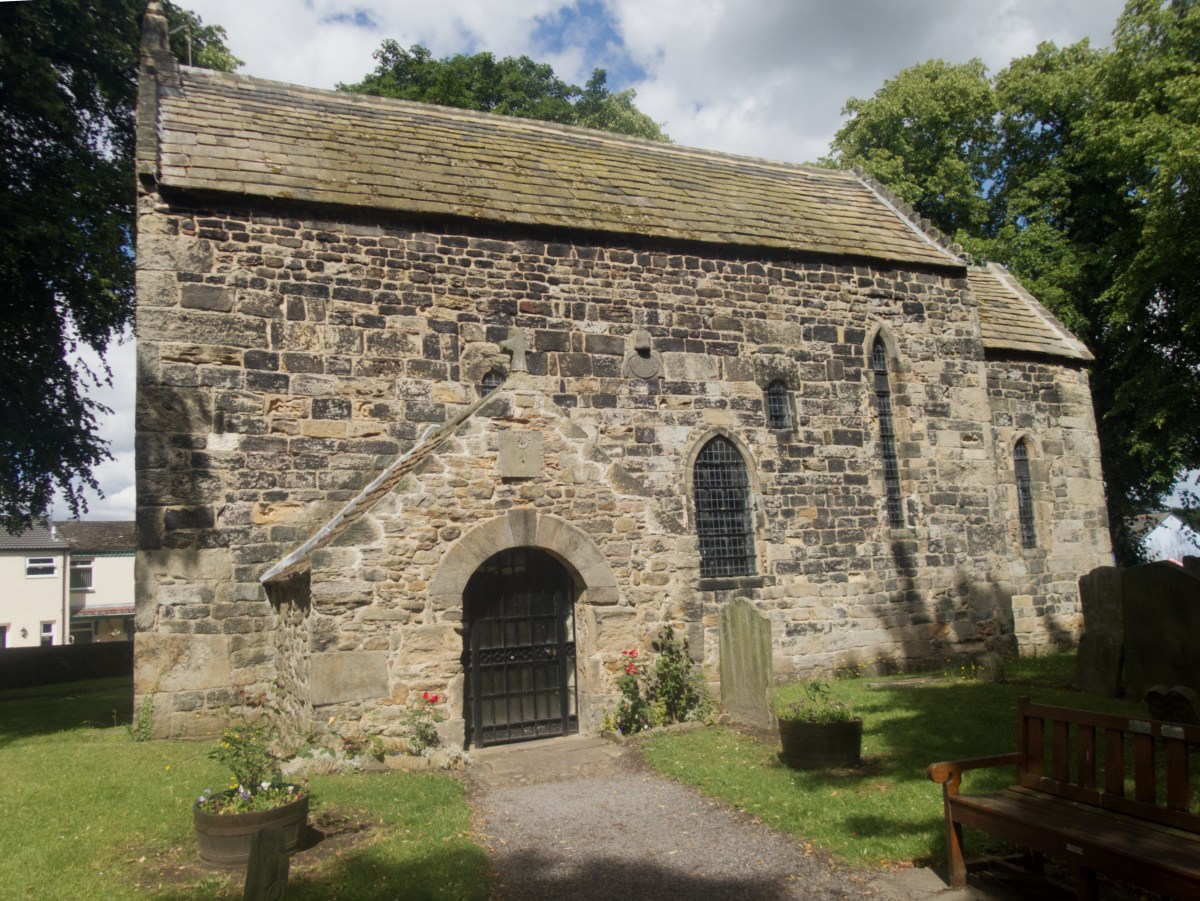
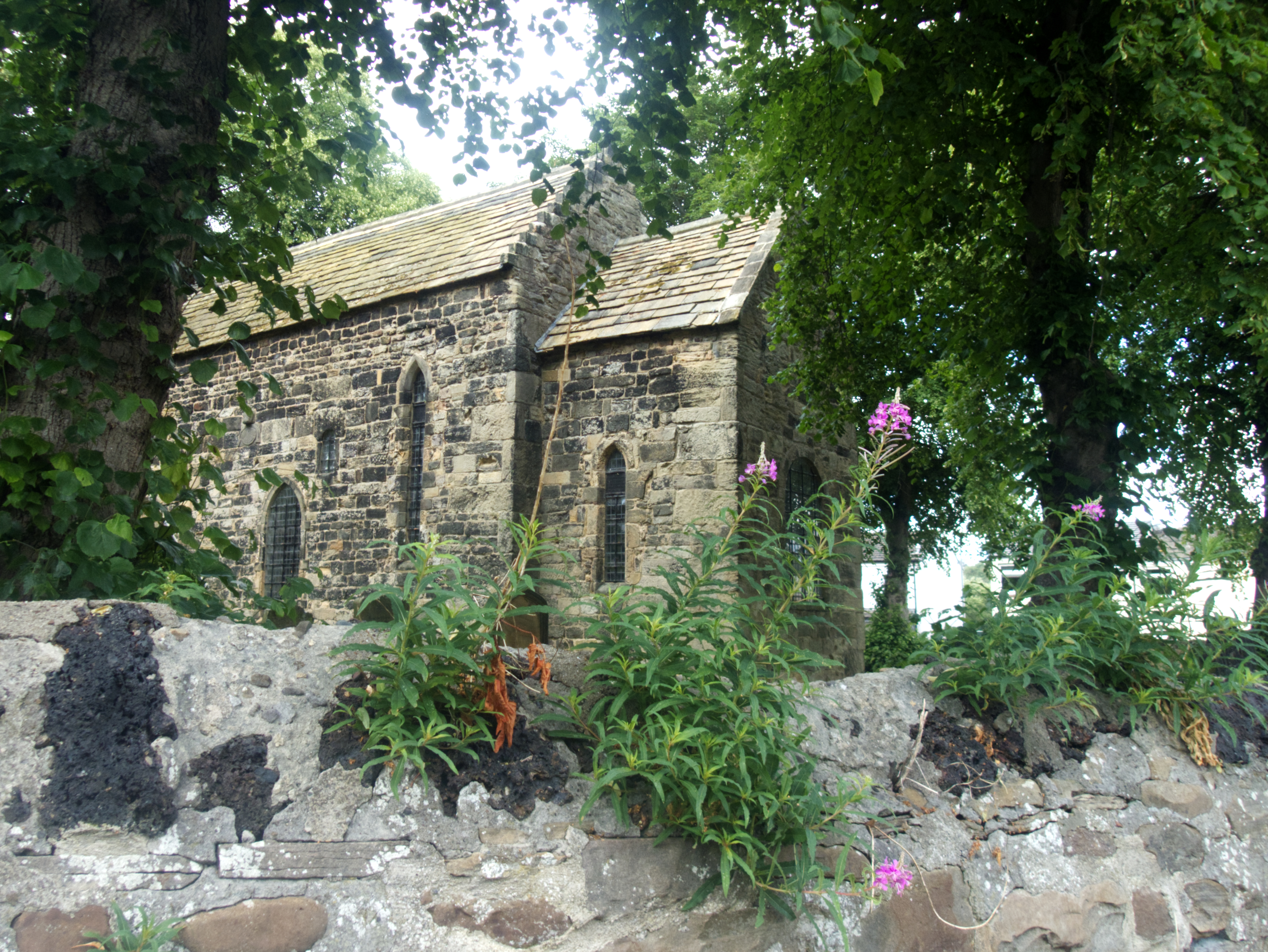
We came upon it when travelling up to Newcastle to visit college friends, it is not far from Bishop Auckland and is the oldest Saxon Church in the UK. The exact date of origin is a little lost in time but possibly 675 AD ish. It may well have been built where there was a former Celtic worship site as the surrounding church yard is spherical and some of the crosses cut into the stonework are of a Celtic design.

The surrounding wall on which the Rosebay was growing once had an inner hedge and was said to look very attractive. It is possible that the wall follows the line of a Celtic stone circle that predated the church.

One of the features of the church are two sundials above the entrance, the higher up one is thought to be contemporary with the building of the church and as such the oldest sundial which has remained in its original position since it was installed just 1,350 years ago! The dial has three lines on it which may have been the times when prayers were said, it also has a snake like creature but with a fish tail surrounding it and above there is a carving which seems to be the subject of some discussion as to what it depicts. Most seem to think it is the head of an animal, possibly a bull or and antelope, others think it may be the bottom half of a seated person ( the top half having broken away sometime) and I think it is a representation of Darth Vader.

.

Other features that can be seen are that several stones were from earlier Roman buildings, particularly the nearby fort of Binchester. One stone has LEG VI written on it which is the 6th Legion, however it is set upside down showing that the stone masons who made the church had no regard for the Roman heritage.

The Rosebay Willowherb was a rather stunted specimen, it can grow much taller and have a more impressive flower spike, however it was growing out of the top of a wall and was in some degree of shade due to nearby trees.

Rosebay or Rosebay Willowherb? Well it was the later and its scientific name was  Epilobium angustifolium and that placed it in the same genus as all the other Willowherbs but then it was renamed Chamerion angustifolium, and thus separated from the main group, at the same time some folks started to refer to it as simply Rosebay. However the BSBI ( Botanical Society of Britain and Ireland) still stick with the full Rosebay Willowherb so that is good enough for me. The reasons for the change relates to various morphological differences. The leaves are arranged in a spiral as opposed to opposite which is the case with Epilobium species. Also the arrangement of the stigma and stamens is different. Finally it does not have a Hypanthium which is a sort of cup beneath the flower where the calyx, petals and stamens all fuse together. Something which is not that noticeable but you see it quite well developed in Pomegranates’.

All quite complicated, alternatively we could call it Fireweed which is its other common name as it often grows where there has been a fire. In the era of Steam trains it was often found along railway lines, now it is still found in such situations but that is probably due more to its light wind blown seeds which are easily distributed along railway lines.

Black Spleenwort and Wall, Staffordshire

There are several places called Wall, one is near Newcastle and that is obviously associated with Hadrian’s Wall another is in Staffordshire, and this one is on the famous Watling street a lot of which is now the A5.

The site has several plants growing on the walls, but when I visited in July many had succumbed to the hot dry summer, not so the Black Spleenwort which presumably has quite extensive roots as it is a perennial and has therefore the time to get its roots well into the wall and down to any residual moisture.

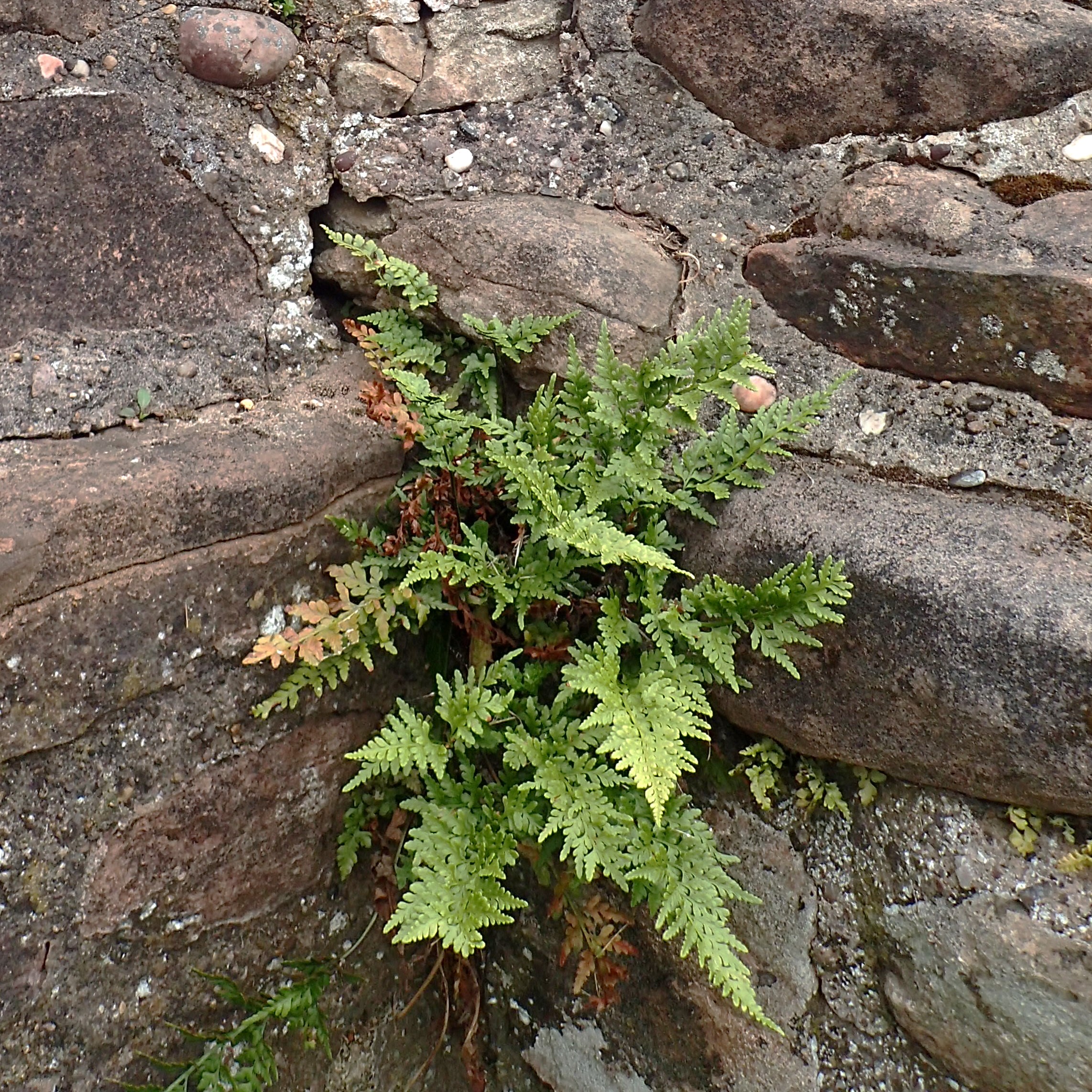
This fern is quite variable and depending on where it is growing it can look quite different. It is often to be found growing from walls, particularly in the west of Britain, in open situations the fronds are quite compact and the individual leaflets are rounded and the colour is light green. In woodlands it is more rangey and the individual leaflets are pointed and jaggy edged also they are usually dark green. One characteristic which does help to identify it wherever it is growing is that the central stalk down each frond has two groves running along it.

I had not heard of this place until I mentioned to my son that I was trying to put together something about Walls and Flowers and he said there is a village just along from where his brewery Trinity Brew Company is located on the outskirts of Litchfield. He said it was named Wall because there is a bit of Roman Wall there. Well not just ‘a bit’ but quite a lot.

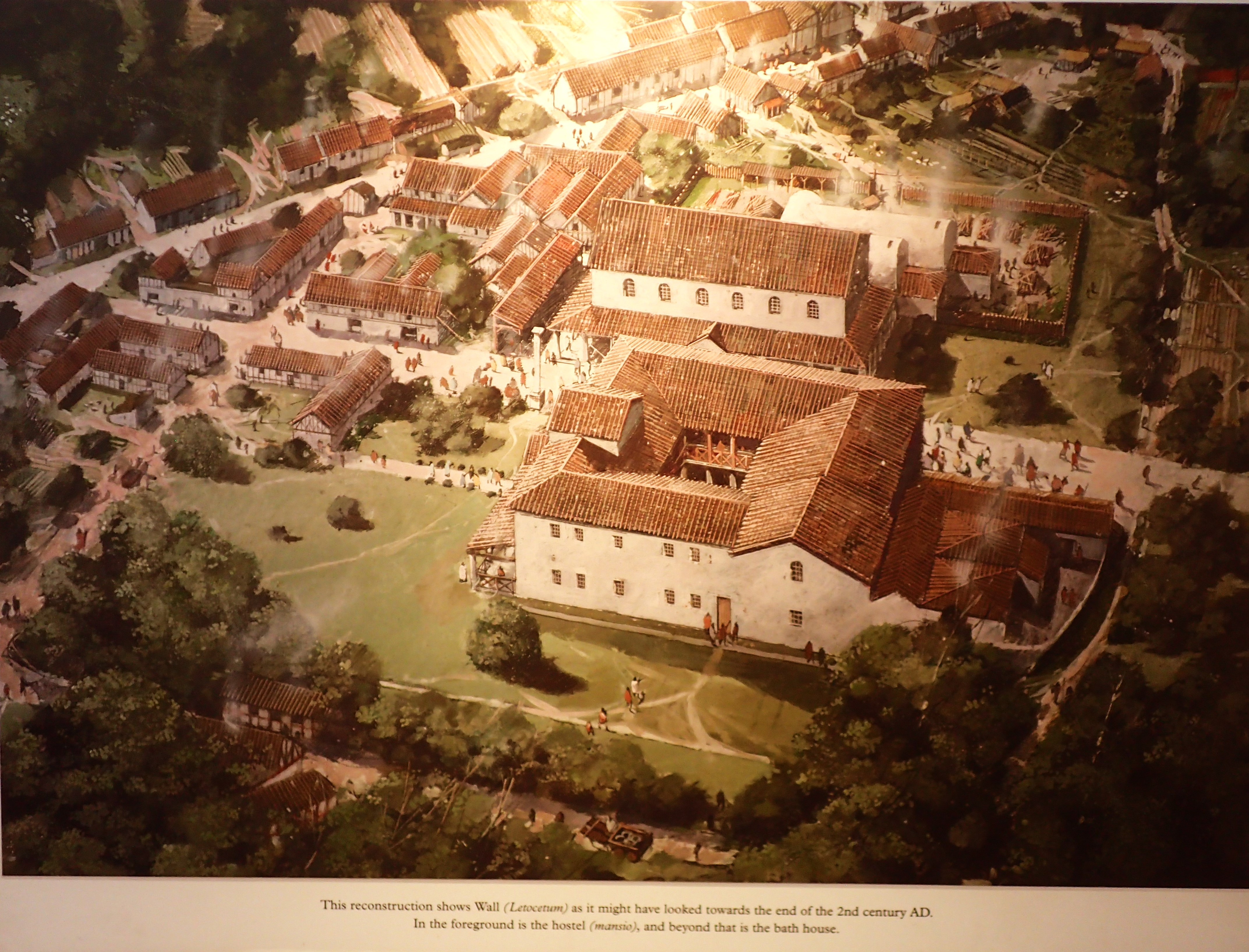
Wall is however its new name, originally it was called Letocetum by the Romans who developed it as a fort on Watling Street, in fact there was probably habitation there before the Romans came as it is a junction where two ancient pathways cross Watling Street and Ryknild Street now known as Iknield Way . Also it was on a boundary between two Celtic tribes the Cornovii to the West and the Corieltauvi to the East. The original Iron age name was Lētocaiton meaning Grey Wood ( caiton has become modern day Welsh Coed ie wood).

Possibly the Letocetum referred more to the area rather than the specific location of a village as subsequent to the fall of the Roman empire the village disappeared and was replaced by another site nearby which became Litchfield a name also derived from Letocetum.

What you see now is the remains of two buildings, a guest house and a bath house. As is often the case with Roman settlements there were several reconstructions and alterations over the course of the 367 years they were here. Originally they just built marching camps as they proceeded north west along the ancient route of Watling Street, later they improved the route putting in a stone base so that communication could rapidly pass through and the the first guest house was built around 80AD but this was wooden, the first Bath house followed in 100AD but what you see now represents much later constructions made with stone and dating to the second and third centuries AD. However at its height it would have been quite a populous bustling community probably producing leather goods, glassware, pottery and metalware.

Other species growing at Wall were Mouse-eared Chickweed, Maidenhair Spleenwort, and Selfheal, but the Black Spleenwort was perhaps the commonest certainly the most impressive.

Harebell and Milecastle 37, Hadrian’s Wall

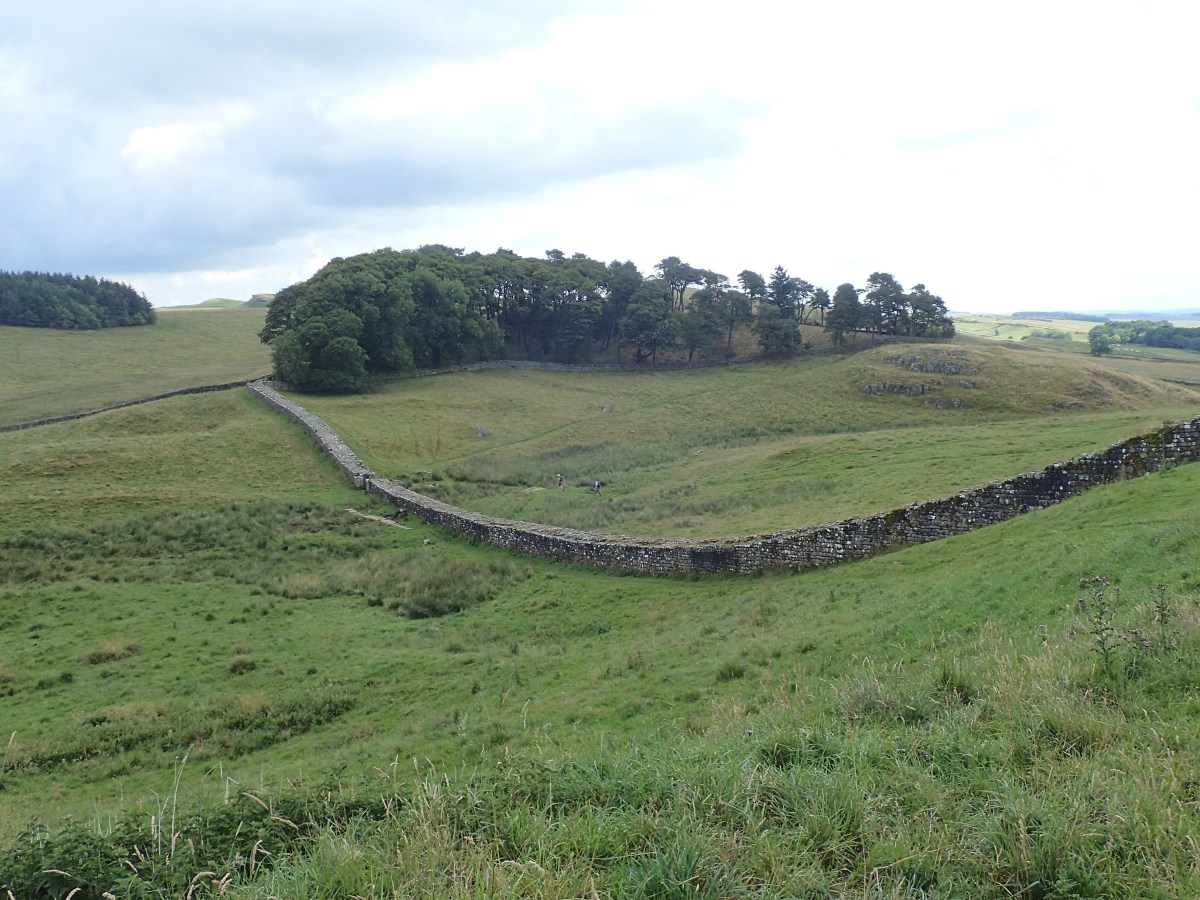
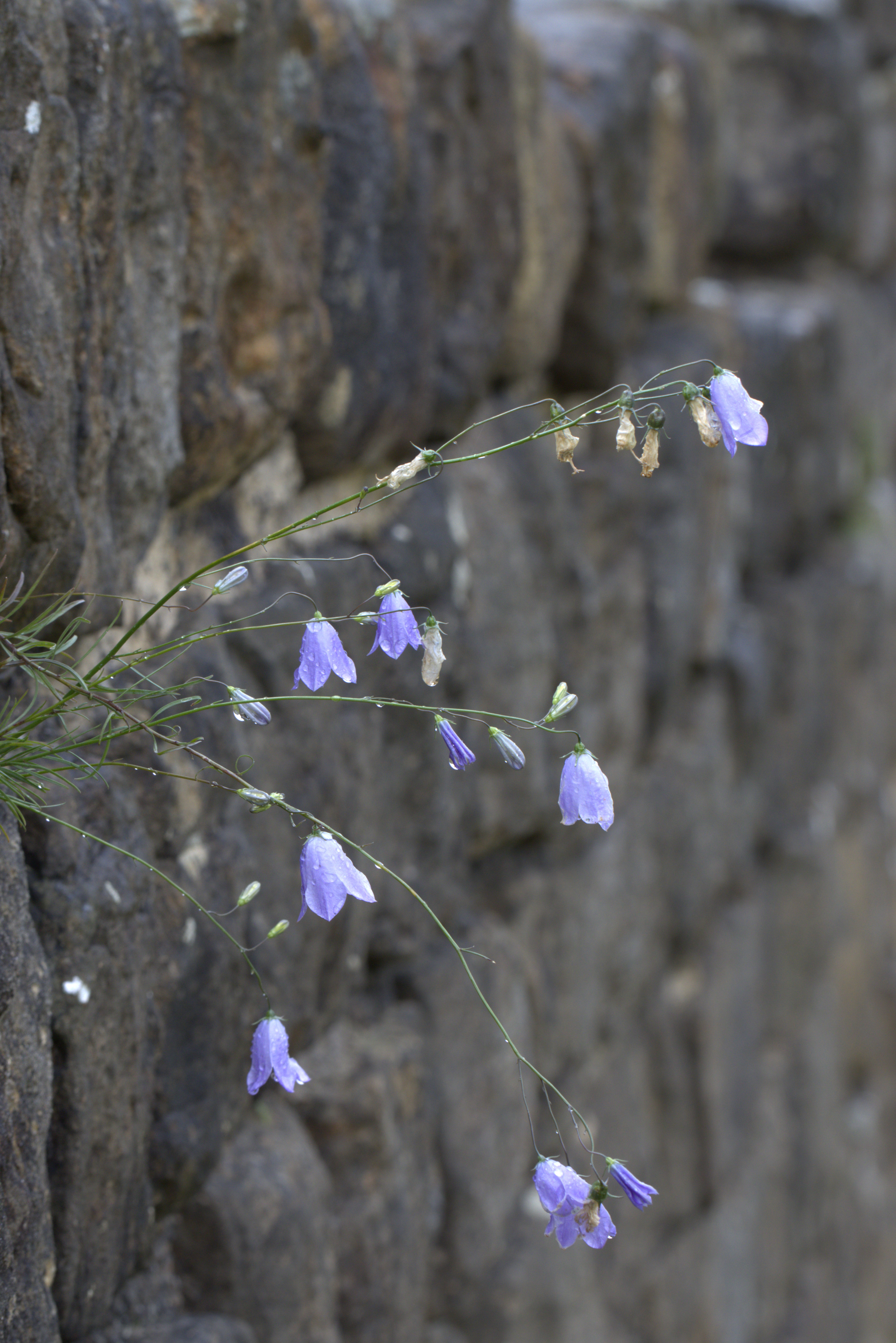
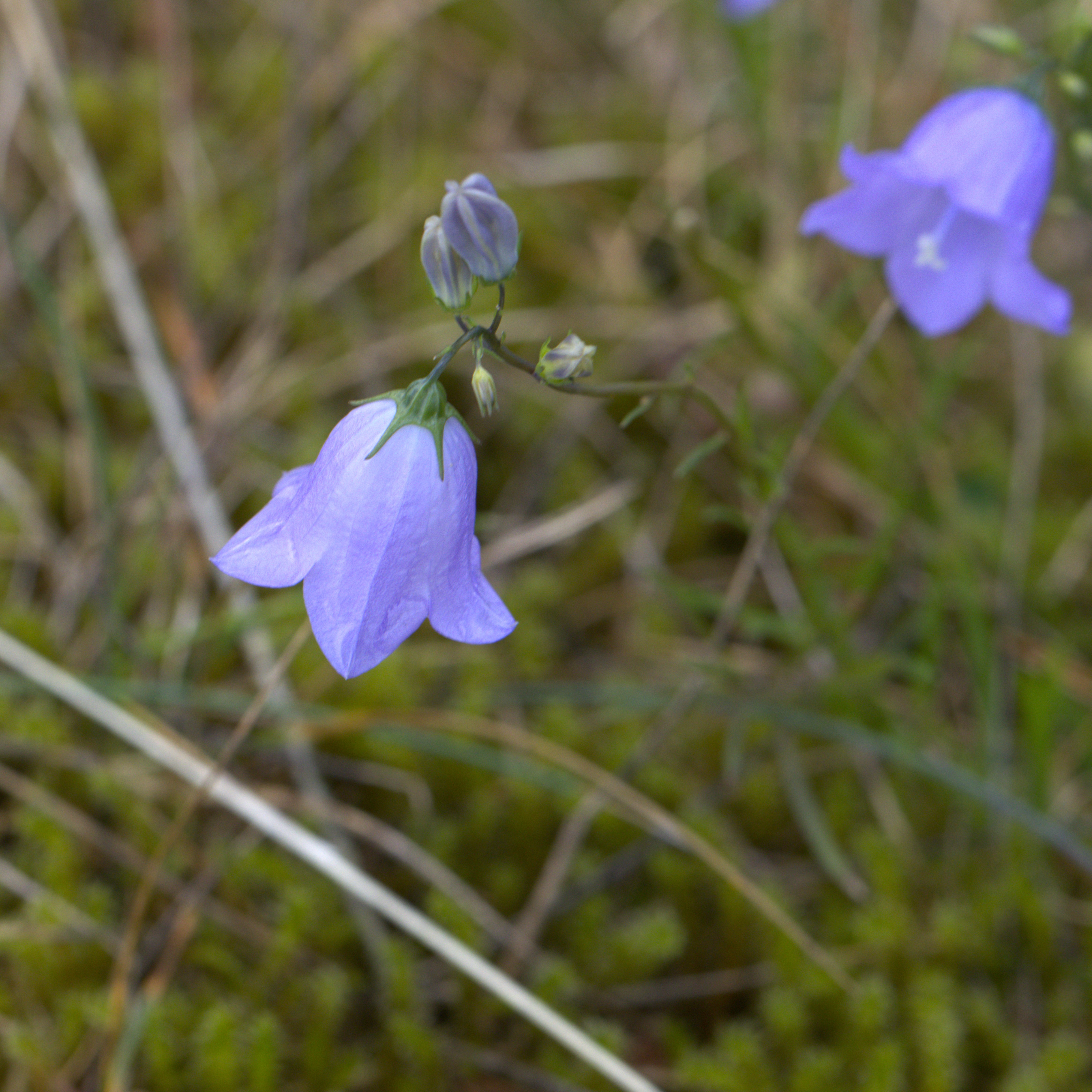
During a recent visit ‘up north’ as a southerner would say, we visited several places along the Hadrian’s Wall and I encountered Harebell numerous times. It was of course growing across the region in the low grassy moorland, but it was also growing directly out of or on top of the wall.

This beautiful and delicate looking little species is a rhizomatous perennial herb. It is however far from delicate in its requirements, being quite tolerant of dry, open, and infertile habitats. It is also not too fussy about soil pH being found in both mildly acidic and alkaline soils also it can tolerate some heavy metal presence. All in all it is well suited to life on walls but is also encountered in grassland, fixed dunes, rock ledges, roadsides and railway banks. It flowers from mid summer onwards.

Its scientific name is Campanula rotundifolia and it has several common names as you might expect, one is Scottish Bluebell but in Scotland they often call it simply Bluebell. It is not related to what the English think of as a Bluebell the one that grows in woodlands. It is the flower emblem of Sweden and the county flower of Yorkshire.

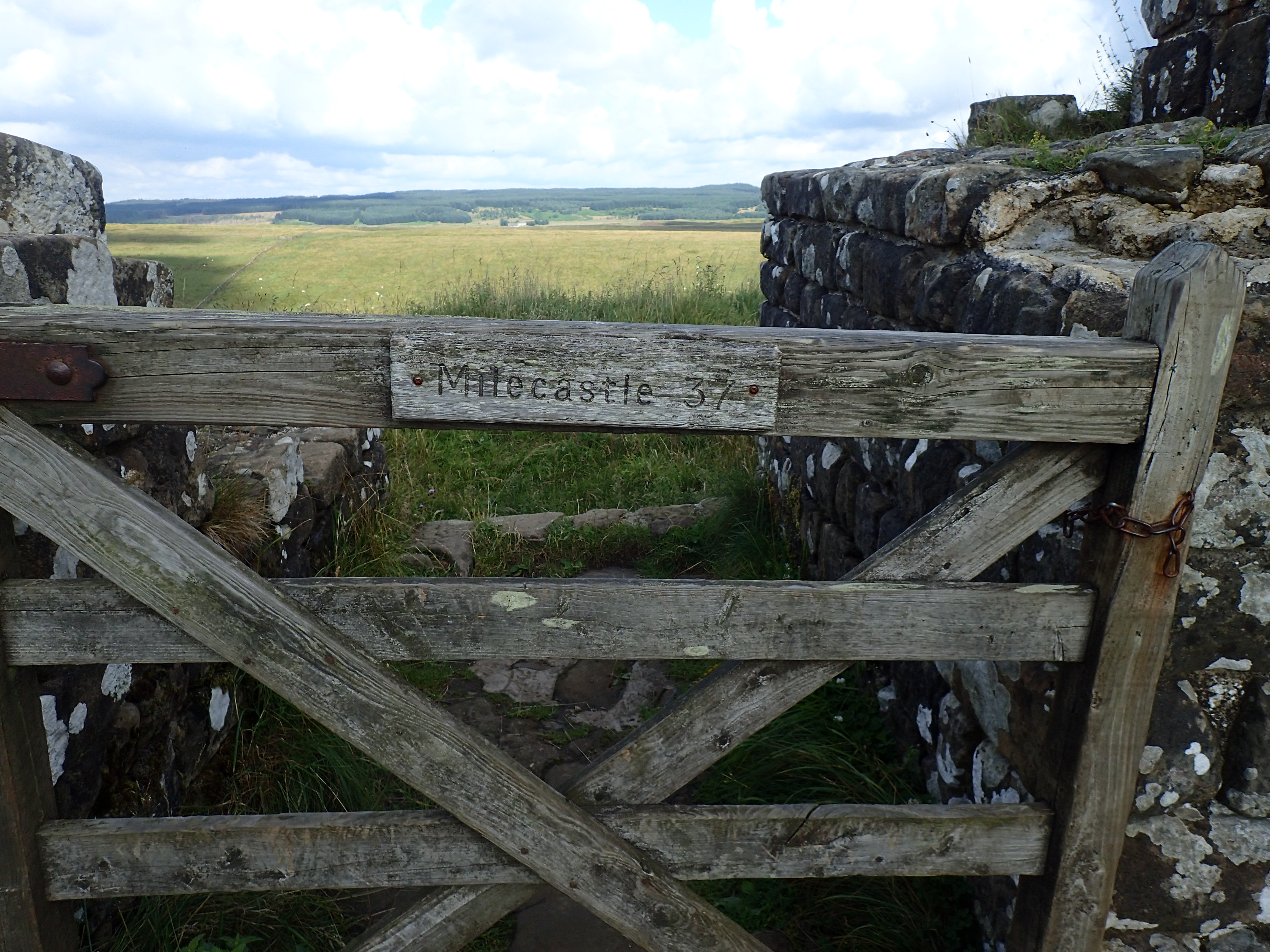
One of the places we saw it on Hadrian’s wall was mile fort number 37. it is the next fort along from Housesteads. Not surprisingly these milecastles (small forts) were built at one mile intervals all the way across the length of the wall.

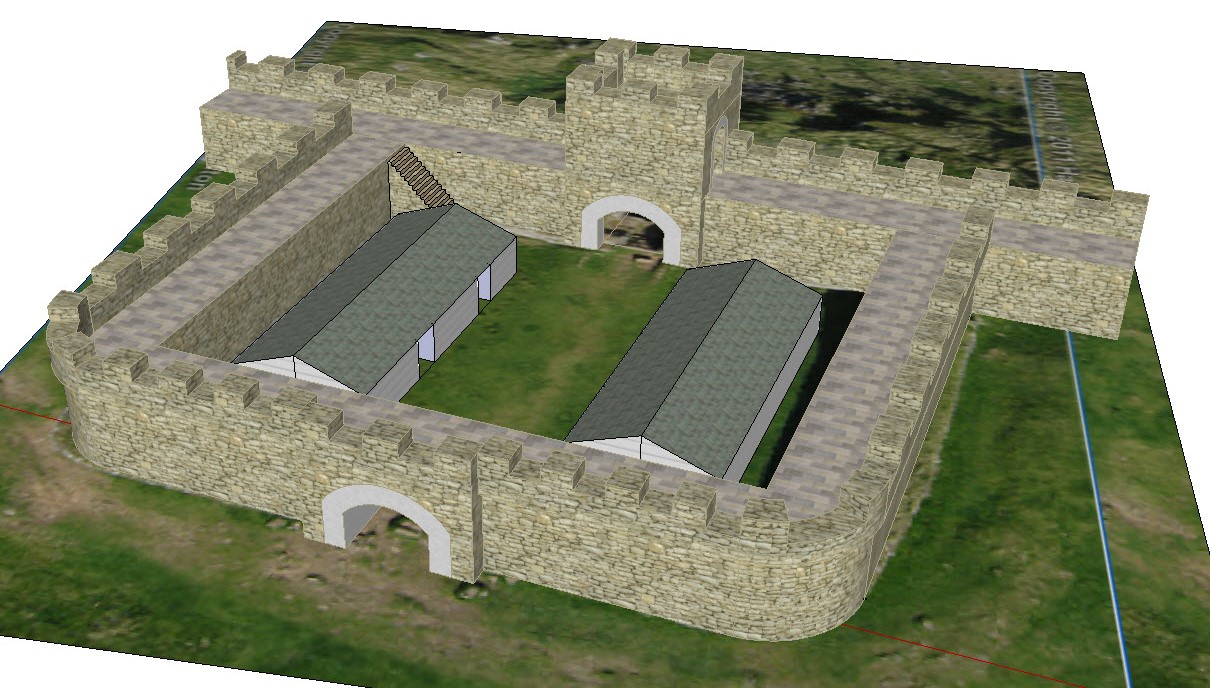
This artists impression of how Milecastle 37 would have looked is by courtesy of HUKBMBEAR Thank you.

When it was up and running it would have had housing for 20 to 30 soldiers and they would have remained on site also each garrison would have manned the neighboring turrets. The milecastle’s garrison was a border post as well as being defensive in time of rebellion. It would have allowed the passage of people, goods and livestock across the frontier, and it is likely that the milecastle acted as a customs post to levy taxation on that traffic. Could Scottish independence could see the reintroduction of modern day equivalents?

Between each milecastle there would have been two turret structures these were located approximately one-third and two-thirds of the way between the milecastles; all very neat and precise just like the Roman roads.

The two turrets linked to milecastle 37 are named 37a and 37b. 37a is at Rapishaw Gap and was probably demolished before the Romans abandoned the wall and the only evidence for it now is some earthworks which can only be appreciated from aerial photographs.

Turret 37 b at Hotbank Grag is still visible but it is just a stone studded earthen platform so not that impressive now.

 There were 80 milecastles and 158 turrets.