Harebell and Milecastle 37, Hadrian’s Wall

During a recent visit ‘up north’ as a southerner would say, we visited several places along the Hadrian’s Wall and I encountered Harebell numerous times. It was of course growing across the region in the low grassy moorland, but it was also growing directly out of or on top of the wall.
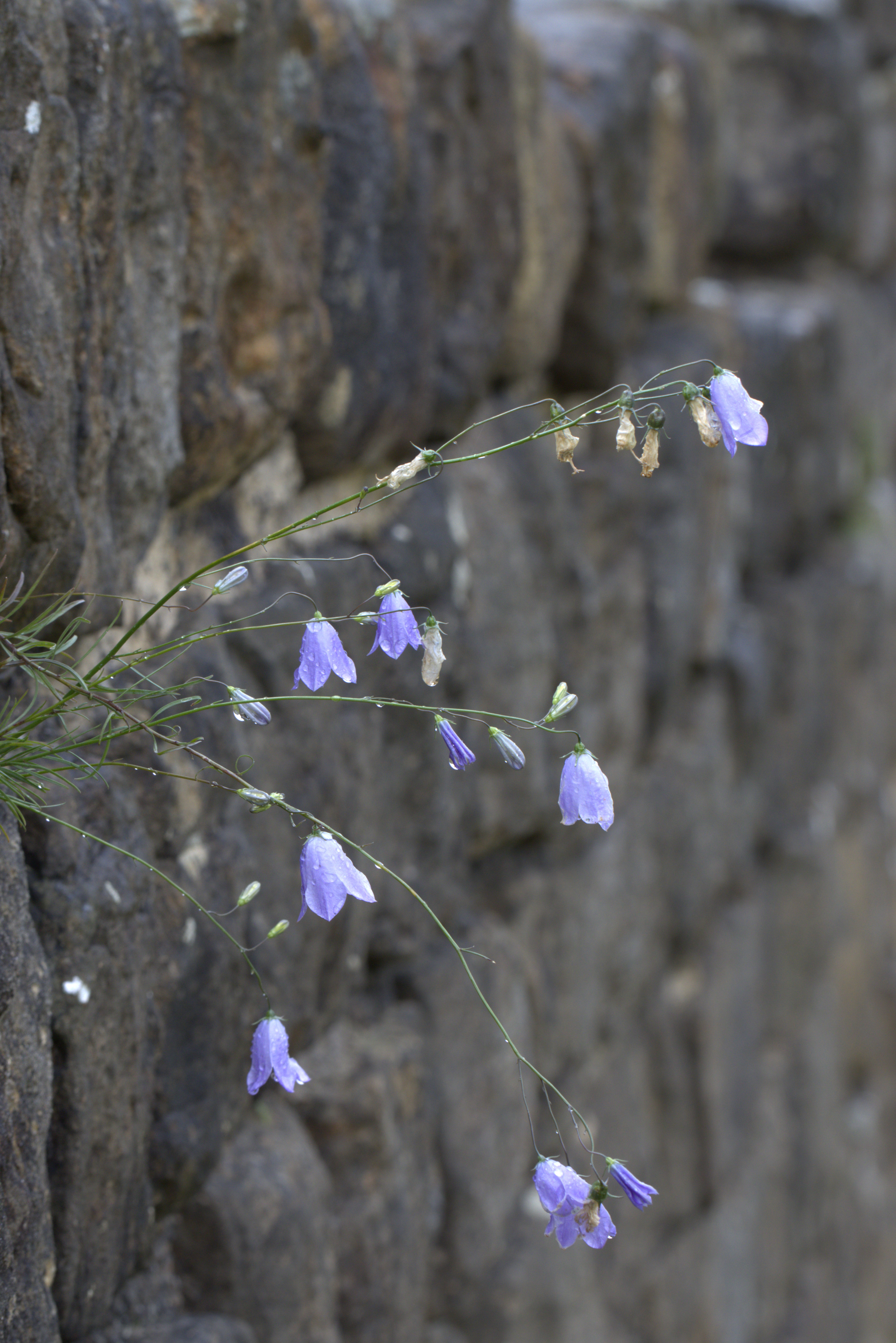
This beautiful and delicate looking little species is a rhizomatous perennial herb. It is however far from delicate in its requirements, being quite tolerant of dry, open, and infertile habitats. It is also not too fussy about soil pH being found in both mildly acidic and alkaline soils also it can tolerate some heavy metal presence. All in all it is well suited to life on walls but is also encountered in grassland, fixed dunes, rock ledges, roadsides and railway banks. It flowers from mid summer onwards.
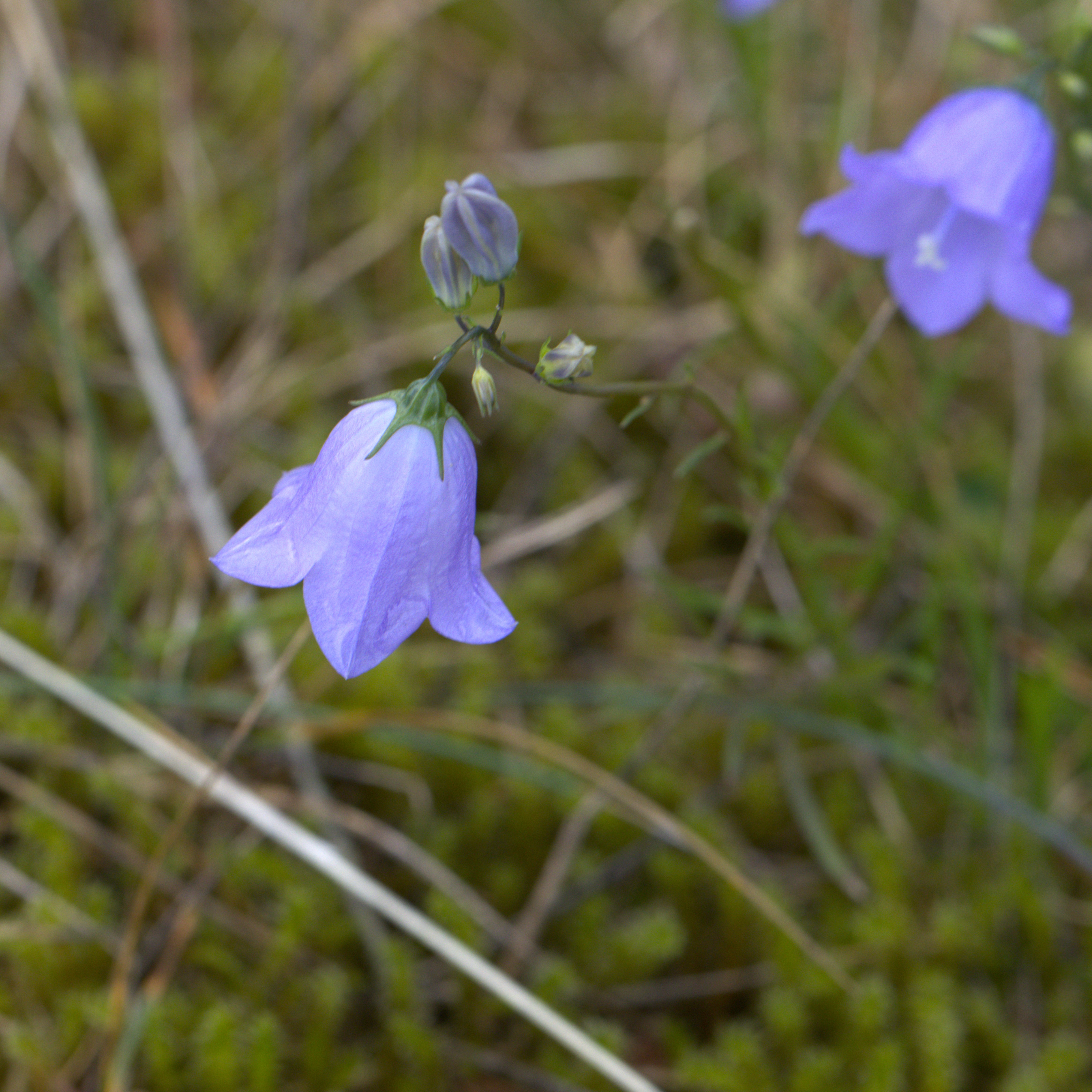
Its scientific name is Campanula rotundifolia and it has several common names as you might expect, one is Scottish Bluebell but in Scotland they often call it simply Bluebell. It is not related to what the English think of as a Bluebell the one that grows in woodlands. It is the flower emblem of Sweden and the county flower of Yorkshire.
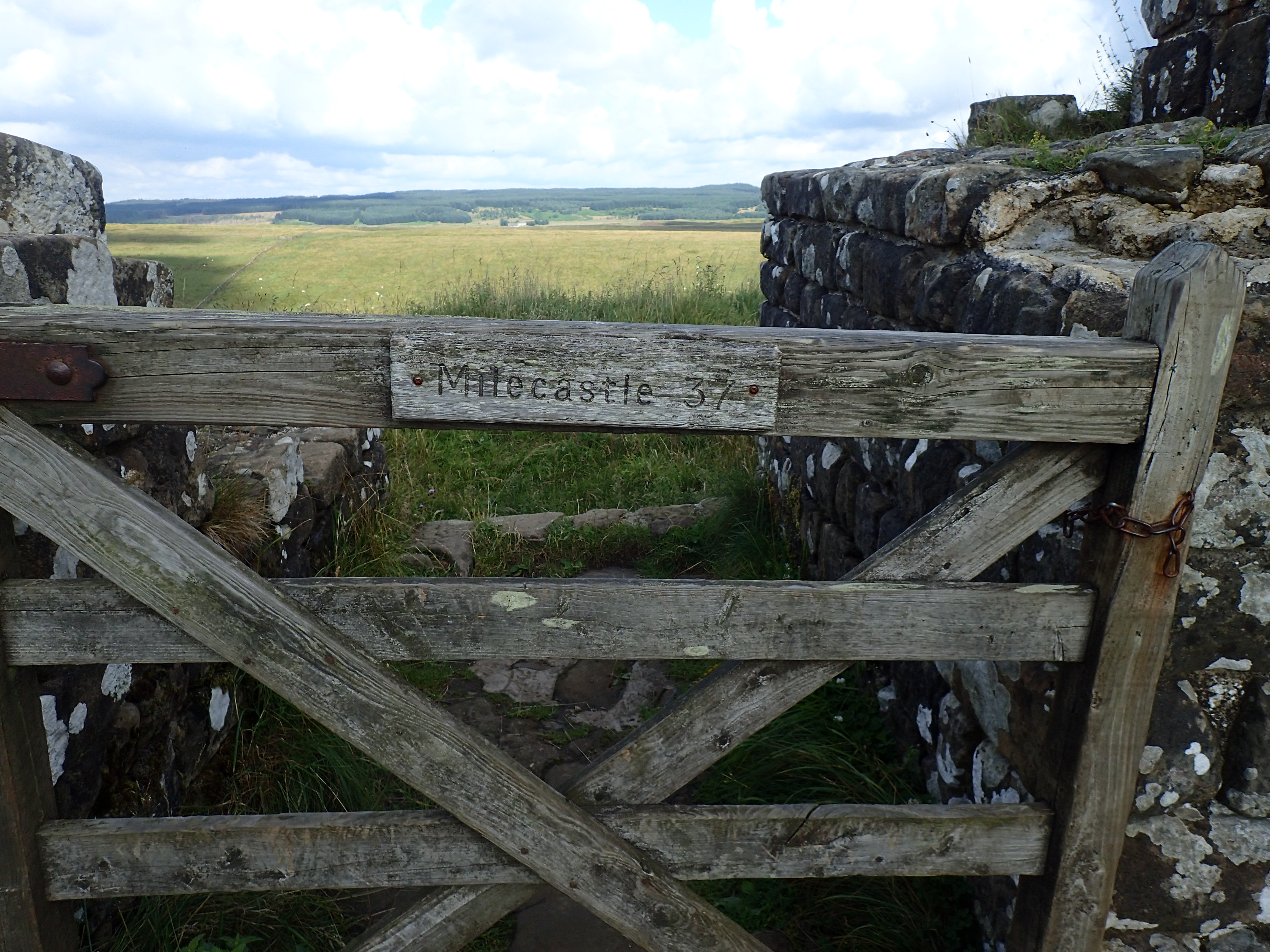
One of the places we saw it on Hadrian’s wall was mile fort number 37. it is the next fort along from Housesteads. Not surprisingly these milecastles (small forts) were built at one mile intervals all the way across the length of the wall.
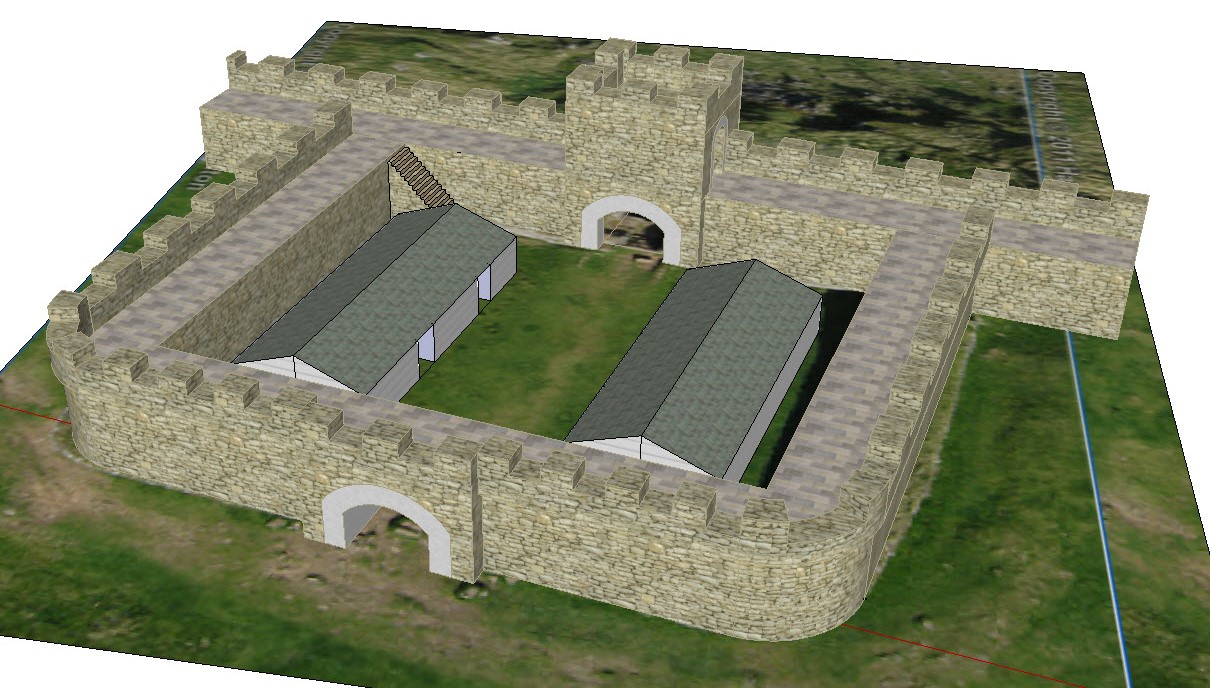
This artists impression of how Milecastle 37 would have looked is by courtesy of HUKBMBEAR Thank you.

When it was up and running it would have had housing for 20 to 30 soldiers and they would have remained on site also each garrison would have manned the neighboring turrets. The milecastle’s garrison was a border post as well as being defensive in time of rebellion. It would have allowed the passage of people, goods and livestock across the frontier, and it is likely that the milecastle acted as a customs post to levy taxation on that traffic. Could Scottish independence could see the reintroduction of modern day equivalents?

Between each milecastle there would have been two turret structures these were located approximately one-third and two-thirds of the way between the milecastles; all very neat and precise just like the Roman roads.

The two turrets linked to milecastle 37 are named 37a and 37b. 37a is at Rapishaw Gap and was probably demolished before the Romans abandoned the wall and the only evidence for it now is some earthworks which can only be appreciated from aerial photographs.

Turret 37 b at Hotbank Grag is still visible but it is just a stone studded earthen platform so not that impressive now.

 There were 80 milecastles and 158 turrets.
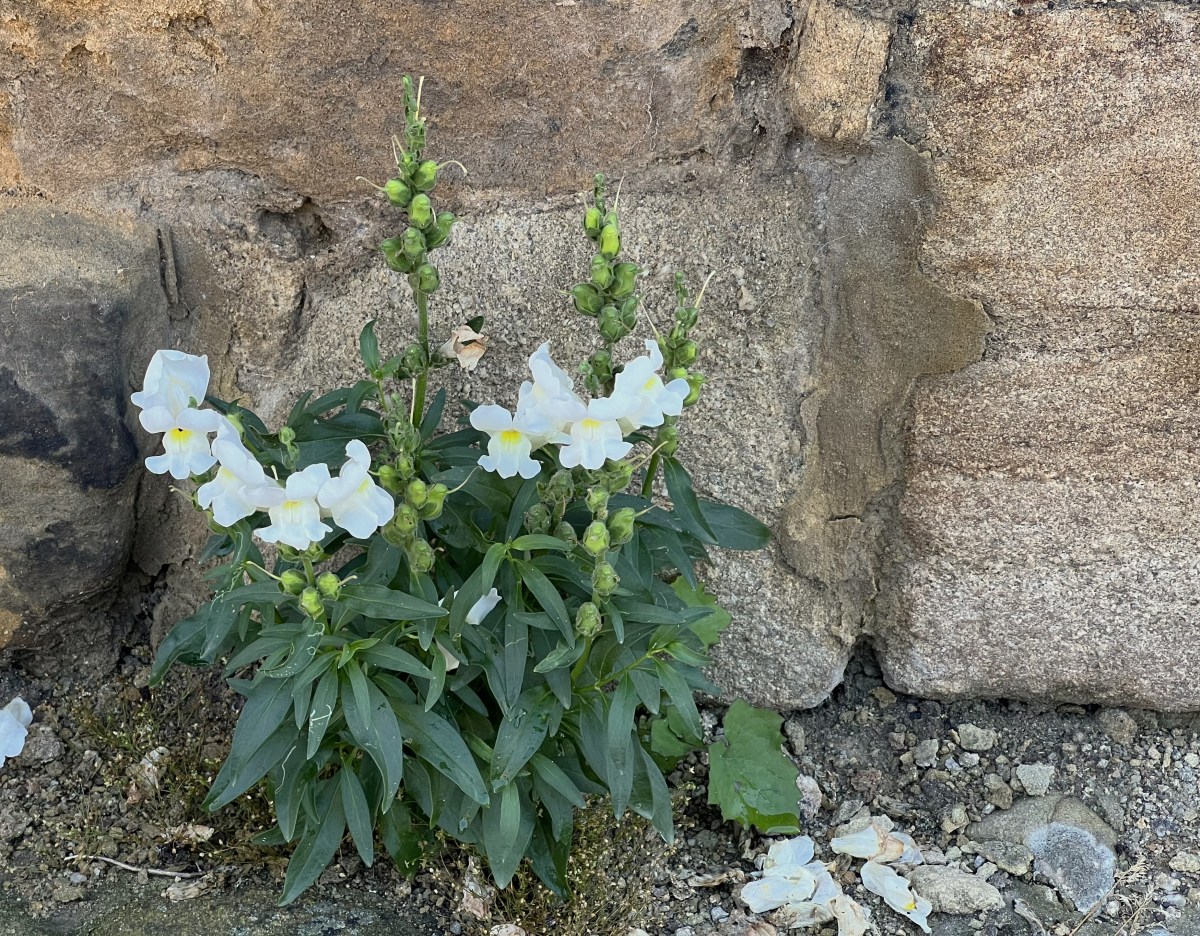
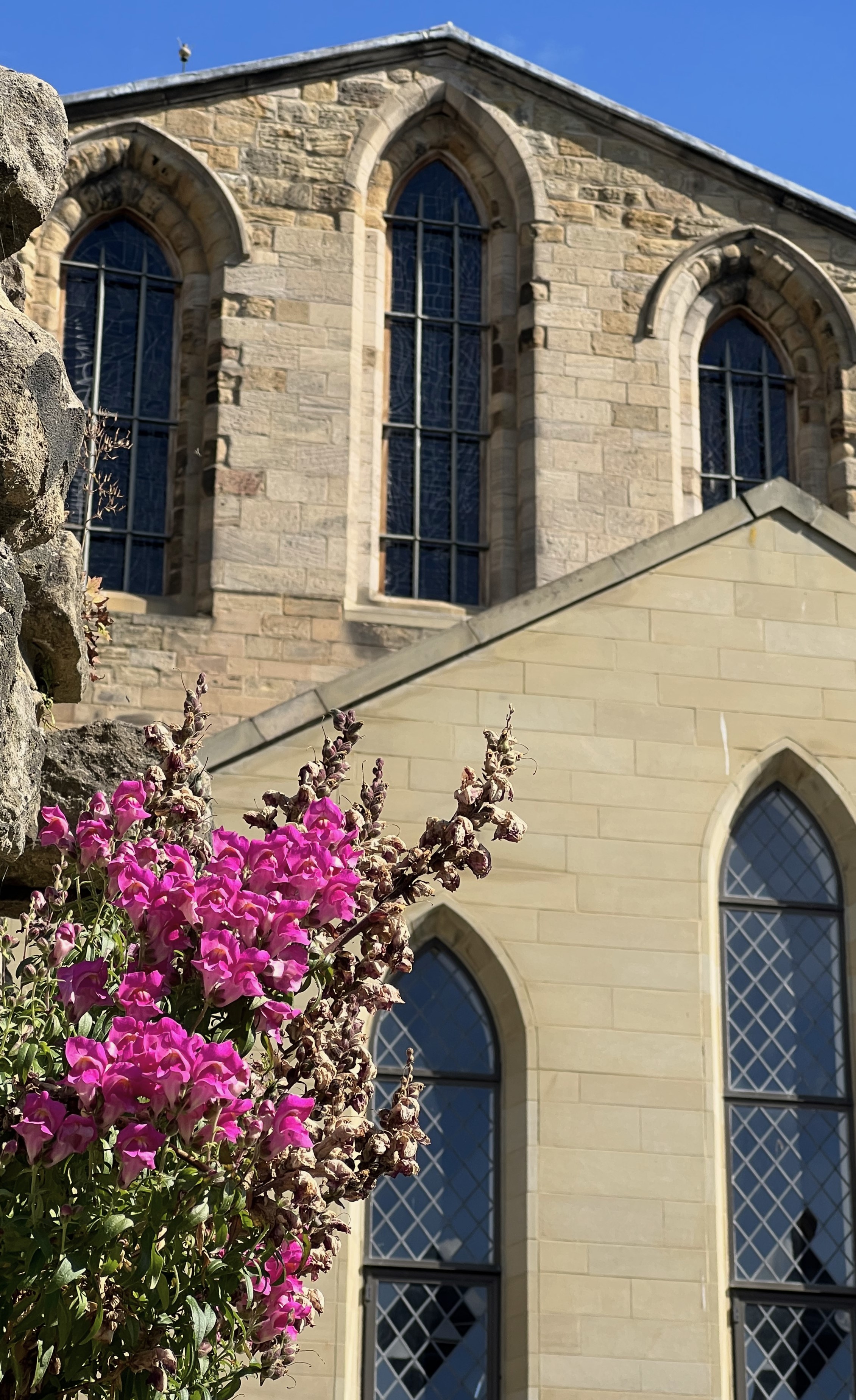
Snapdragon; Hexham Abbey, Northumberland

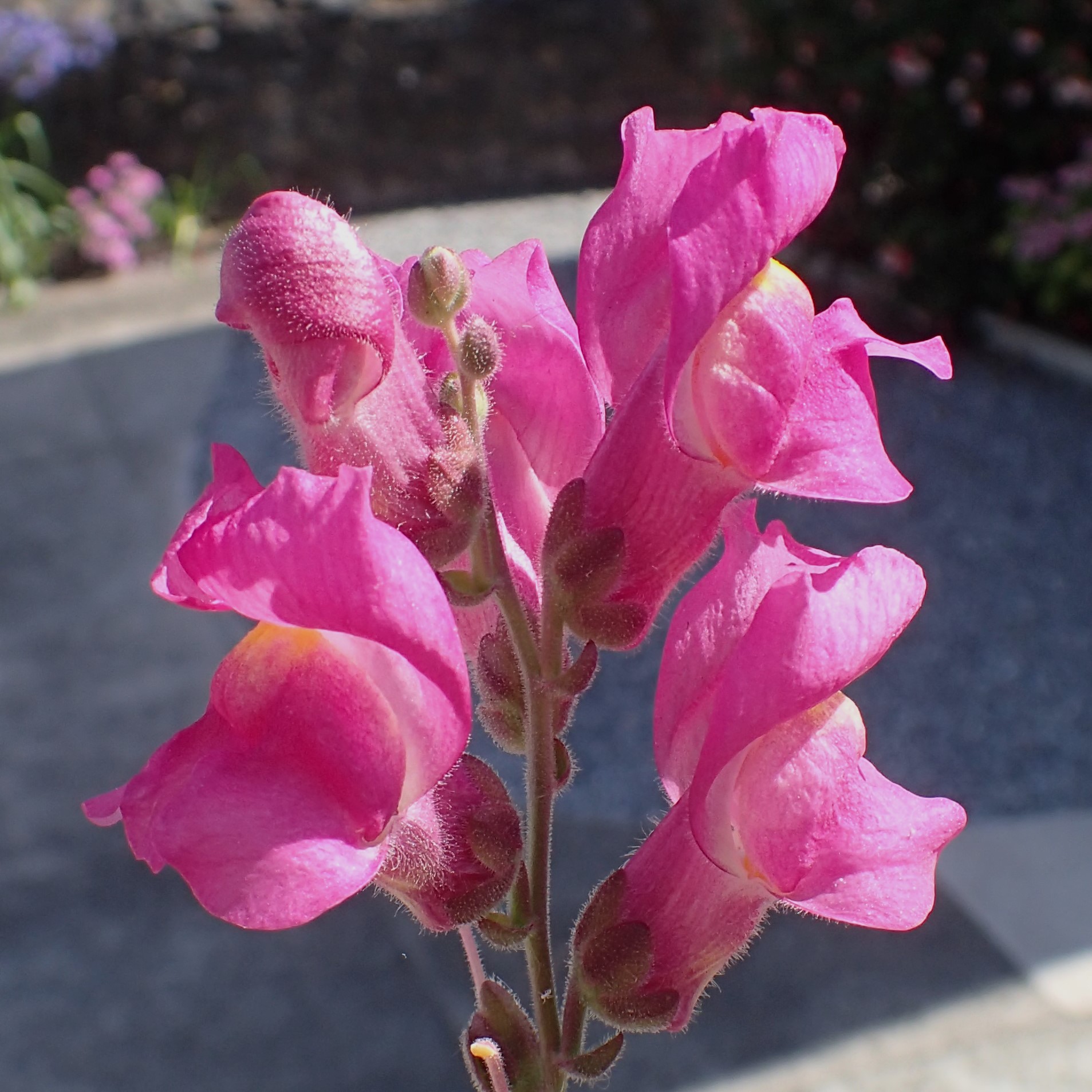
Snapdragon or Antirrhinum is a garden plant which has long been established in the wild. It is not native being from the Mediterranean and SW Europe. It was first grown here in gardens during Elizabethan times. It has a striking flower which is usually in a rich pink colour although garden varieties can come in various shades, white, cream, yellow and all stations from pink through to purple. The flower is perhaps reminiscent of a dragon and it does snap shut with the upper and lower parts coming together quite strongly. The only pollinators that can force their way into the flower is the larger bumble bees. I remember as a small boy being fascinated by the bumble bees pushing their way into the flowers and then backing out covered in pollen, also along with many other children I would pull one of the flowers away from the flower head and then you could squeeze the sides and the mouth would open.

It is an annual or short-lived perennial herb and is widely naturalised on old walls, waysides, pavement cracks, waste ground and rubbish tips. Populations can be long-lived, and the species reproduces readily from seed. It is less common in the North and in Scotland so Hexham is towards its upper limit. It is usually found close to habitation. It is quite tolerant of dry conditions, it prefers a pH of 7 and is not that frost hardy, thus its preference for southern Britain.

Hexham Abbey was built between 674 and 678, and much of the stone came from the remains of Roman buildings in Corbridge which is three miles away. It was Queen Etheldreda who gave the land to Wilfrid Bishop of York in 673 or 4 and thus it is one of the earliest Christian sites in the UK. What you see today is not what was built back then, it was largely replaced in the 12th and 13th century between 1170 through to 1250. Subsequent additions have been made, but given that every phase of building has been done in the same light honey coloured stone, it helps give the whole building a unity of form.

What does remain of the original church is the crypt and there you can see many roman stones including one that has the names of three emperors engraved into it Septimus Severus ( 193 to 211AD ) and his sons Marcus Aurelius ( 198 to 217 AD) and Geta. The three ruled as a triumvirate after Severus appointed his sons as joint rulers in 198 but when Severus died in 211 then the two sons ruled together but not that harmoniously.

Today the Abbey is well worth a visit, located in the very centre of Hexham and it does have a pleasant court yard with surrounding gardens and an excellent tea room. I was visiting the area with Dr Colin Harwood and thanks have to go to him for the photographs. He obliged by taking the pictures as I had left my camera back at base. As you can see both pink and white varieties grow on the walls.