My back garden is small, but it is surrounded on all sides with stone walls. They are not dry stone walls as they have a form of mortar in-between the local stone. The use of the words ‘form of mortar’ is well advised as it is quite loose and plants are easily able to colonise it.
The garden is orientated to the north and is also terraced with 4 to 5 levels and these are also formed from similar walls, so lots of wall space, probably more wall than garden.
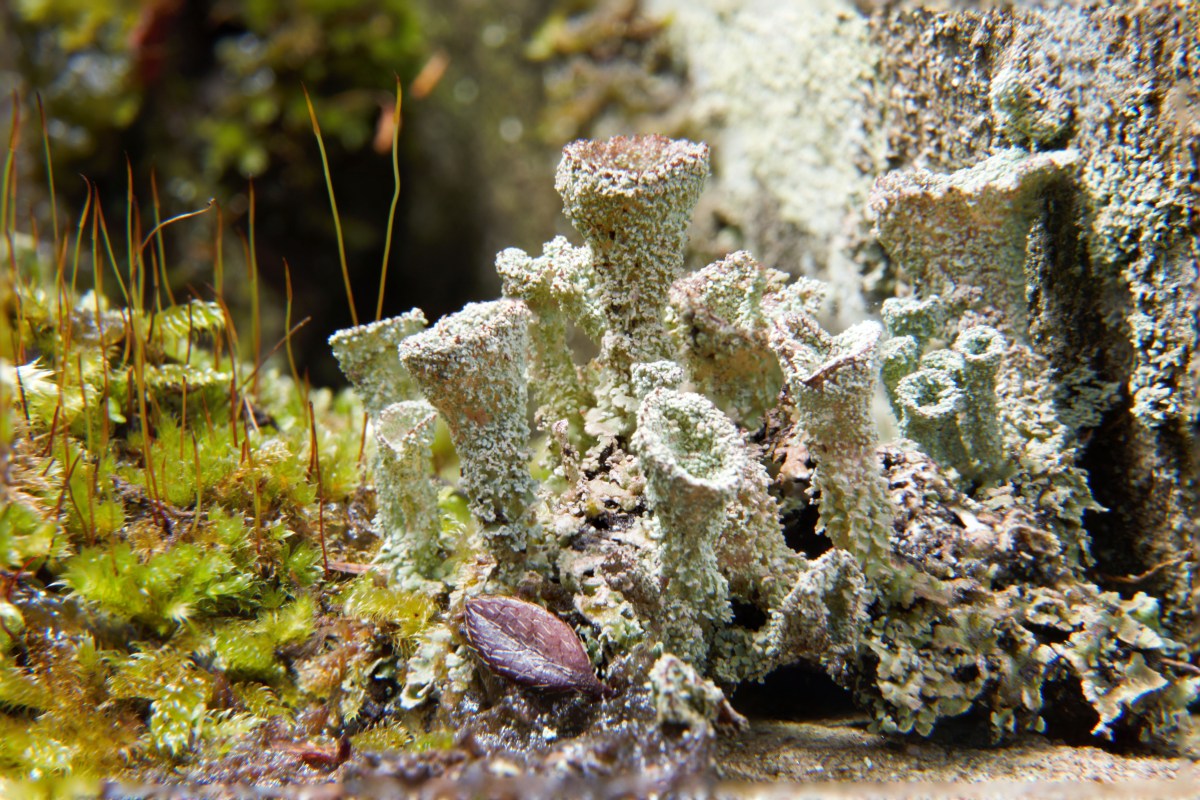
Much of the eastward facing side wall was covered with a thick layer of Ivy when we purchased and the opposite wall had a straggling climbing rose, the rose has gone and the ivy has been removed but not completely eradicated, it still tries to make a come back but so far without success. The end wall had some plants other than ivy and particularly interesting were some cup lichens. There was a few bits of Ivy-leaved Toadflax and some Maidenhair Spleenwort fern, but mostly Ivy. There was a couple of places towards the top of the garden where the Ivy was less dominant where Bugle grew out of the wall and one spot where a Primrose had established itself.
Bit by bit the walls have become colonised by a greater variety of plants, some of this has been natural and some has occurred with a helping hand.
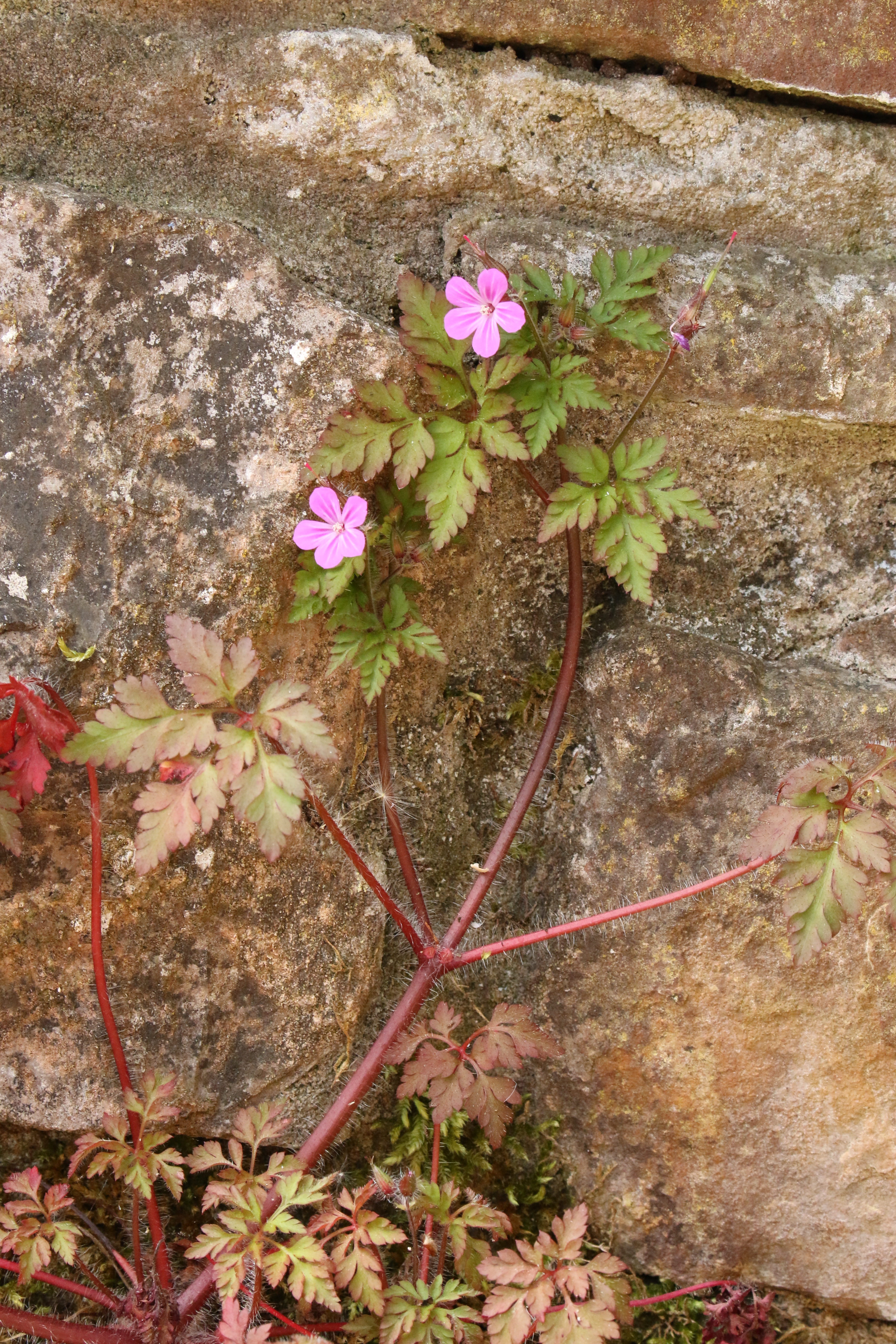
The natural colonisation has involved the spread of the Ivy-leaved Toadflax, this is an introduced species and virtually only grows on walls, it is now perhaps the most common species on walls. At the same time the Maidenhair Spleenwort has done quite well, another fern which was already established in the garden is the Harts tongue fern and this has spread into some new positions on the walls although it seems to have only colonised the lower regions of the walls were it is probably more damp. Lots of other species seem to have made their way from the flower beds, which are cared for but also contain what some might call weeds. So we now have various Violet species along with Bittercress, Herb Robert and the related Shiny leaved Cranesbill. Wild Strawberry, and Speedwell species, and some Willowherbs are also to be found. There are quite a few mosses and lichens but I am restricting myself to the larger (vascular) plants.
With a little help other species have colonised. I do not grow vegetables any more, the garden is too small, but in our previous garden I did grow quite a lot and so when we moved I brought with me some half used packets of seeds and some herbs in pots. This has resulted in two new species in the walls. Corn Salad or Lambs lettuce, I had some old seed and so rather than bin it I sprinkeld the seeds on a small bare patch of soil and it has never looked back. It now self sows every year and has done quite well in various locations like cracks between paths and walls and going up the steps from one level to the next and it is quite happy in the walls. I let it grow and seed because it does provide a bit of fresh green for salads very early in the year and its more tasty than supermarket lettuce especially in February and March. The other import has been Marjoram which was brought in as a pot plant herb from the previous house and it too has self seeded and is colonising the walls quite happily. It is much appreciated by insects including various bee species and the butterflies in late summer.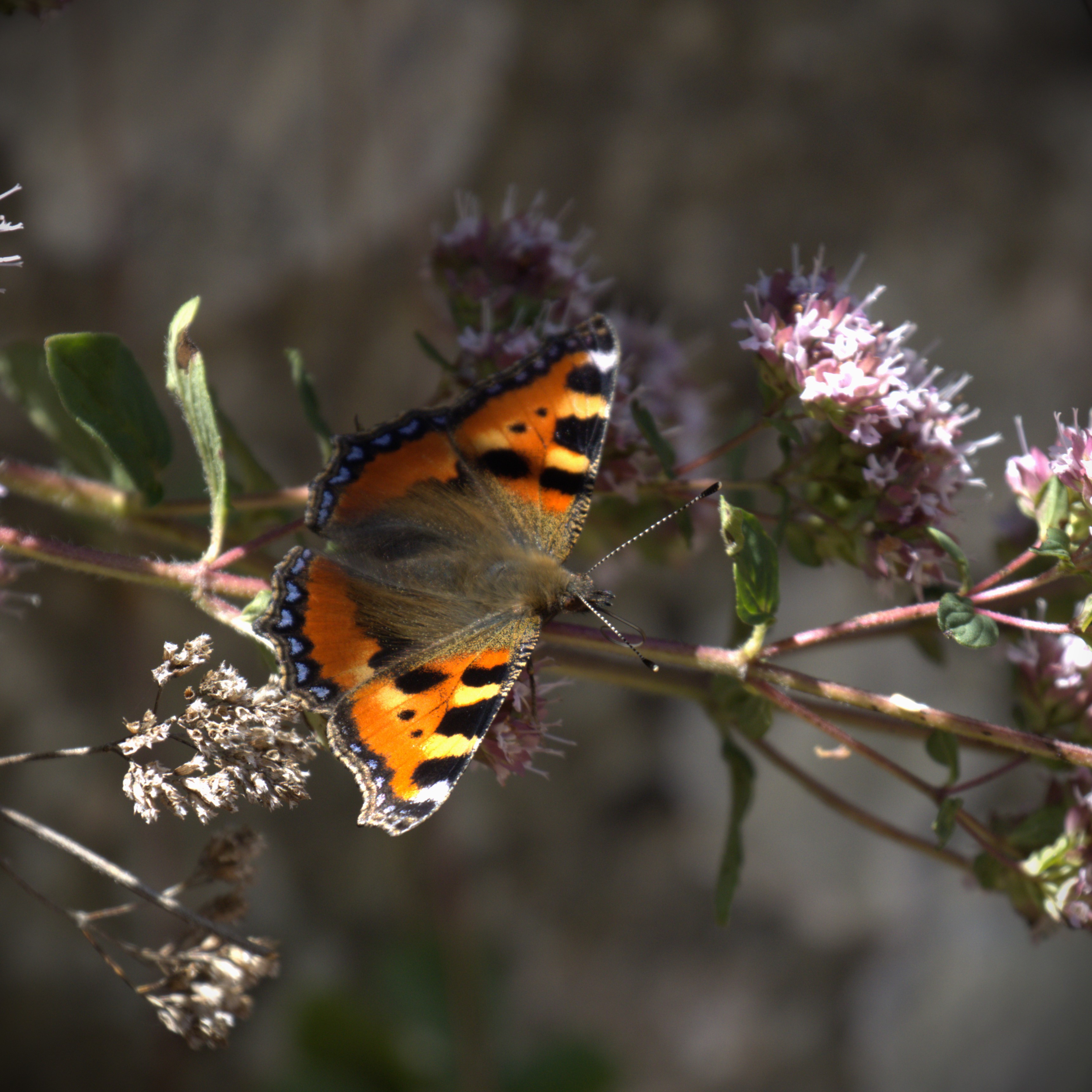
Then there are one or two where my helping hand has been more firm, ie I have specifically tried to get the plants established in the walls. I generally have done this by removing some seed heads from species growing on other walls and then pushing the seeds or seed heads into what look like suitable nooks and crannies. I have also done this with the spore areas on fern leaves. Success has been mixed. Probably the most successful has been Navelwort, it took a couple of attempts but two years ago lots of tiny plants appeared from places where I had introduced seeds the previous year and then this year these plants grew on and produced flower spikes, they duly seeded and died but now I have seen new leaves appearing at various places in the wall. I have also introduced some stonecrop, the common yellow one, I took a very small amount for some growing in a nearby wall and then poked tiny amounts into what looked like suitable places, most died, not immediately but slowly slowly and now there is just one small patch but that has grown from its original size and seems to be established.

With regards to ferns I have taken leaves with sori ( the brown spore producing areas) from various plants and then again pushed them into the walls, I had some success with a fern called Rusty back with just one plant developing a couple of years ago but this years very hot weather did for that one. I have also tried the same with wall rue but no success.
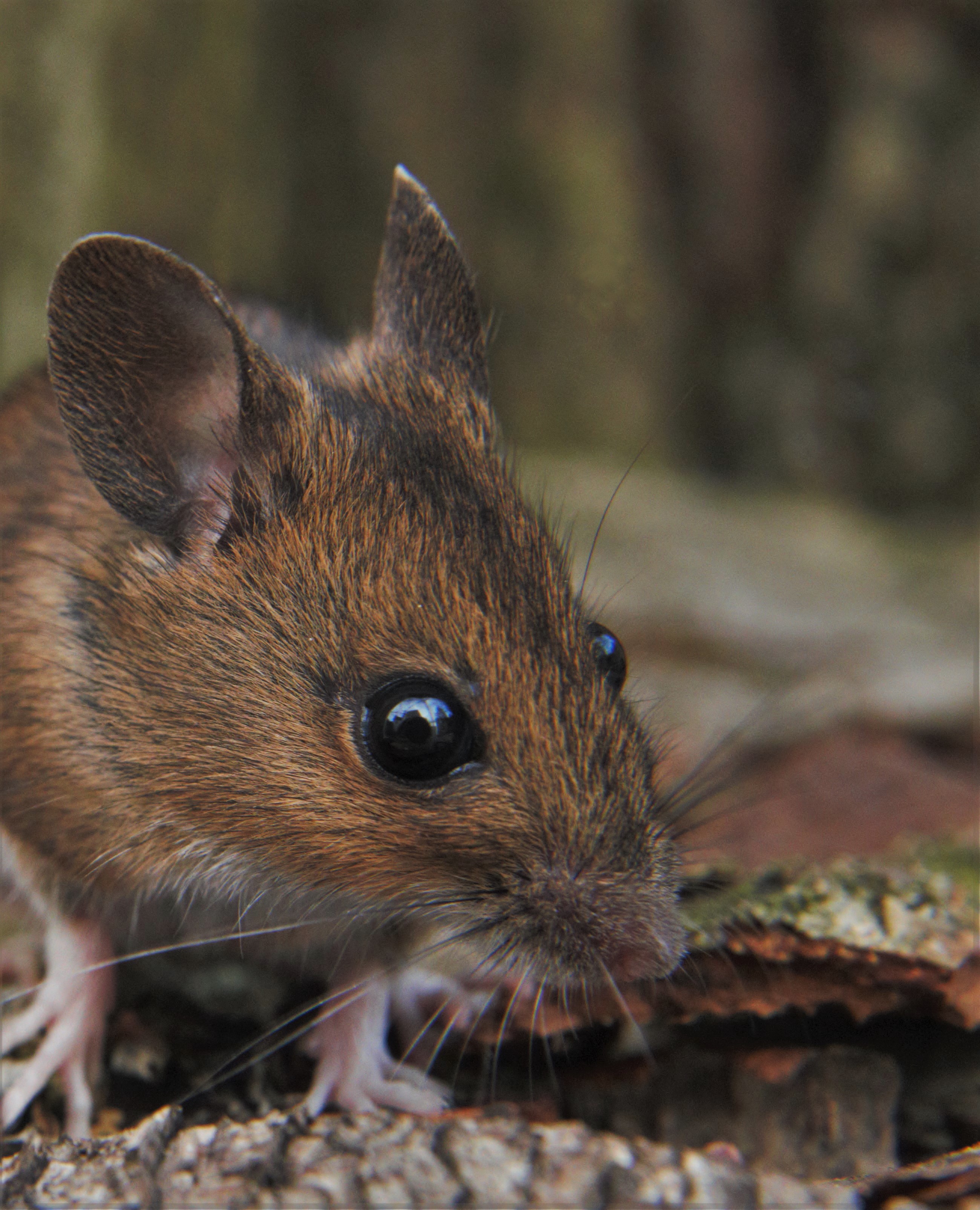
I try to encourage a good mix of species by, when there is not a hose pipe ban, spraying the wall quite frequently with water in the evenings and I also exercise some control by removing species that might like to take over such as the Ivy and the Marjoram, also some of the Willowherb. The walls around my garden also support a range of different animals from tiny molluscs through to three species of mammal, I regularly see Field Mice and Bank Voles and I occasionally see a Shrew. These I believe have their homes in the holes and cracks between the stones.
 Walls and Flowers