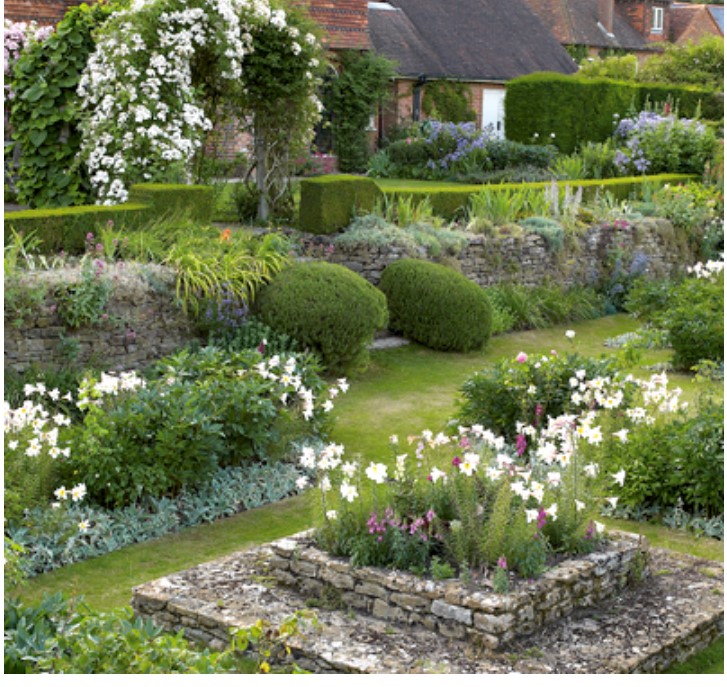
Gertrude Jekyll

The famous turn of the century garden designer was a great exponent of walls and natural planting. Turn of the ninetieth century that is, she was born in 1843 and died 1923, her hey days in terms of garden design were the 1880’s to 1920’s.

She originally studied to be an artist, the arts and crafts movement had a big influence on her, the likes of Turner, Ruskin and William Morris. It was later that her failing eyesight caused her to leave painting and turn to garden design. Also at this time she became friends with Edwin Lutyens a young architect, also influenced by the arts and crafts movement. Her family lived in Godalming in Surrey, their house was designed by Lutyens. Subsequently she collaborated extensively with him, he designed the house and she worked on the garden. She designed over 400 different gardens and there are many that survive and are indeed still open to the public. She also wrote books and numerous articles for publications such as Country Life and as said she was an artist and also a photographer.
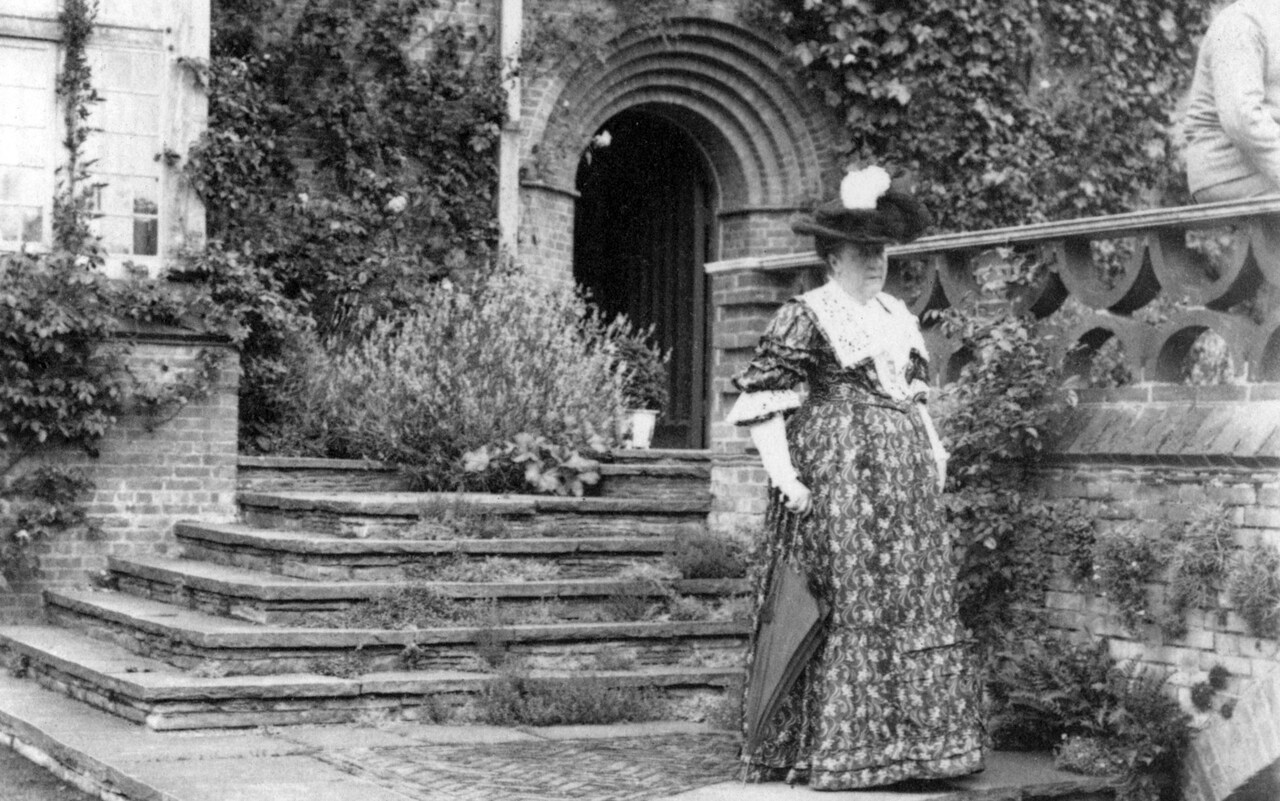
Reading her books gives you a strong impression of what she was like. I would say knowledgeable but not to be messed with. Her opinions were very much to the point and there could be no arguing. Her book Wall and Water Gardens published in 1901 has extensive descriptions of the designs and types of walls and suggestions for what should be planted in or on them. She has lists for walls situated in the sun and suggests plants like Cheddar Pink and Stonecrops Then for walls in the shade she has Ferns , Mossy Saxifrages and Snapdragons which she says can be used in sun or shade.

She mentions lots of native plants which she considers suitable such as Mulleins, Stitchwort, Shinning Cranesbill Wall Pennywort, Welsh Poppy and Red Valerian.

Here are a couple of quotes from her book, this talking about lawns. ‘how many gardens on sloping ground are disfigured by profitless and quite indefensible steep banks of mown grass! Hardly anything can be so undesirable in a garden. Such banks are unbeautiful, troublesome to mow and wasteful of spaces that might be full of interest. If there must be a sloping space and if for any reason there cannot be a dry wall, it is better to plant the slope with low bushy or rambling things. ‘

And this about brick walls. ‘often the wall that one would wish to make the home of many a lovely plant is of the plainest brick or stone, and the mortar joints are fairly sound. Still the ardent wall gardener is not to be daunted, for, armed with a hammer and a bricklayers cold chisel he knocks out joints and corners of bricks (when a builder is not looking on) exactly where he wishes to have his ranges of plants.’

I think these quotes get across the nature of the lady, formidable to say the least.
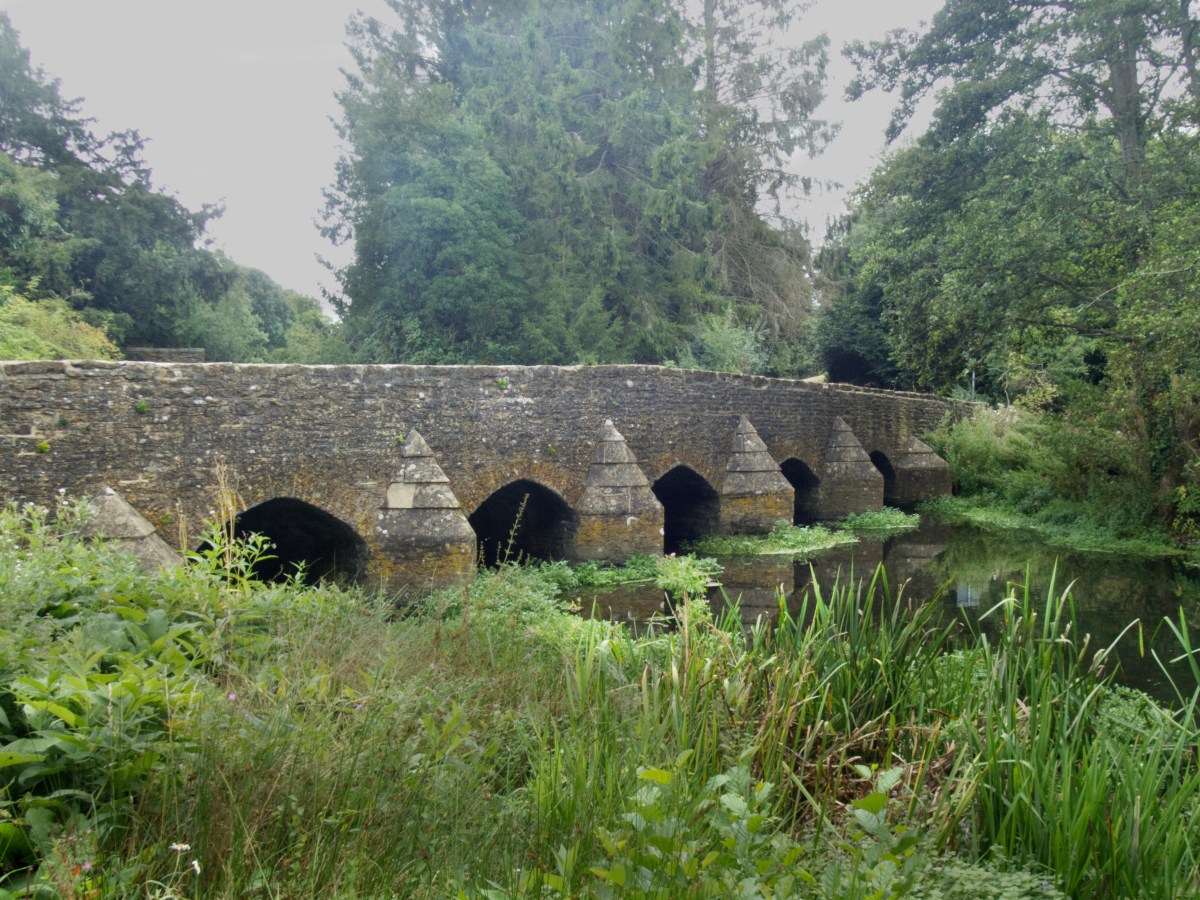
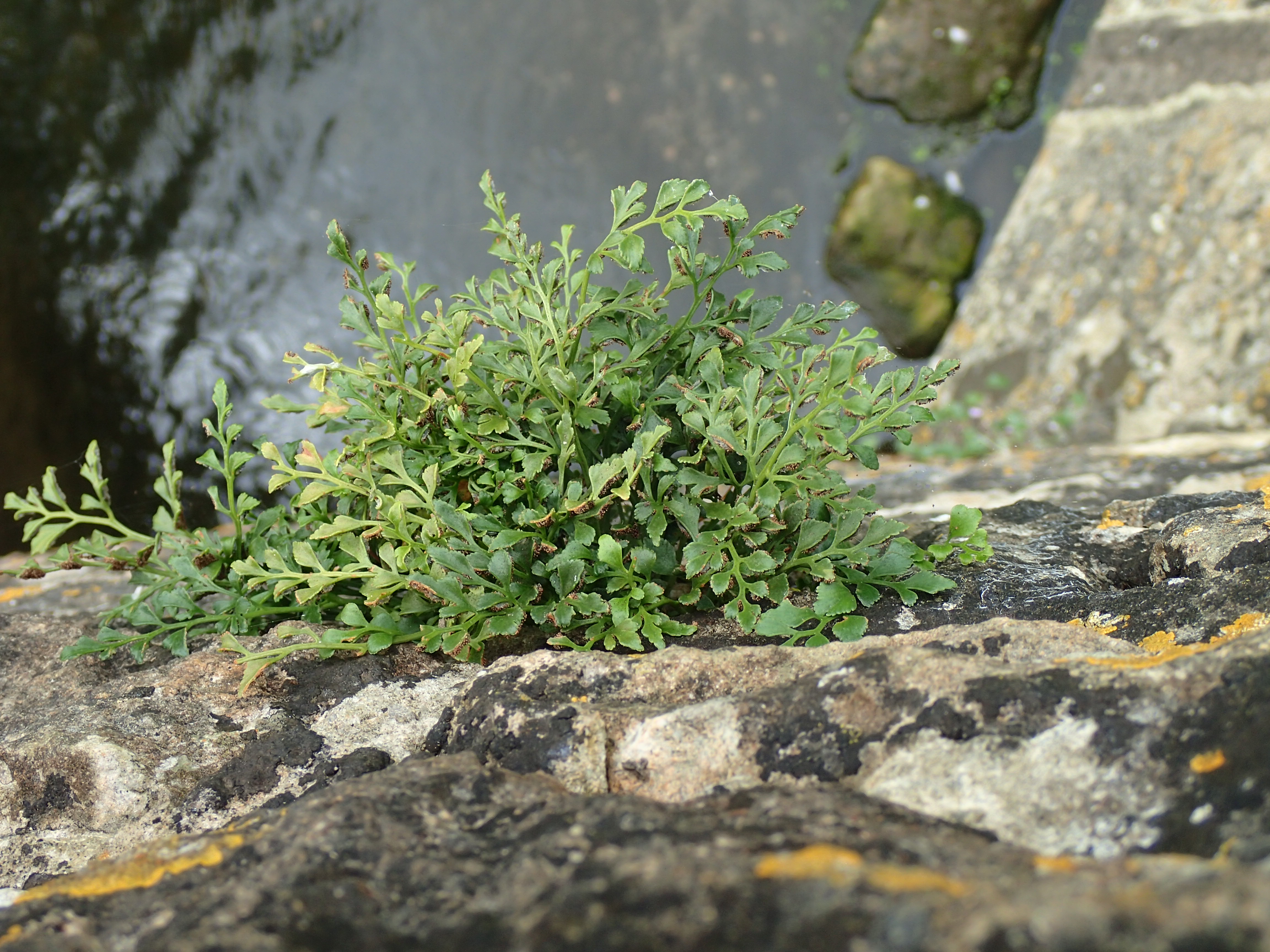
Wall Rue and Easton Grey, Wiltshire.

Wall Rue is a fern and is commonly found in walls as its name would suggest, and often in company with Maidenhair Spleenwort with the latter being the more dominant of the two. Not so on the old bridge over the River Avon in Easton Grey where there are just two plant species, Ivy-leaved Toadflax and Wall Rue.

Asplenium ruta-muraria is the scientific name. It is blue green in colour, the same as the herb Rue. It is a small fern and grows in a compact tussock , not a spreading frond. It does not smell like its name sake the herb Rue which has a pungent and disagreeable smell and is not much used in cooking any more. Back in the day it was sometimes used in small quantities mostly for medicinal purposes. In some countries, for example Ethiopia, it is still used in cooking.

Wall Rue prefers alkaline conditions so limestone walls or walls where a lime mortar has been used to hold the stones together are to its liking although according to the BSBI, Wall Rue prefers a pH of 7 whilst Maidenhair Spleenwort prefers a pH of 8.

Easton Grey, near Malmesbury, is a Cotswold village through which the River Avon passes. There are several River Avons in Britain, nine to be precise! Avon means river in the Celtic language and Afon is the word for river in Welsh so the River Avon is the River River! The River Avon passing through Easton Grey ends up passing through Bristol and into the Bristol Channel at Avonmouth and so is sometimes referred to as the Bristol Avon or Lower Avon, It rises at Acton Turville near Chipping Sodbury in Gloucestershire and is seventy five miles long in a circular route, passing through Malmesbury, Tetbury, Bath and Bristol. Despite being only a few miles from the source, the bridge at Easton Grey is the seventh crossing point downstream. There are three arms of the river. The one at Easton Grey is called the Sherston branch. The originating source is debatable. Some consider the Tetbury Avon which rises at Wor Well to the north east of Tetbury to be the main source but whatever the source the three tributaries join in Malmesbury.

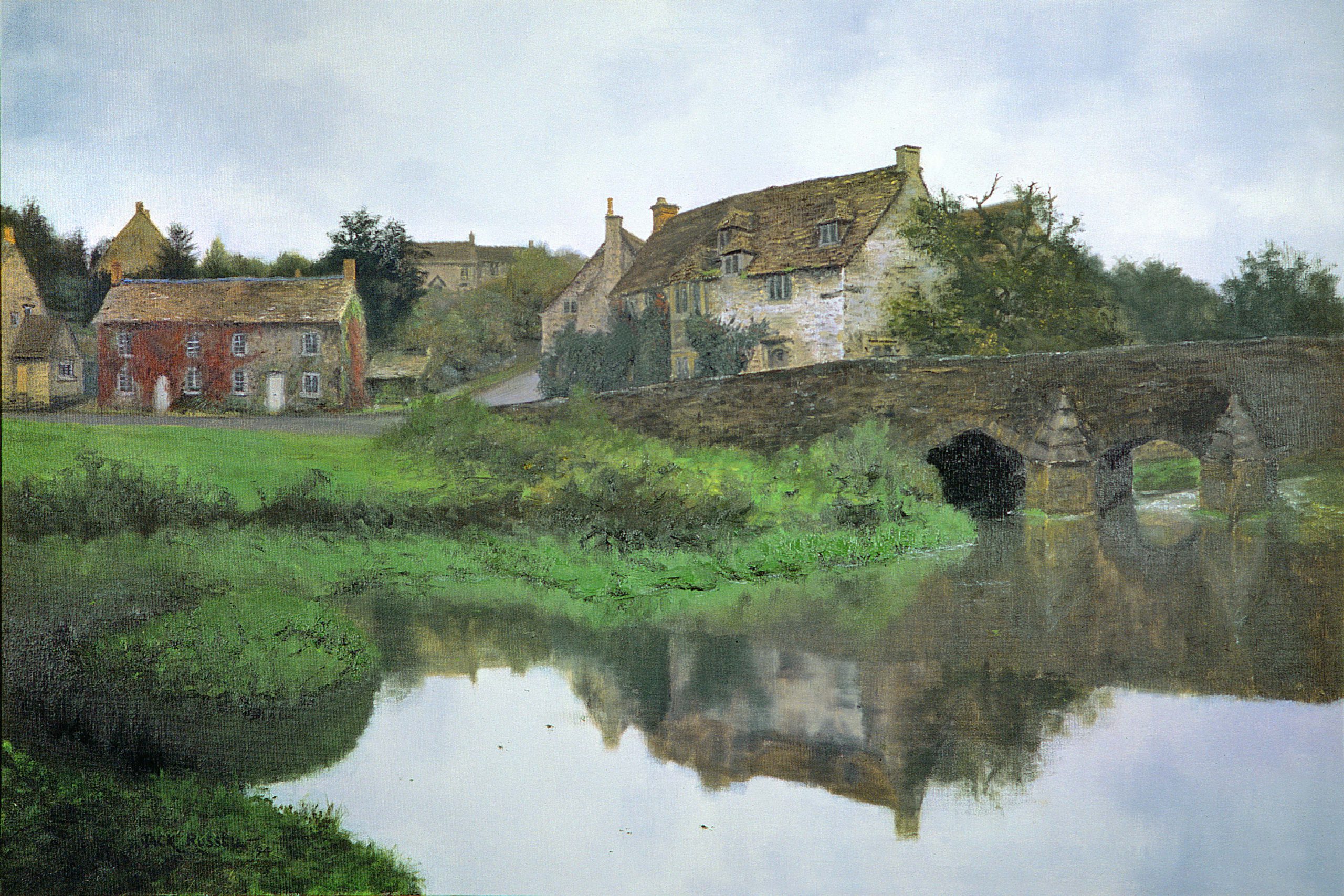
The bridge at Easton Grey is comprised of five pointed-arched spans. On the northern side there are six projecting triangular cutwaters buttressing each of them. It was probably constructed in the sixteenth century, and is made from local Cotswold stone which is ideal for Wall Rue Fern. It is very picturesque and is often the subject of photographs. The local artist Jack Russell has painted it. He was also rather good at cricket, playing for England as wicket keeper!

Not only is the bridge picturesque but so too is the little hamlet surrounding it, not least the house on the opposite side of the road called Bridge House. A local historian recalled that this house might have a connection to Edwin Lutyens. It was possible that he combined the original row of cottages into one property and that Gertrude Jekyll with whom he often collaborated had some influence over the garden. However I can find no reference to this elsewhere. My historian contact wonders if he heard about this in a Wiltshire monthly magazine or possibly when he attended an antiques auction there in or around 2000. I have found reference in an article by British Listed Buildings to the building undergoing major refurbishment in 1923 with an arts and crafts style circular chimney breast being a feature in one of the rooms. That is the closest link to Lutyens that I have been able to find

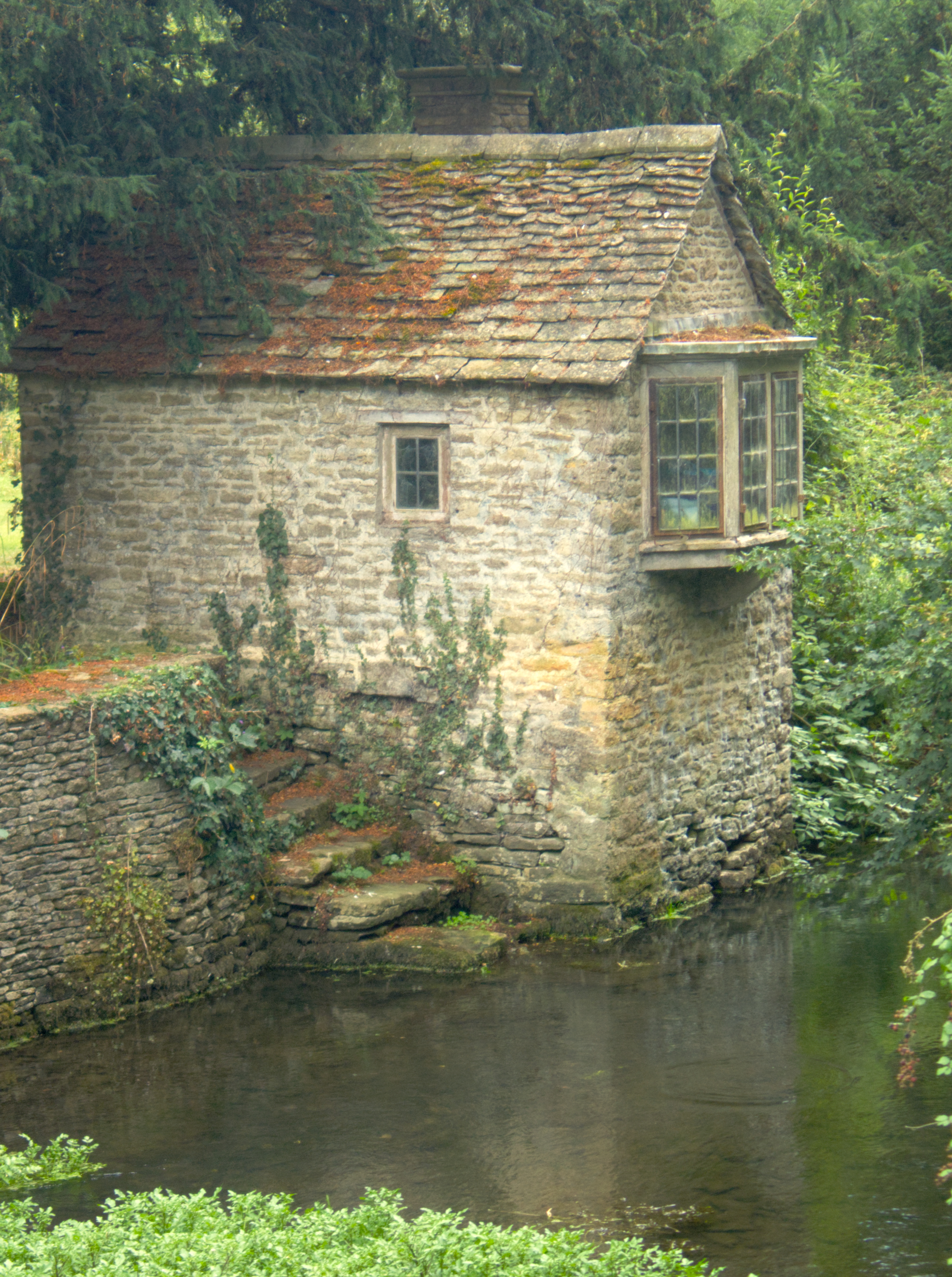
It has a very charming so called ‘fisherman’s cottage’ in the garden overlooking the river.

Gertrude Jekyll did however design a garden in Hampshire at a village with a similar name called Upton Grey. This was around the Old Manor House which Charles Holme purchased, and then rented to tenants for the rest of his life. The property deteriorated and eventually Holme commissioned a local architect Ernest Newton to refurbish it, keeping many of the original timbers. Today’s Edwardian decoration encloses oak rooms, a 16th-century staircase and original roof timbers. Newton’s house was finished in 1907. Gertrude Jekyll created a four and a half acre garden around it.