
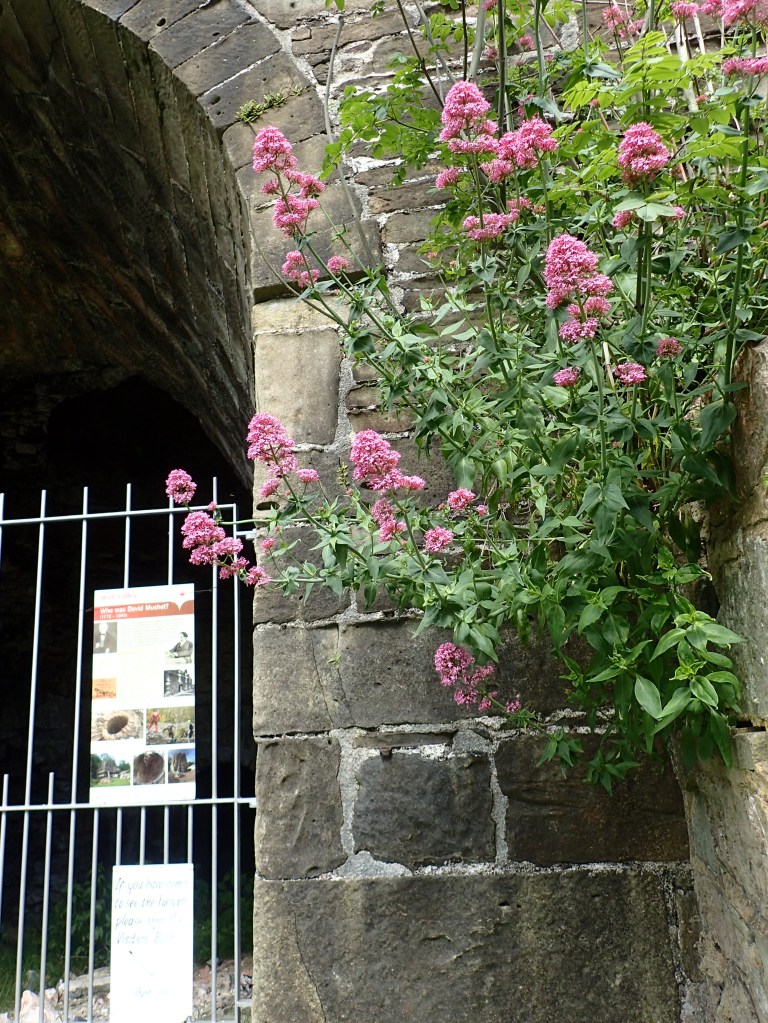
The plant growing out of the side of the furnace is a pink version of Red Valerian which may also be white. It is often found near the coast and it is not uncommon to see it growing out of sea cliffs. Although regularly to be found in walls this is not exclusively the case. It is a perennial and some of the leaves usually remain throughout the winter. In spring it returns to grow up into its branching form, reaching a height of about seventy-five centimetres. Flowering starts from early May and continues right through to October. The flowers are quite striking, especially the dark magenta ones. They have five petals which then fuse into a tube and extend back into a long spur. This suggests that pollination is carried out by insects with long tongues. I have seen the hummingbird hawk moth, Macroglossum stellatarum visiting these flowers. They are quite fragrant which will also help to attract the moths.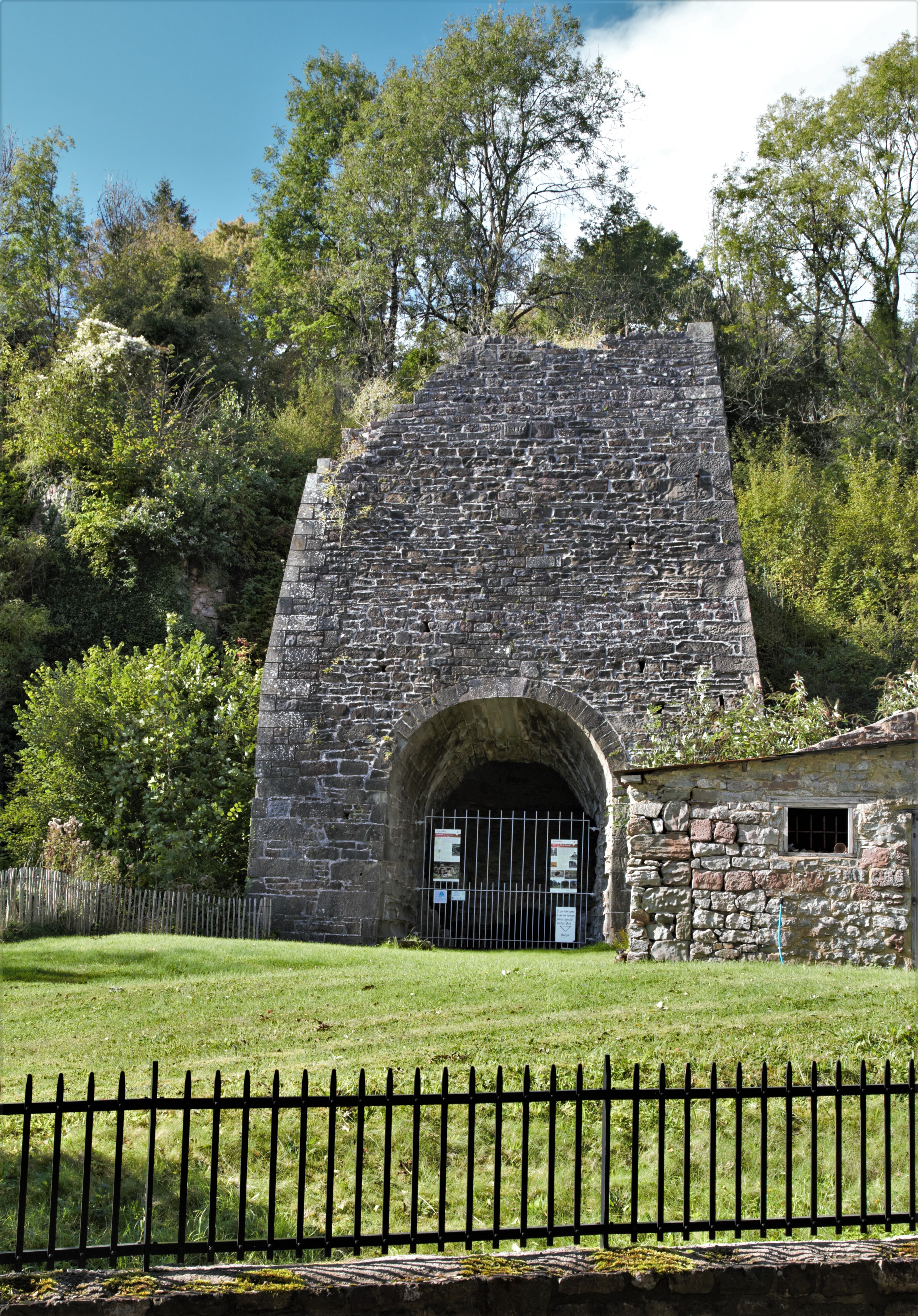
David Mushet( 1772 – 1845) was an expert in iron and steel. He was born in Scotland but moved down to Gloucestershire and the Forest of Dean after a stint at Alfreton in Derbyshire. He was brought in by one Thomas Halford who had built two coke fired furnaces at Whitecliff. These early furnaces which pre dated the famous Bessemer converters involved feeding iron ore and coke in at the top. Gradually the material worked its way down getting hotter and hotter until molten iron and slag came out at the bottom. The iron went into sand moulds and formed what were known as pigs of cast iron. Originally iron had been made with charcoal in the Forest of Dean but this later process used the local coal. However the Forest of Dean coal did not produce good coke and the production at Whitecliff was never profitable. Eighty tons of iron ore and a hundred and twenty tons of coke only produced twenty tons of pig iron. Mushet could see that the process was not economically viable and his partnership with Halford was terminated but he went on to develop the nearby Dark Hill Iron Works which was where a lot of research was carried out. He was succeeded by his youngest son Robert who had success in improving the Bessemer process and developing the worlds first highspeed special steels incorporating Tungsten. The Bessemer Process produced poor quality steel, his improvement involved burning off impurities and introducing carbon and manganese. This had the effect of improving the quality of the finished product, increasing its malleability and its ability to withstand rolling and forging at high temperatures. However it was Bessemer who took the credit and indeed a knighthood and Mushet just got a pension from Bessemer, basically to buy him off.

 Walls and Flowers