Walls and Flowers.
There are flowers which grow on walls and there are walls which have flowers growing out of them and this is about both. The plants which have been selected for this book are those which often grow out of walls, some almost exclusively others commonly but not always found on walls. There are many plants that might just grow out of a wall occasionally and these are not included. One has to draw the line somewhere and I drew it at sixty.
Shown above is a superb specimen of Great Mullein. It is unfortunately one of the rejects as it happens to be growing out of a wall but it is not a plant that regularly does so. However the related species, Dark Mullein, does make the cut as it is commonly found on walls and sunny banks. This Great Mullein is the only one I can recall seeing on a wall.
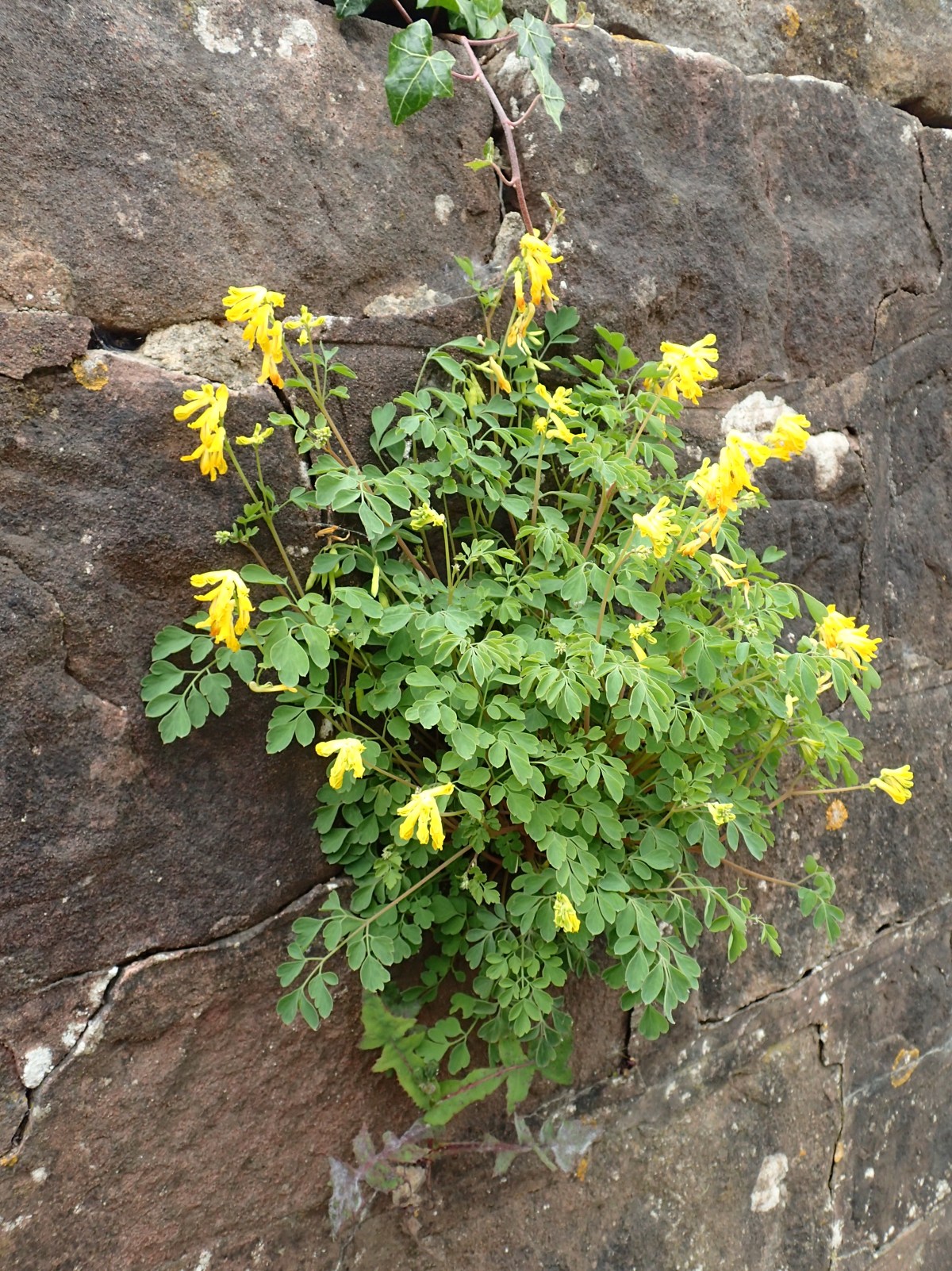
The sixty chosen species include a few grasses which are, after all, flowering plants, and also some ferns which are not. Plants which are almost exclusively found on walls are species such as Ivy-leaved Toadflax, Yellow Corydalis and Mexican Fleabane. These three all happen to be introduced species. Some plants have become so much part of walls that ‘wall’ is part of their name, for example Pellitory of the Wall, Wall Bedstraw, Wall Rue which is a fern and the most famous one of all – the Wallflower.
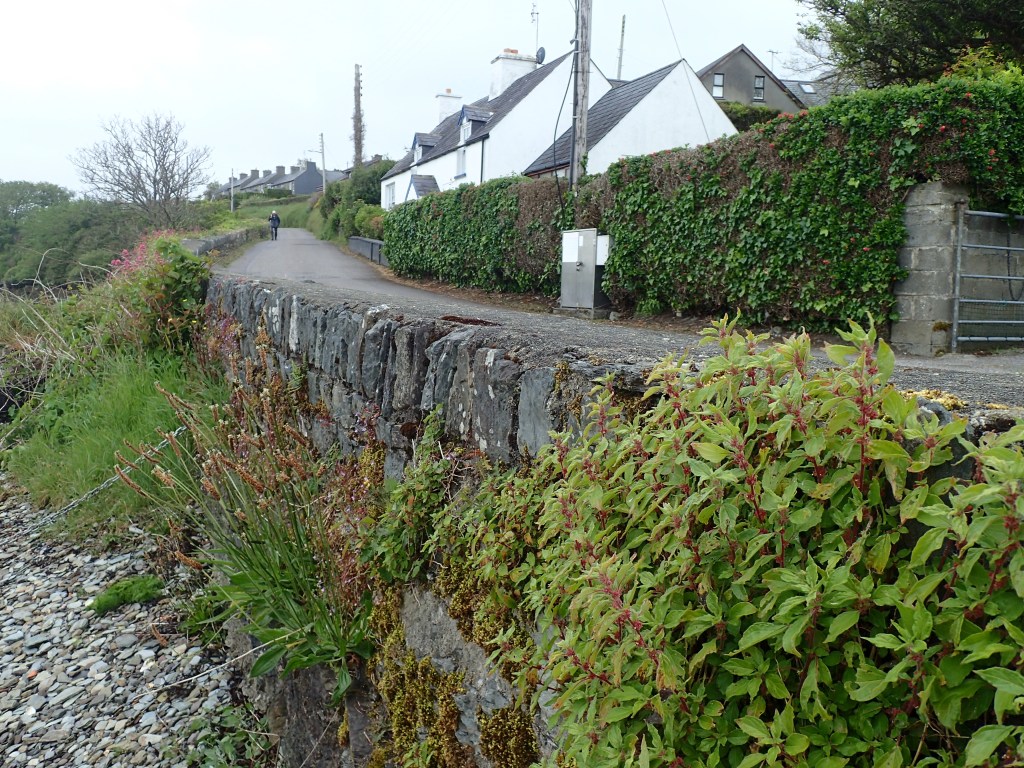
The other aspect of the book is the walls themselves and each plant has been photographed growing on a particular wall which may be famous, may be characteristic of a certain region such as dry stone walls which vary from place to place or it may be just somewhere that I visited. I will cover walls as far apart as Hadrian’s wall, The Antoine wall (which is even further north), the sea wall at Baltimore in southern Ireland, and closer to my home I have the drystone walls of the Cotswolds and the walls of the first iron smelting works just up the road from where I live.
The flowers obviously predate the walls, so the plants we now find on our walls had to live somewhere before man started his constructions. This would have been cliffs, mountain sides and rocky gravelly places. When man began to put up his buildings, fortifications, and boundary markers the plants were already adapted and could take advantage of these new opportunities. It is a difficult habitat though and I will explore the challenges that colonising walls presents.
 Walls and Flowers