This is a shrub, which has a peculiar ‘flat’ way of growing, which makes it particularly suitable to growing up against walls.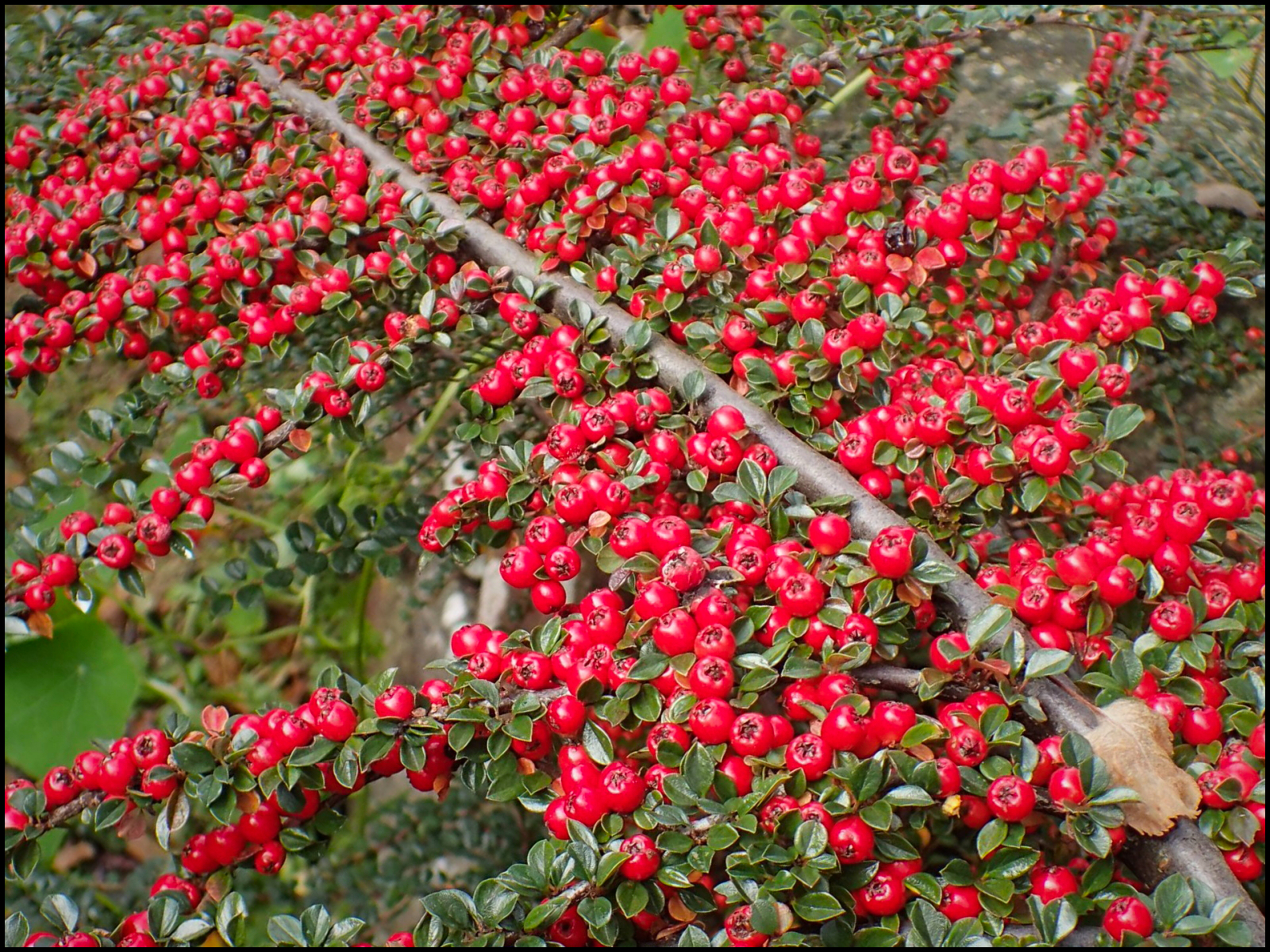
It is grown for its bright Red berries which form in late summer and are then a good source of food for the birds so that by October to November they usually have very few if any left. The flowers are small and pink, they are produced in late Spring.
This is not a native species it originates in China, it was introduced into cultivation around 1879 and is extremely popular in gardens. It was first recorded from the wild in 1940 and apppears to be increasing rapidly. It is distributed by birds, similar to many other berries, the fruit is eaten and the seed passes through unharmed and is deposited where ever, often on a wall. So when the seed germinates it often gets established near the tops of walls and then spreads and cascades down. Birds that may be attracted to it are Blackbirds, Thrushes, Fieldfares and Redwings but if you are lucky it could bring in a Waxwing. Many plant species which use birds to distribute their seeds in this way, actually benifit from the passage of the seed through the birds gut as the digestive processes start to break down the outter seed coat and so germination occurs more easilly, than it would otherwise do.
However it can also establish itself on natural habitats, such as Limestone cliffs, pavements and screes,where many rare native species also often grow. Here they damage native vegetation and can be difficult to eradicate. It is an offence now to plant Cotoneaster species in wild and there are efforts to remove it from rare natural sites such as Limestone pavements.
This article is incomplete it needs to be linked to a famous or interesting wall that has Cotoneaster growing on it. Any suggestions?

 Walls and Flowers