Well I suspect most of you have heard of Rosebay Willowherb although recently its genus has been changed so now it is sometimes simply called Rosebay. However you may not know that much about Escomb Church.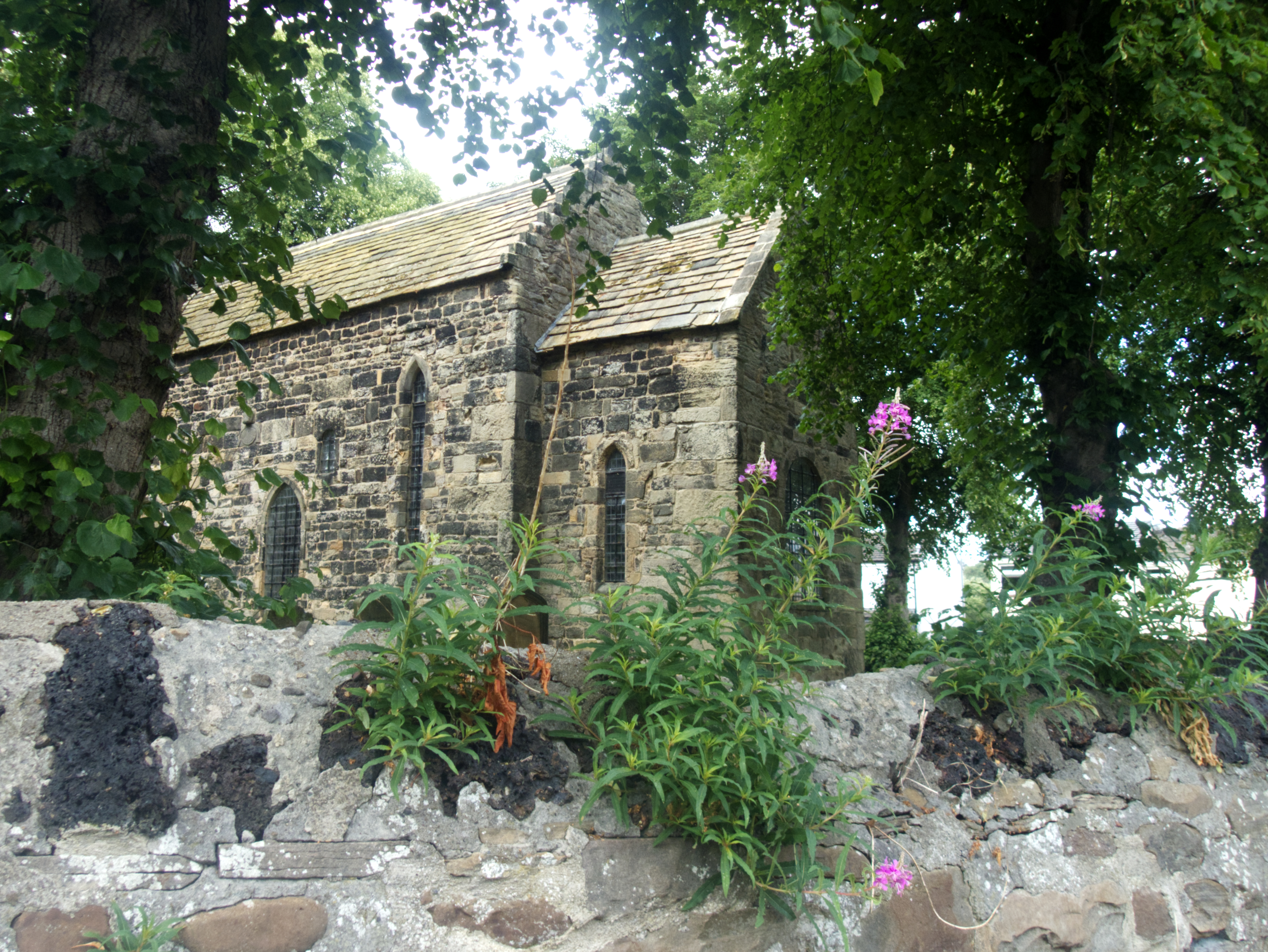
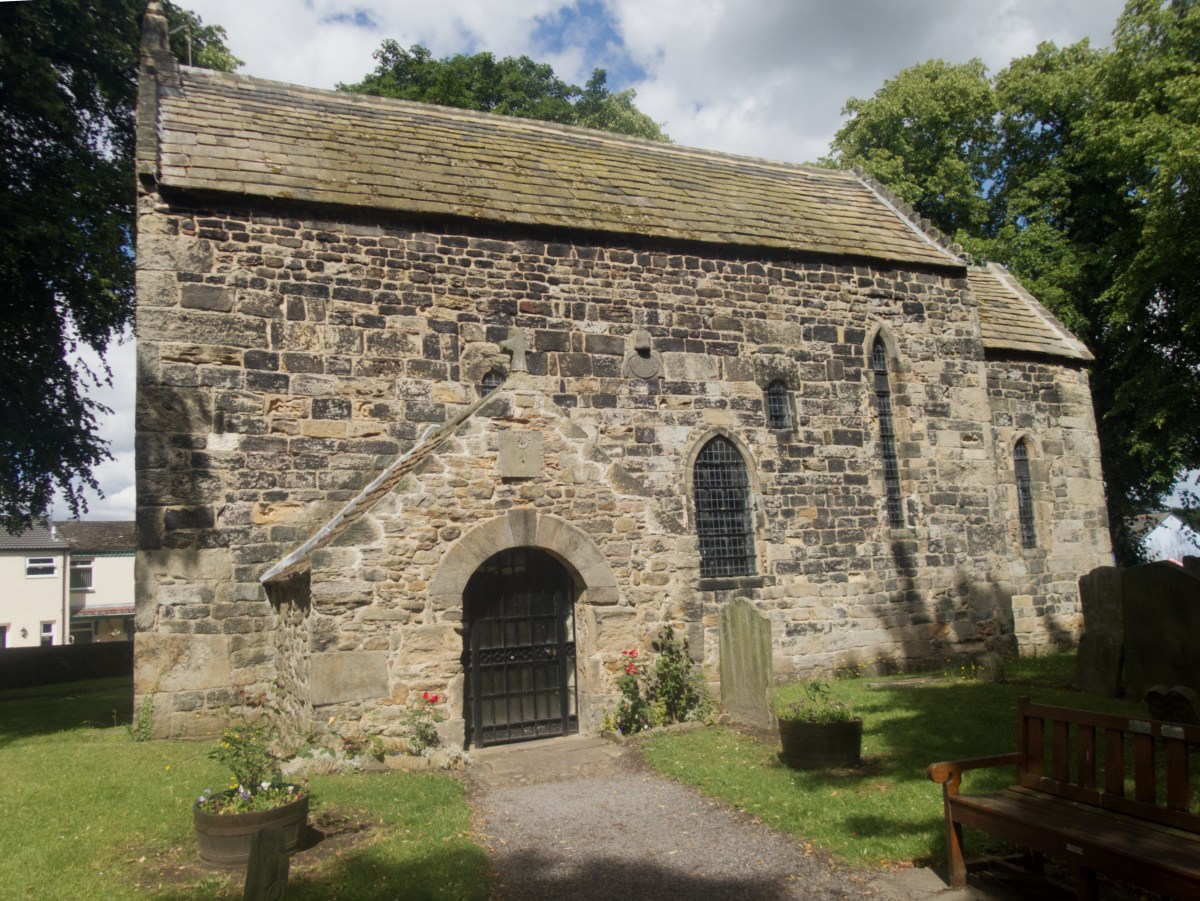
We came upon it when travelling up to Newcastle to visit college friends, it is not far from Bishop Auckland and is the oldest Saxon Church in the UK. The exact date of origin is a little lost in time but possibly 675 AD ish. It may well have been built where there was a former Celtic worship site as the surrounding church yard is spherical and some of the crosses cut into the stonework are of a Celtic design.
The surrounding wall on which the Rosebay was growing once had an inner hedge and was said to look very attractive. It is possible that the wall follows the line of a Celtic stone circle that predated the church.
One of the features of the church are two sundials above the entrance, the higher up one is thought to be contemporary with the building of the church and as such the oldest sundial which has remained in its original position since it was installed just 1,350 years ago! The dial has three lines on it which may have been the times when prayers were said, it also has a snake like creature but with a fish tail surrounding it and above there is a carving which seems to be the subject of some discussion as to what it depicts. Most seem to think it is the head of an animal, possibly a bull or and antelope, others think it may be the bottom half of a seated person ( the top half having broken away sometime) and I think it is a representation of Darth Vader.
.
Other features that can be seen are that several stones were from earlier Roman buildings, particularly the nearby fort of Binchester. One stone has LEG VI written on it which is the 6th Legion, however it is set upside down showing that the stone masons who made the church had no regard for the Roman heritage.
The Rosebay Willowherb was a rather stunted specimen, it can grow much taller and have a more impressive flower spike, however it was growing out of the top of a wall and was in some degree of shade due to nearby trees. 
Rosebay or Rosebay Willowherb? Well it was the later and its scientific name was Epilobium angustifolium and that placed it in the same genus as all the other Willowherbs but then it was renamed Chamerion angustifolium, and thus separated from the main group, at the same time some folks started to refer to it as simply Rosebay. However the BSBI ( Botanical Society of Britain and Ireland) still stick with the full Rosebay Willowherb so that is good enough for me. The reasons for the change relates to various morphological differences. The leaves are arranged in a spiral as opposed to opposite which is the case with Epilobium species. Also the arrangement of the stigma and stamens is different. Finally it does not have a Hypanthium which is a sort of cup beneath the flower where the calyx, petals and stamens all fuse together. Something which is not that noticeable but you see it quite well developed in Pomegranates’.
All quite complicated, alternatively we could call it Fireweed which is its other common name as it often grows where there has been a fire. In the era of Steam trains it was often found along railway lines, now it is still found in such situations but that is probably due more to its light wind blown seeds which are easily distributed along railway lines.

 Walls and Flowers
One thought on “Rosebay (Willowherb) and Escomb Church Co.Durham”