
There are several places called Wall, one is near Newcastle and that is obviously associated with Hadrian’s Wall another is in Staffordshire, and this one is on the famous Watling street a lot of which is now the A5.
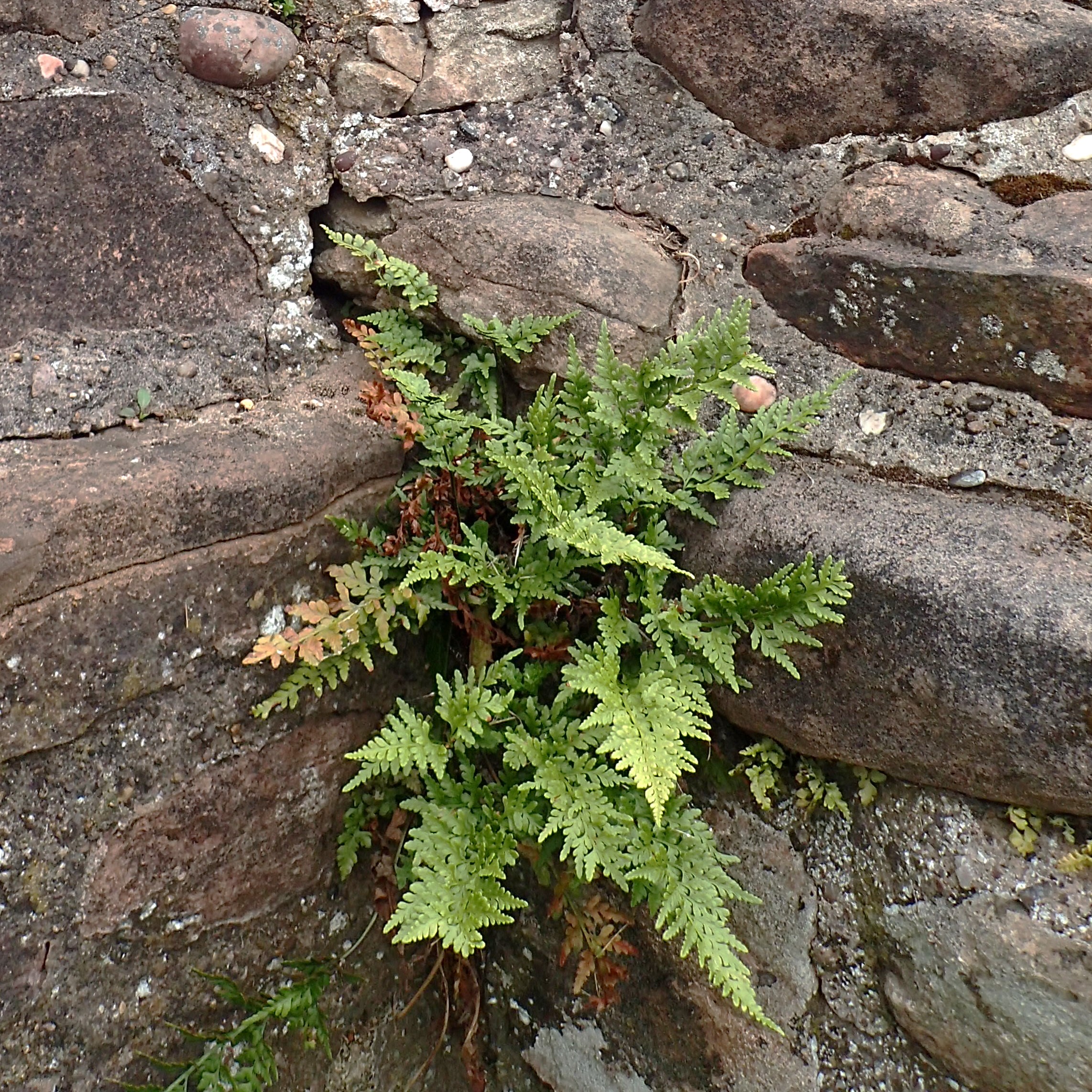
The site has several plants growing on the walls, but when I visited in July many had succumbed to the hot dry summer, not so the Black Spleenwort which presumably has quite extensive roots as it is a perennial and has therefore the time to get its roots well into the wall and down to any residual moisture. 
This fern is quite variable and depending on where it is growing it can look quite different. It is often to be found growing from walls, particularly in the west of Britain, in open situations the fronds are quite compact and the individual leaflets are rounded and the colour is light green. In woodlands it is more rangey and the individual leaflets are pointed and jaggy edged also they are usually dark green. One characteristic which does help to identify it wherever it is growing is that the central stalk down each frond has two groves running along it.
I had not heard of this place until I mentioned to my son that I was trying to put together something about Walls and Flowers and he said there is a village just along from where his brewery Trinity Brew Company is located on the outskirts of Litchfield. He said it was named Wall because there is a bit of Roman Wall there. Well not just ‘a bit’ but quite a lot.
Wall is however its new name, originally it was called Letocetum by the Romans who developed it as a fort on Watling Street, in fact there was probably habitation there before the Romans came as it is a junction where two ancient pathways cross Watling Street and Ryknild Street now known as Iknield Way . Also it was on a boundary between two Celtic tribes the Cornovii to the West and the Corieltauvi to the East. The original Iron age name was Lētocaiton meaning Grey Wood ( caiton has become modern day Welsh Coed ie wood).
Possibly the Letocetum referred more to the area rather than the specific location of a village as subsequent to the fall of the Roman empire the village disappeared and was replaced by another site nearby which became Litchfield a name also derived from Letocetum.
What you see now is the remains of two buildings, a guest house and a bath house. As is often the case with Roman settlements there were several reconstructions and alterations over the course of the 367 years they were here. Originally they just built marching camps as they proceeded north west along the ancient route of Watling Street, later they improved the route putting in a stone base so that communication could rapidly pass through and the the first guest house was built around 80AD but this was wooden, the first Bath house followed in 100AD but what you see now represents much later constructions made with stone and dating to the second and third centuries AD. However at its height it would have been quite a populous bustling community probably producing leather goods, glassware, pottery and metalware.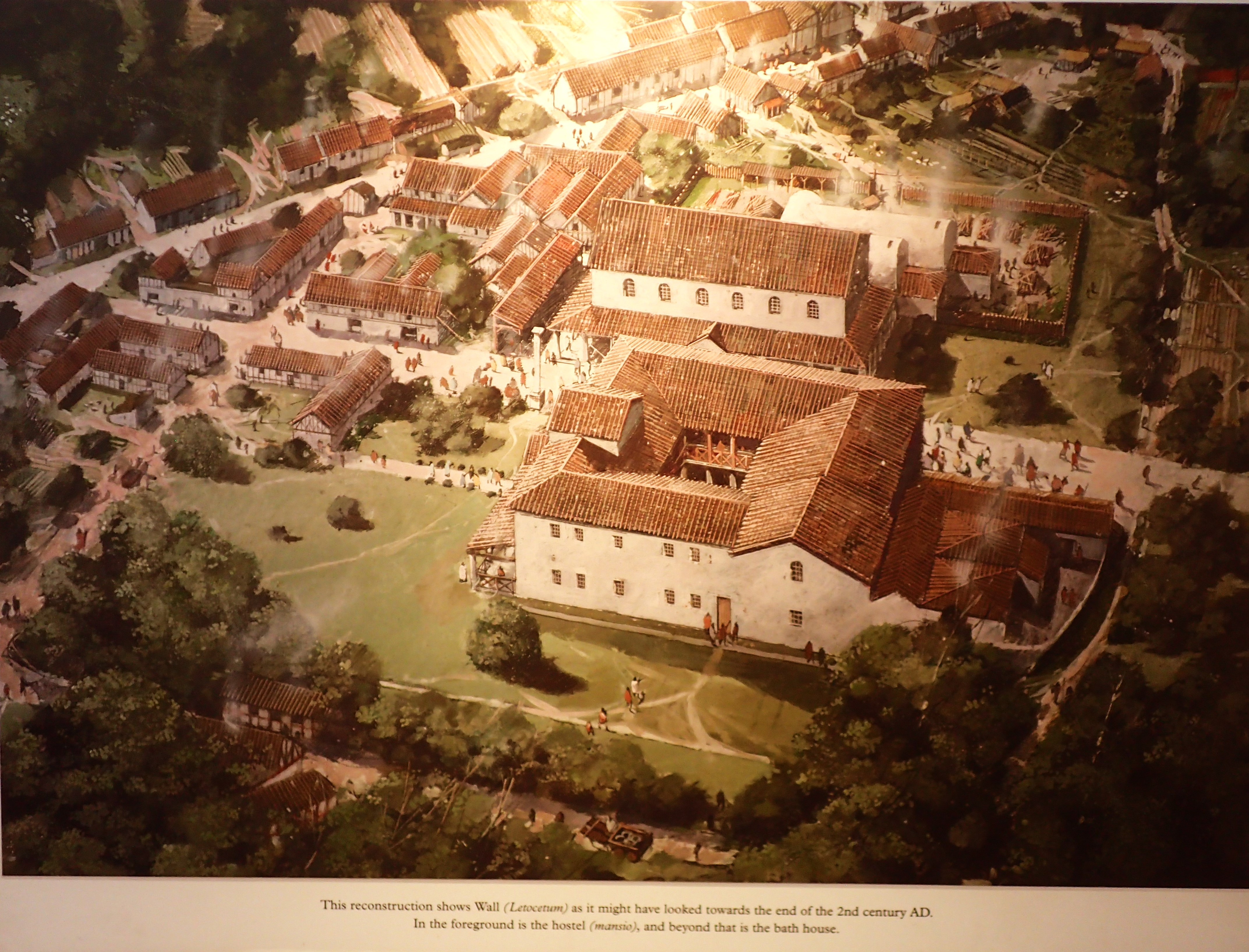
Other species growing at Wall were Mouse-eared Chickweed, Maidenhair Spleenwort, and Selfheal, but the Black Spleenwort was perhaps the commonest certainly the most impressive.

 Walls and Flowers
One thought on “Black Spleenwort and Wall, Staffordshire”