
I always thought it was an amphitheatre, but it is not, it is a theatre. The difference is that a theatre has an arena and a stage whereas the amphitheatre just has an arena and so this makes the St Albans site unique in Britain. (‘quite unique’? is that allowed?)
The Roman Theatre of Verulamium was built around 140AD it is the only example of its kind in Britain. Initially, the arena would have been used for anything from religious processions and dancing, to wrestling, armed combat and wild beast shows ( mainly bulls and bears). From about 180AD the stage came into greater use and the auditorium was extended. By about 300AD, after some redevelopment work, the Theatre could seat 2000 spectators.
Actually only five such structures are known in Britain and only one was a theatre, so it seems drama and music were not that popular with the Britons. The Celts seemed to prefer the more brutal entertainment of the amphitheatre, with its wild beast fights and gladiator shows. In fact, some of these theatres seemed connected to temples, and so it may have been more religious Celtic ceremonies that took place in these theatres.
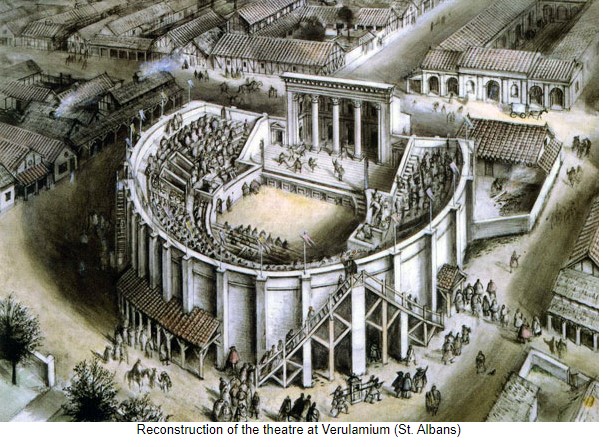
St Albans is the most famous site and was known as Verulamium in Roman times, this is because it was constructed on the site of Verlamion, which was the capital of the iron age tribe known as the Catevellauni. In AD 61 Verulamium was largely destroyed by Boudica and then reconstruction began. The theatre came somewhat later, and there was a temple right next to the theatre.

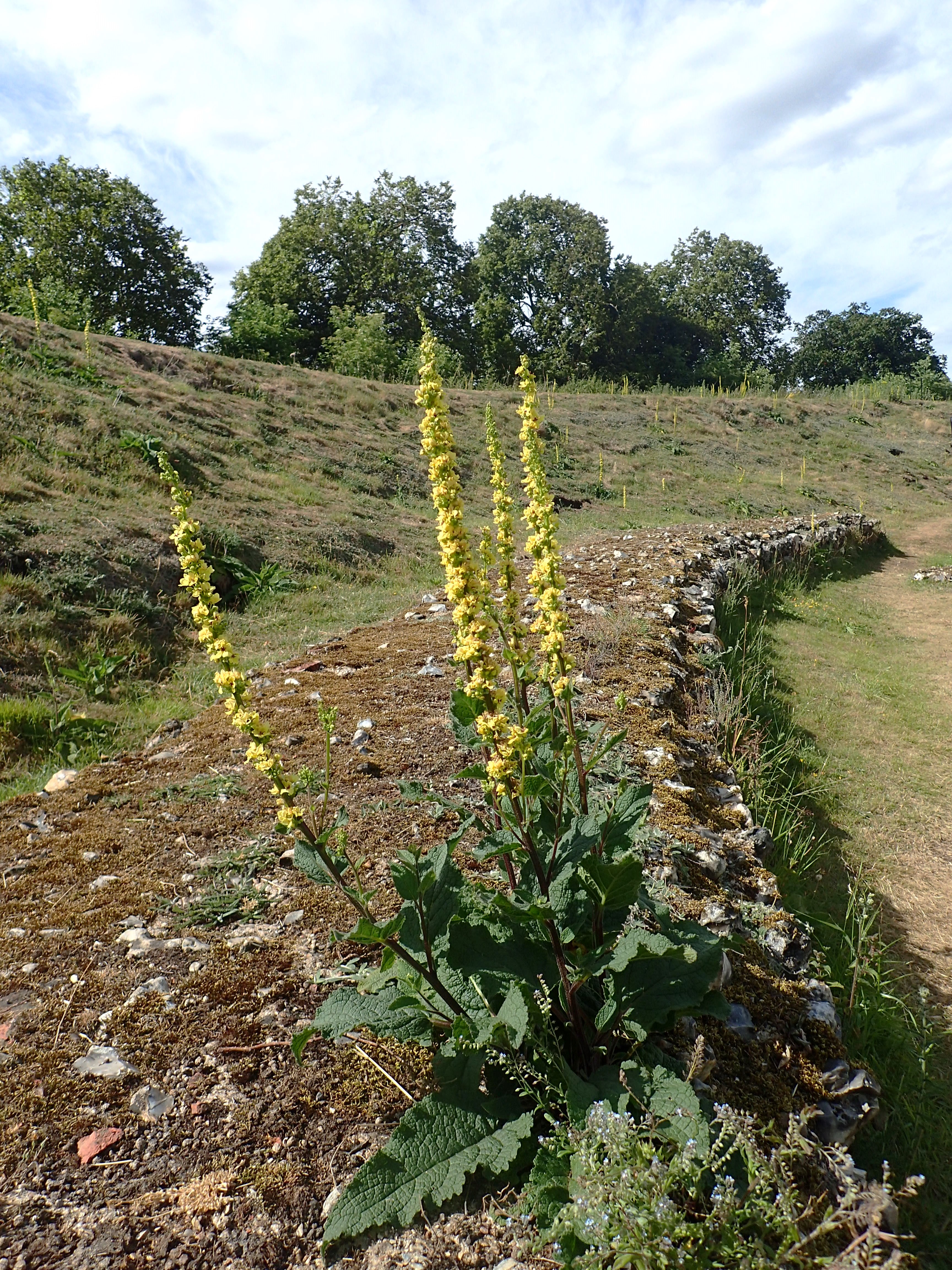
There were quite a few plants growing from the stonework when I visited at the end of June, lots of Forget-me-not which was reaching the end of its flowering season. There was as always a lot of Ivy leaved toadflax and several ferns, but most impressive were the Dark Mullein which were in full bloom. They are biennials and produce a rosette of leaves in their first year rather like Foxgloves and then the flower spike develops in the second year, this is usually unbranched unlike several other species of Mullein. The flowers are yellow with five petals fused into a tube from which the anthers project, these have large purple hairs on them making the centre of the flower look purple. This species is quite common in the south of England particularly in a diagonal SW to NE band roughly following the Cotswolds and Chilterns. Suffice it to say this species is a calcicole and prefers a chalk or limestone substrate. Walls made from such materials will obviously suit it well, it also likes a sunny position so again banks and walls be to its liking.

 Walls and Flowers
One thought on “Dark Mullein (Verbascum nigrum) and the Theatre at Verulamium St Albans.”