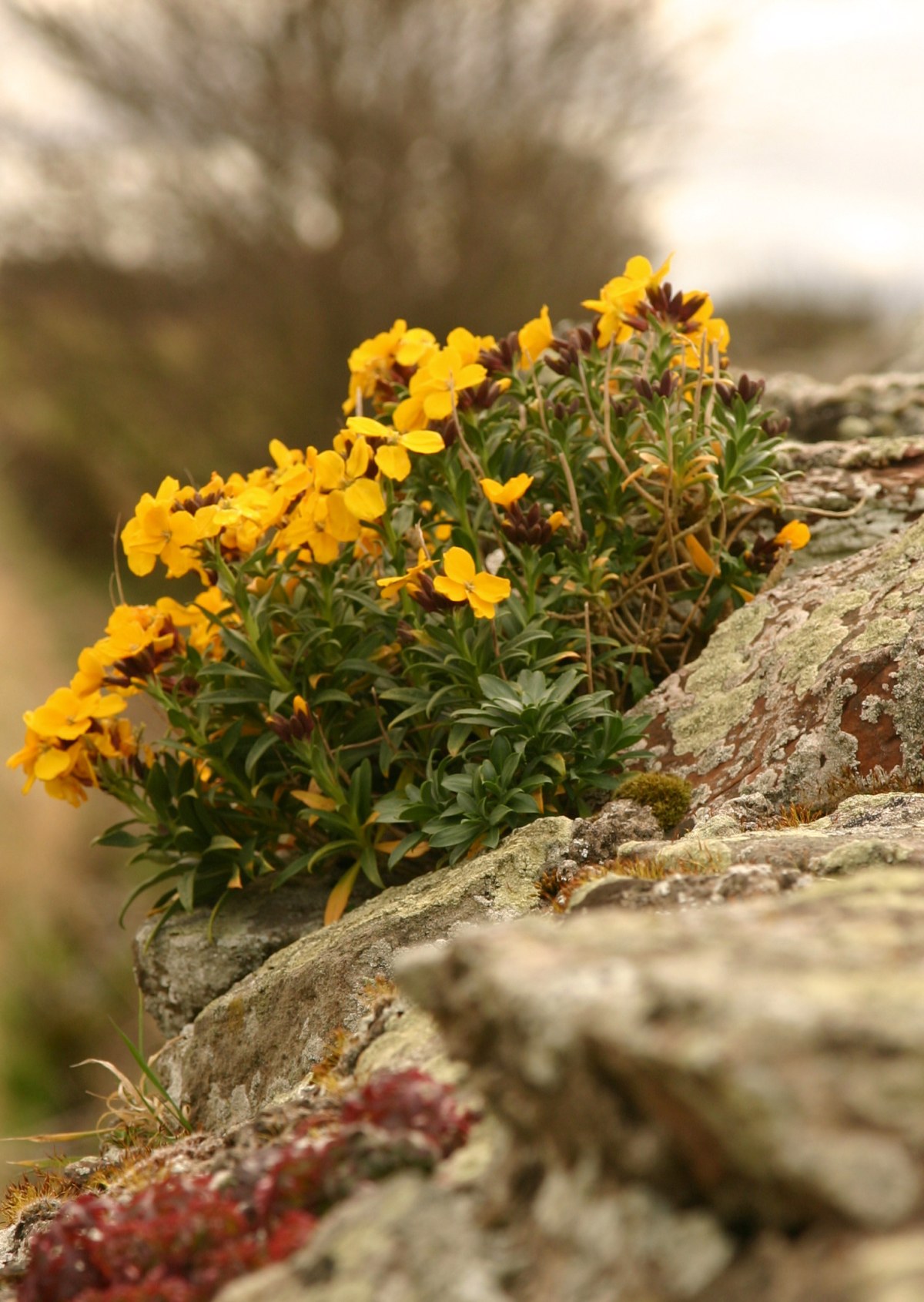
The Wallflower is one of the plant species with which most people are familiar. It is often to be found growing out of walls which, given its name, is just as well but it is also a garden flower. It is not originally from Britain but from southern European and is found right across the Mediterranean and Aegean areas. It has been used throughout time for various medicinal purposes and the list is quite long. It was used by Roman soldiers to treat wounds, a tincture was used to reduce tooth ache, it has been used to treat rheumatism and gout, to bring on menstruation when periods were late and so it goes on. It does contain a substance called cheiranthin which is similar to digitalis derived from Foxgloves which affects the heart rate.

An early reference to the plant appears in a work by Pliny the Elder writing in the first century AD. Some suggest that it was introduced into Britain following the Norman invasion but I see no reason why it could not have arrived much earlier, possibly with the Romans. Either way it has been here a long time. The first record of it growing wild appears in 1548, and there is one in 1777 when Edward Jacob, a local naturalist, records it as Wild Chier growing ‘on old walls and being very uncommon.’ It is now quite common but is recorded less further north and is still uncommon in Scotland, no doubt reflecting its southern European origin. Despite this I found it growing from some of the walls surrounding Tantallon Castle in East Lothian.
It was originally classified as Cherianthus cheiri by Linnaeus but it is now called Erysimum cheiri. The cheiri derives from the Greek word for hand as it was often used in small bouquets held in the hand. It is in the Cruciferae family along with cabbages, brussel sprouts and turnips and as such it has a simple flower structure composed of four petals in a cross. Like most of the family the wild form has yellow petals, but over the years a range of different garden varieties have been bred so that colours ranging from Red to yellow, purple and brown are all available. Personally I prefer the brown or yellow types . It is often grown by gardeners as a biennial. Bundles of bare rooted young plants can be purchased in the autumn and planted out to flower the following year. However if they are left in place and they will go on to flower for several more years. They flower in the Spring and have a wonderful scent. The petals have a velvety texture and they are much appreciated by bees and other insects.
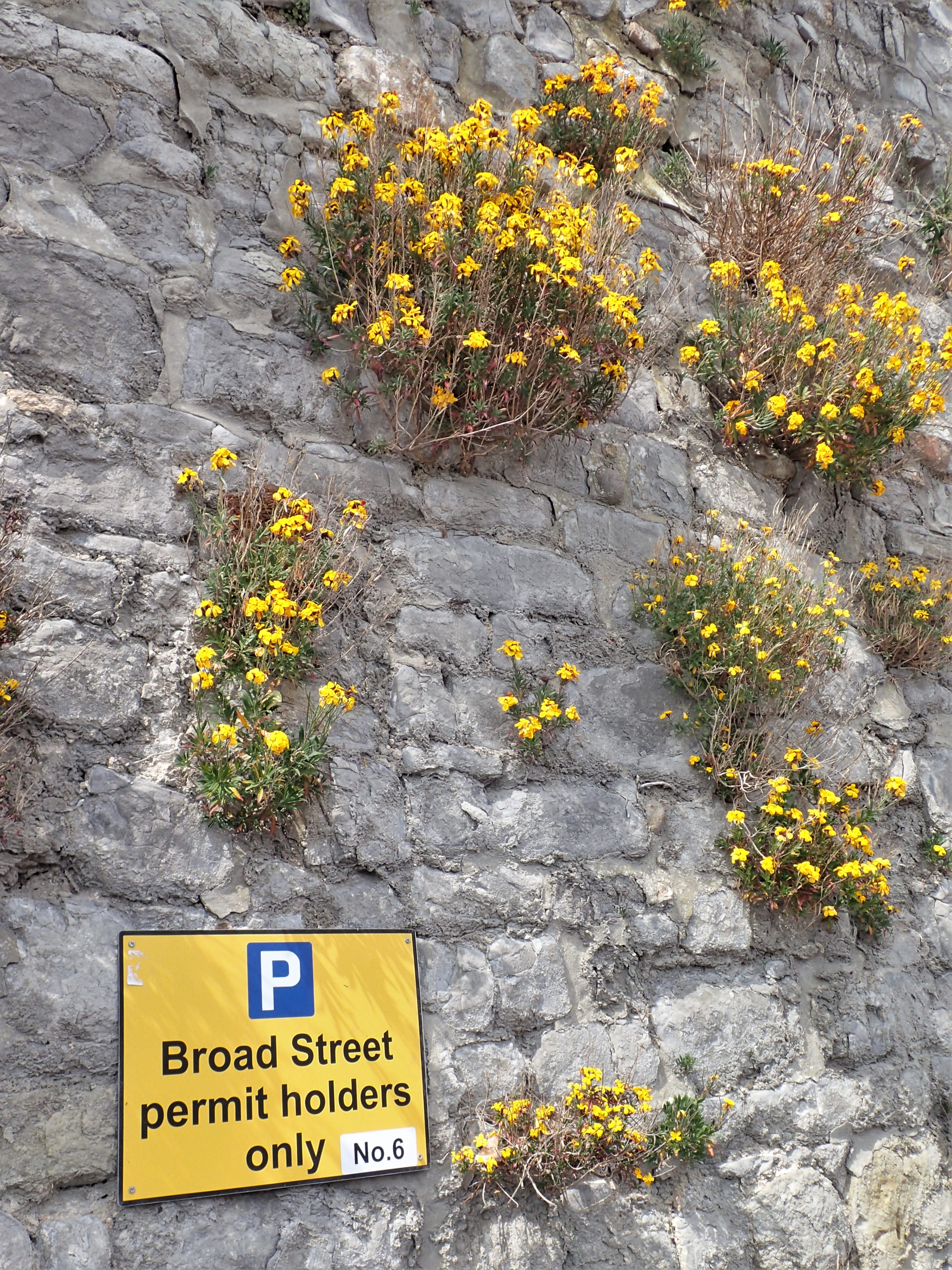
Not all Wallflowers grow on castle walls.
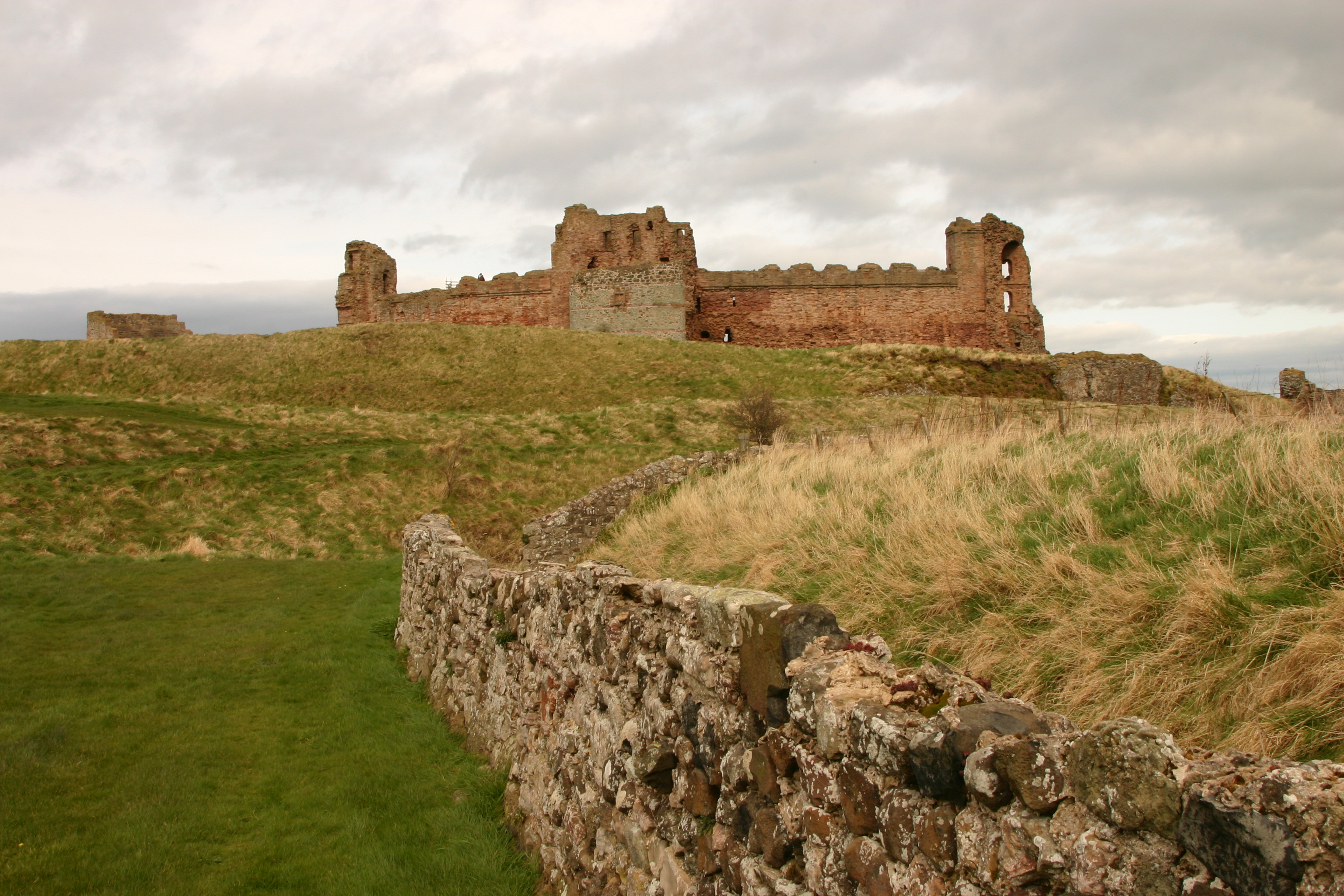
Tantallon Castle is a ruined mid fourteenth century fortress, located three miles east of North Berwick, in East Lothian, Scotland. It sits atop a promontory opposite the Bass Rock, looking out onto the Firth of Forth. The last medieval curtain wall castle to be constructed in Scotland, Tantallon comprises a single wall blocking off the headland, with the other three sides naturally protected by sea cliffs. It was the home of the Douglas clan.
In 1354, William Douglas was given the estates of his father, Sir Archibald Douglas and his uncle, the ‘Good Sir James Douglas’ who was a close friend of Robert the Bruce. These estates included the barony of North Berwick.
William was made Earl of Douglas in 1358 , by which time masons may already have begun to build Tantallon.
The house of Douglas split into two branches in the 1380s: the ‘Black’ and the ‘Red’. Tantallon passed to the junior line, the Earls of Angus known as the ‘Red Douglases’. They owned the castle for the next three hundren years, often clashing with the Crown.
It is possible to see Gannets from the castle. They make Bass Rock look almost white which is no doubt the result of the combined effect of their plumage and the guano. Eider ducks can also be seen,often close to the shore line.
The demise of the castle came during the Civil War when Cromwell sent two to three thousand troops led by General Monck along with much of the artillery located in Scotland, to lay siege to Tantallon. After twelve days of bombardment with cannon a breach was made in the Douglas Tower. The defenders were compelled to surrender. After the siege Tantallon was left in ruins and it was never repaired or inhabited thereafter.

 Walls and Flowers
